Lacking the funding it needs to continue, Houston’s BCycle bike share system will end operations in the coming months.


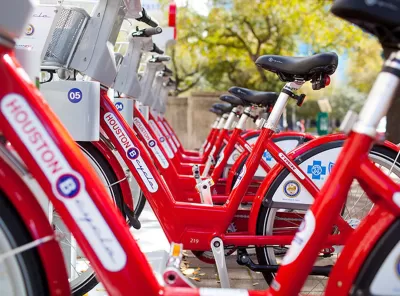
After a rough few years and a failure to secure the funding needed to continue the program, Houston’s BCycle bike share program is shuttering in the next two months. In an opinion piece for the Houston Chronicle, Neeraj Tandon and James Llamas, two volunteer directors on the board of Houston Bike Share, the nonprofit that operates the system, call the decision heartbreaking.
Outlining the history of Houston’s bike share system, the authors explain how the system got to where it is today—and how it can be revived in the future. “During the 2020 COVID pandemic, Houstonians flocked to bicycling and BCycle for safe, socially distanced fitness, recreation and transportation. Our annual ridership peaked at over 300,000 trips.” But this came at a cost: “with a network more heavily focused on transportation, rather than recreation, revenue did not keep pace. Sponsorships dried up. Meanwhile, our bikes and stations were aging and required more maintenance and repair.”
Ultimately, the authors note, “our experience has also shown that rental fees alone can’t support a robust bike share system here. It requires ongoing support, similar to the support taxpayers provide to fund mass transit.” Although the system will end operations over the next couple of months, “At the City of Houston’s request, BCycle’s equipment remains in the field.” All it takes to turn it back on is proper funding.
FULL STORY: We have to shut down BCycle. It breaks our hearts. (Opinion)

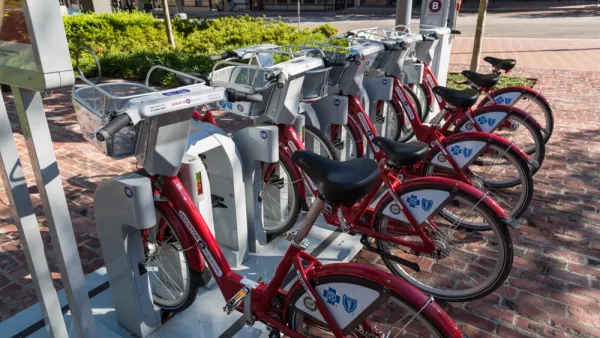
Houston Metro Abandons Bike Share in Favor of On-Demand Microtransit
The agency failed to include funding for bike share in its 2025 budget proposal.
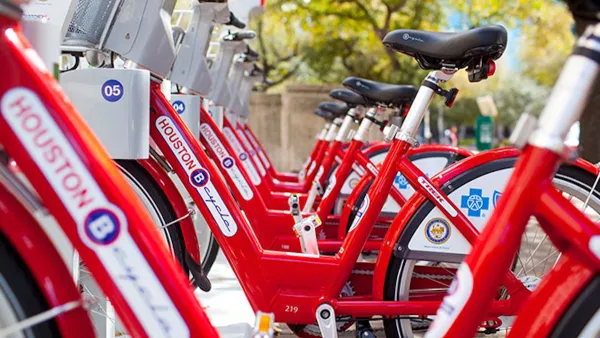
Houston Will Be Largest US City Without Bike Share
The city’s bike share system will cease operations at the end of June.
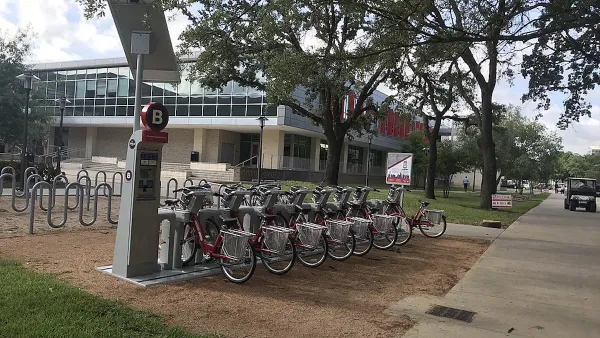
From Zero to Two: Houston’s Bike Share Saga Continues
The city is now proposing supporting BCycle as well as launching a new, complementary system.

Planetizen Federal Action Tracker
A weekly monitor of how Trump’s orders and actions are impacting planners and planning in America.

The state-sanctioned urbicide of Austin
People don’t kill cities. Freeways do.

US to reduce Colorado River water deliveries to Mexico
A new Colorado Treaty amendment reduces Mexico’s Colorado River water allocation by 250,000 acre feet.

Mamdani overhauls NYC's Vision Zero plan with 100 new policy goals
The overhaul aims to reduce traffic deaths and make streets safer for pedestrians, cyclists and drivers through lower speed limits, new safety infrastructure and more.

Amtrak not solely to blame for New Jersey commuter rail's unreliability, report finds
A new study from the Garden State Initiative found that NJ Transit’s budget grew 20% across a 4 year period, but reliability declined significantly over the same period.

EPA erases limits on planet-warming pollution from power plants
Under Monday’s plan, power plants would still have some limits on how much mercury, arsenic and other contaminants they can emit.

FREE Course: Walkable City 1: Why Walkability?
After describing his path towards focusing on walkability as the essence of good planning, Jeff Speck marches through his five principal reasons for making more walkable places.
Reinventing Malls: Planning Alchemy—Turning Gray Fields Into Gold
The course focuses on the opportunities and imperatives that shape reinvention of mall sites.


Eagle County Government
Harvard University Graduate School of Design
Nashville Planning Department
The Architects Foundation
University of Cincinnati Online
The Pocatello Development Authority
The Urban Renewal Agency of the City of Pocatello
Journal of the American Planning Association