The city made a subtle, one-word change that frees up developers to build parking based on actual need and eliminates costly unnecessary parking.



A one-word change unanimously approved by the city council in Norman, Oklahoma could have a major impact on excess parking and construction costs in the city, writes Seairra Sheppard in Next City.
“Basically, all we did in the ordinance was change the word ‘required’ to ‘recommended,’” explained Councilman Matt Peacock.
According to Peacock, “Oklahoma is the only state in the nation that requires its cities to be funded by sales tax alone.” Making the connection to parking, Peacock added, “So when there are massive empty parking lots that are separating buildings by acres, all I see is a lost sales tax base.”
After the change, “Because the parking laws are now recommended instead of required, developers hold a bigger responsibility of tuning in to city needs and proposing an appropriate amount of parking for their business,” Sheppard writes. As Peacock notes, “Parking should be a function of the market, not a function of the building code.”
FULL STORY: This City Removed Its Parking Mandates By Changing One Word


Illinois ‘People Over Parking Act’ Bans Parking Requirements Near Transit
The new law could unlock denser, more affordable housing development near train and bus lines.
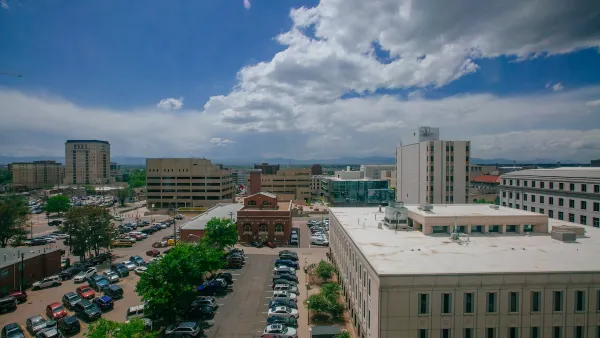
Denver Could Eliminate Parking Requirements
The city could remove parking mandates citywide to reduce the cost of housing construction and ease permitting for new projects.

Colorado Bill Would End Minimum Parking Requirements
Supporters of the bill say eliminating parking mandates would make housing more affordable and reduce carbon emissions.

Planetizen Federal Action Tracker
A weekly monitor of how Trump’s orders and actions are impacting planners and planning in America.

The state-sanctioned urbicide of Austin
People don’t kill cities. Freeways do.

US to reduce Colorado River water deliveries to Mexico
A new Colorado Treaty amendment reduces Mexico’s Colorado River water allocation by 250,000 acre feet.

Colorado’s Largest Data Center Could Rise Next to Homes — Without a Public Hearing
The proposed campus would consume 11 times the power of Denver International Airport; as it has across the country, opposition mounts.

5 New England states march closer to 800 megawatt wind energy project
Securing federal approval for the project may be complicated under the Trump administration, which has historically been hostile towards domestic wind power.

Baltimore to break ground on $50 million Transit Priority Project
The project will bring faster bus trips, safer streets and better bike connections to Baltimore.

FREE Course: Walkable City 1: Why Walkability?
After describing his path towards focusing on walkability as the essence of good planning, Jeff Speck marches through his five principal reasons for making more walkable places.
Reinventing Malls: Planning Alchemy—Turning Gray Fields Into Gold
The course focuses on the opportunities and imperatives that shape reinvention of mall sites.

Eagle County Government
Harvard University Graduate School of Design
Nashville Planning Department
The Architects Foundation
University of Cincinnati Online
The Pocatello Development Authority
The Urban Renewal Agency of the City of Pocatello
Journal of the American Planning Association