The loss of revenue from fare evasion is a drop in the bucket compared to the fiscal cliff facing major U.S. transit agencies.


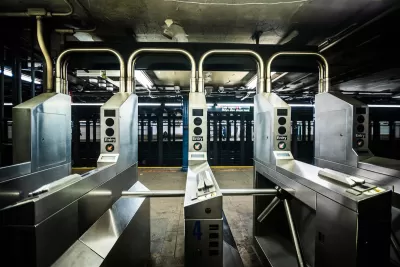
In an opinion piece published in Streetsblog, Sogand Karbalaieali argues that debates over fare evasion on public transit systems largely miss the point.
According to Karbalaieali, the revenue losses caused by people jumping turnstiles or failing to tap their payment cards pale in comparison to “a more significant and fundamental problem:” the massive budget shortfalls faced by many U.S. transit agencies, including the the Washington Metropolitan Area Transit Authority (WMATA) in Karbalaieali’s home region.
While news outlets are preoccupied with fare evasion and WMATA's strategies to combat it, a more significant question emerges: How else can WMATA generate revenue?
Karbalaieali suggests “creative solutions for generating revenue through underutilized parking spaces” by converting WMATA-owned lots to other types of development. The article also blames parking requirements for driving up the cost of housing.
Ultimately, Karbalaieali writes, fare evasion is a distraction from much more critical priorities. “While addressing fare evasion is important, the more pressing urgency lies in achieving our climate goals, promoting healthy lifestyles, fostering sustainable transportation, and building resilient infrastructure.”
FULL STORY: Opinion: Fights Over Fare Evasion Are Missing the Point

Seattle to Reinstate Bus Fare Enforcement
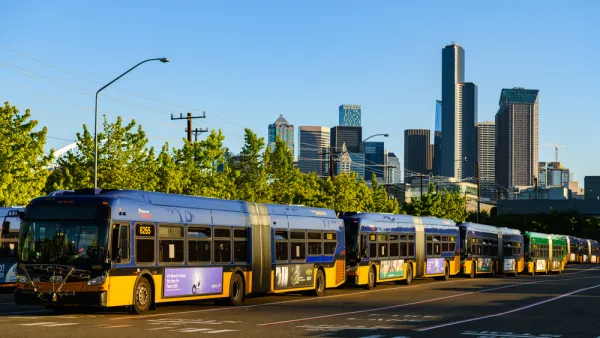
After a COVID-era move to eliminate fare inspections on city buses, King County Metro is reinstating checks for fare evasion.

DC Metro Targets Bus Fare Evasion
The WMATA says roughly 70 percent of riders do not pay fares.
Congressman Proposes Bill to Rename DC Metro “Trump Train”
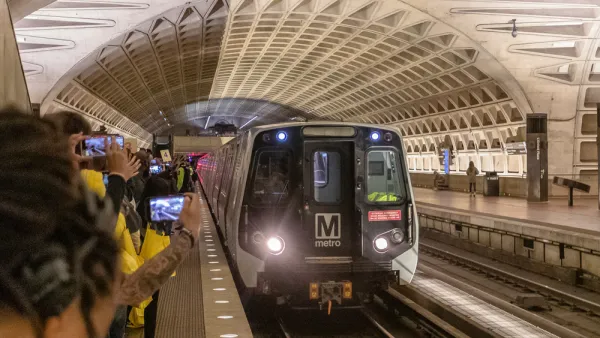
The Make Autorail Great Again Act would withhold federal funding to the system until the Washington Metropolitan Area Transit Authority (WMATA), rebrands as the Washington Metropolitan Authority for Greater Access (WMAGA).

Planetizen Federal Action Tracker
A weekly monitor of how Trump’s orders and actions are impacting planners and planning in America.

The state-sanctioned urbicide of Austin
People don’t kill cities. Freeways do.

US to reduce Colorado River water deliveries to Mexico
A new Colorado Treaty amendment reduces Mexico’s Colorado River water allocation by 250,000 acre feet.

5 New England states march closer to 800 megawatt wind energy project
Securing federal approval for the project may be complicated under the Trump administration, which has historically been hostile towards domestic wind power.

Baltimore to break ground on $50 million Transit Priority Project
The project will bring faster bus trips, safer streets and better bike connections to Baltimore.

Airbnb launches $250 million 'last-dollar financing' housing accelerator, makes first investment in Austin
The company will put $6.4 million towards affordable housing development in Texas’ capital.

FREE Course: Walkable City 1: Why Walkability?
After describing his path towards focusing on walkability as the essence of good planning, Jeff Speck marches through his five principal reasons for making more walkable places.
Reinventing Malls: Planning Alchemy—Turning Gray Fields Into Gold
The course focuses on the opportunities and imperatives that shape reinvention of mall sites.

Eagle County Government
Harvard University Graduate School of Design
Nashville Planning Department
The Architects Foundation
University of Cincinnati Online
The Pocatello Development Authority
The Urban Renewal Agency of the City of Pocatello
Journal of the American Planning Association