A new map highlights prime downtown real estate that could be repurposed for more productive uses.


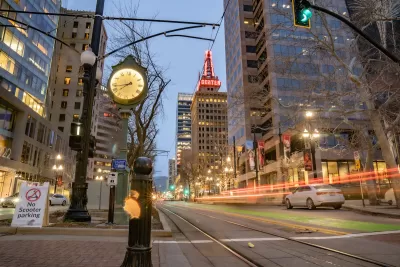
According to an article by Taylor Anderson in Building Salt Lake, almost a third of the Utah capital’s downtown is taken up by parking despite 2021 parking reforms that reduced the number of required parking spots for downtown developments.
“Researchers with the Parking Reform Network studied the area spanning roughly between North Temple and 900 South, 200 East to 500 West and found that 29 percent of the land is dedicated to parking,” Anderson explains.
“The city itself often appears to acknowledge car dominance, approving a nearly 1,000-car parking garage in the Granary District and undertaking several angled parking projects in lieu of cycle tracks, expanded sidewalks or other improvements that would encourage and promote walking and commuting by bike.”
Yet the land, PRN argues, could be more productively used for “parks, retail, housing, universities, daycares, bars, restaurants, churches, offices, assisted living facilities, hospitals, group homes, art galleries, museums, or a combination of it all.”
FULL STORY: Here’s how much of Downtown Salt Lake City is covered in car parking


L.A. Reimagines Parking for New Uses
In famously car-centric Los Angeles, developers and city officials are changing the way they view parking space, opting instead to allocate the space to more effective uses.
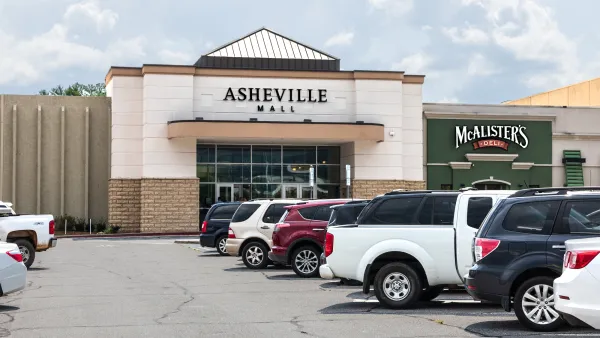
Asheville reconsiders parking minimums as surface parking eats up over a third of downtown real estate
Housing advocates say parking requirements are unnecessary and induce sprawl.
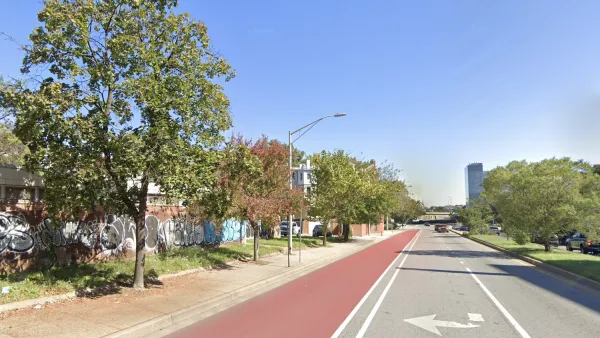
In a twist, Baltimore residents ask for less parking
A grocery store developer is asking to build more off-street parking than the city's new regulations allow, as well as 6 curbside spots that would replace an existing bus lane.

Planetizen Federal Action Tracker
A weekly monitor of how Trump’s orders and actions are impacting planners and planning in America.

The state-sanctioned urbicide of Austin
People don’t kill cities. Freeways do.

US to reduce Colorado River water deliveries to Mexico
A new Colorado Treaty amendment reduces Mexico’s Colorado River water allocation by 250,000 acre feet.

5 New England states march closer to 800 megawatt wind energy project
Securing federal approval for the project may be complicated under the Trump administration, which has historically been hostile towards domestic wind power.

Baltimore to break ground on $50 million Transit Priority Project
The project will bring faster bus trips, safer streets and better bike connections to Baltimore.

Airbnb launches $250 million 'last-dollar financing' housing accelerator, makes first investment in Austin
The company will put $6.4 million towards affordable housing development in Texas’ capital.

FREE Course: Walkable City 1: Why Walkability?
After describing his path towards focusing on walkability as the essence of good planning, Jeff Speck marches through his five principal reasons for making more walkable places.
Reinventing Malls: Planning Alchemy—Turning Gray Fields Into Gold
The course focuses on the opportunities and imperatives that shape reinvention of mall sites.

Eagle County Government
Harvard University Graduate School of Design
Nashville Planning Department
The Architects Foundation
University of Cincinnati Online
The Pocatello Development Authority
The Urban Renewal Agency of the City of Pocatello
Journal of the American Planning Association