The housing supply is starting to more closely match demand.


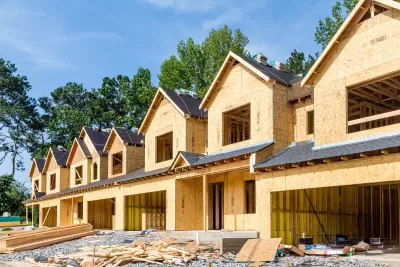
Writing in The Washington Post, Conor Sen describes the current U.S. housing market and what its state means for homebuyers and sellers.
“A lack of supply has stabilized a market where affordability remains challenging. Homeowners with low mortgage rates have chosen not to sell, putting builders of new houses in a stronger position than they had anticipated last autumn when interest rates were surging and the market slowed.”
Accordingly, “Single-family housing starts have risen. Healing supply chains have shortened the time to build homes, meaning the ramp up in construction that’s underway should put more completed homes on the market by the first half of 2024.”
In the multifamily market, a record number of units are under construction. “While the for-sale and for-rent markets aren’t completely fungible, more rental units will give homeowners looking to downsize options.”
Sen concludes that “It’s going to take years to build enough to bring the housing market back into balance, but for the first time in a while there are reasons to think we’re moving in the right direction.”
FULL STORY: The US Housing Drought Is Ending. What Does It Mean for Prices?


Report: How Billionaire Buyers Are Making the Housing Crisis Worse
The financialization of the housing sector is driving up costs for ordinary families and keeping available units off the market.
How ‘Filtering’ Opens Up Affordable Housing
An analysis of 12 U.S. cities found that new market-rate construction often leads to more affordable units becoming available, but the effect varies across housing markets.

U.S. Home Sales to Foreign Buyers Drop by Almost 10 Percent
International purchases of homes on the U.S. housing market slowed in the last year.

Planetizen Federal Action Tracker
A weekly monitor of how Trump’s orders and actions are impacting planners and planning in America.

The state-sanctioned urbicide of Austin
People don’t kill cities. Freeways do.

US to reduce Colorado River water deliveries to Mexico
A new Colorado Treaty amendment reduces Mexico’s Colorado River water allocation by 250,000 acre feet.

5 New England states march closer to 800 megawatt wind energy project
Securing federal approval for the project may be complicated under the Trump administration, which has historically been hostile towards domestic wind power.

Baltimore to break ground on $50 million Transit Priority Project
The project will bring faster bus trips, safer streets and better bike connections to Baltimore.

Airbnb launches $250 million 'last-dollar financing' housing accelerator, makes first investment in Austin
The company will put $6.4 million towards affordable housing development in Texas’ capital.

FREE Course: Walkable City 1: Why Walkability?
After describing his path towards focusing on walkability as the essence of good planning, Jeff Speck marches through his five principal reasons for making more walkable places.
Reinventing Malls: Planning Alchemy—Turning Gray Fields Into Gold
The course focuses on the opportunities and imperatives that shape reinvention of mall sites.

Eagle County Government
Harvard University Graduate School of Design
Nashville Planning Department
The Architects Foundation
University of Cincinnati Online
The Pocatello Development Authority
The Urban Renewal Agency of the City of Pocatello
Journal of the American Planning Association