The desert city faces a growing risk from extreme heat waves and stronger, more unpredictable storms.



The city of Tucson, Arizona announced it will begin implementing its climate action plan, developed in part as a response to more intense heat waves and extreme weather events, according to a piece by Ysabelle Kempe in Smart Cities Dive.
Tucson Mayor Regina Romero said the plan balances short- and long-range planning “to protect residents now while also plugging away at long-term efforts to reduce greenhouse gas emissions and become more resilient to extreme weather events.”
The plan includes establishing cooling centers for residents with limited access to safe, air-conditioned spaces, as well as ‘resilience hubs’ that provide cooling services and are powered by solar energy and batteries to stay operational during power outages. “The city also offers free access to showers, pools, and splash pads.”
“Tucson’s long-term climate plans revolve around decarbonizing the city and planting trees to sequester planet-warming carbon dioxide, Romero said.” The city has also created a stormwater harvesting program to help conserve scarce water resources.
FULL STORY: Tucson, Arizona, gears up climate action as city faces extreme weather

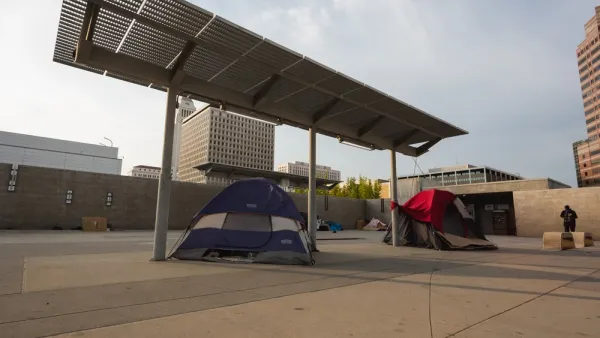
Extreme Heat Responsible for Growing Death Rates Among Unhoused People
Extreme heat events like the ‘heat dome’ that baked Southern California last summer kill a disproportionate number of people experiencing homelessness, who have fewer resources to protect themselves from the scorching sun.
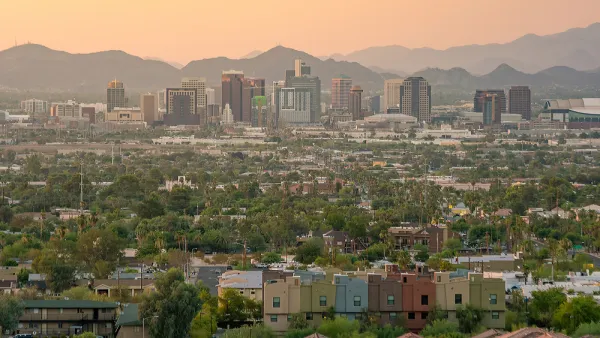
Why It's So Difficult to Measure Heat Deaths
Without a standard for recording and classifying heat-related deaths, experts believe the scale of the problem is much bigger than numbers let on.

LA County Adopts First Heat Action Plan
LA County has adopted its first Heat Action Plan, a long-term, people-centered framework to reduce heat risks, protect public health, and adapt communities, homes, and public spaces to a hotter and more dangerous climate.

The state-sanctioned urbicide of Austin
People don’t kill cities. Freeways do.

US to reduce Colorado River water deliveries to Mexico
A new Colorado Treaty amendment reduces Mexico’s Colorado River water allocation by 250,000 acre feet.

New Jersey’s second-largest city bans standalone data centers
Jersey City will continue to allow co-location facilities, such as those meant for research institutions that store their own data.

Amtrak not solely to blame for New Jersey commuter rail's unreliability, report finds
A new study from the Garden State Initiative found that NJ Transit’s budget grew 20% across a 4 year period, but reliability declined significantly over the same period.

EPA erases limits on planet-warming pollution from power plants
Under Monday’s plan, power plants would still have some limits on how much mercury, arsenic and other contaminants they can emit.

Phoenix announces new on-demand transit service, more frequent RAPID buses
Both new services will launch in October, and are part of Phoenix's Project Effective Access Solutions for Easing Congestion.

FREE Course: Walkable City 1: Why Walkability?
After describing his path towards focusing on walkability as the essence of good planning, Jeff Speck marches through his five principal reasons for making more walkable places.
Reinventing Malls: Planning Alchemy—Turning Gray Fields Into Gold
The course focuses on the opportunities and imperatives that shape reinvention of mall sites.

Eagle County Government
Harvard University Graduate School of Design
Nashville Planning Department
The Architects Foundation
University of Cincinnati Online
The Pocatello Development Authority
The Urban Renewal Agency of the City of Pocatello
Journal of the American Planning Association