Despite efforts on the part of many employers to bring workers back to the office, office buildings are now the most distressed segment of the commercial real estate market.


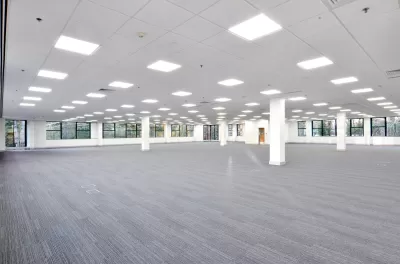
Move over, dead malls: there’s a new troubled kid in town. “According to a new report by MSCI Real Assets analyzing the commercial real-estate sector, around $24.8 billion of office buildings in the U.S. were in financial distress by the end of the second quarter — surpassing both retail (which includes malls) and hotels,” explains Clio Chang in Curbed.
“As remote work continues to force companies to cut back their real-estate footprints, the MSCI report showed that the measure of offices in distress was up by 36 percent since the first quarter. Meanwhile, the country’s overall office-vacancy rate is at 20 percent.”
While housing advocates tout office vacancies as an opportunity to convert these centrally located buildings to housing, it remains to be seen if that idea can overcome the costs and logistical challenges of adaptive reuse.
Read the full story: Offices Are the New Malls

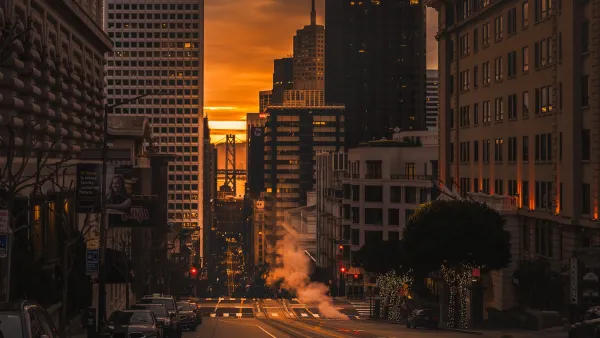
With Zero Office Conversions in Four Years, San Francisco Pins Hopes on New Special Financing District
City leaders hope the new incentive will spur the redevelopment of some of the city’s 30,000 square feet of vacant office space into housing.
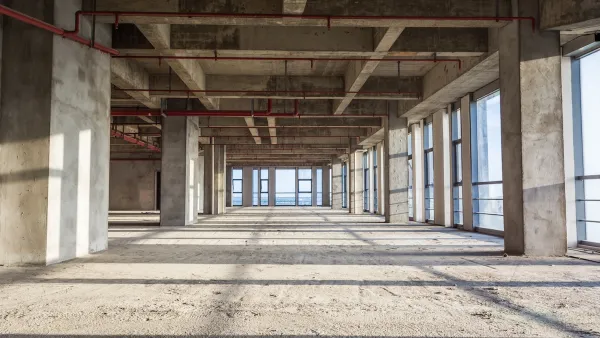
Dorm-Style Housing: A Solution for DC’s Vacant Office Buildings
Adapting office buildings to dorm-style housing with shared spaces is a much more affordable option than repurposing offices into apartments.
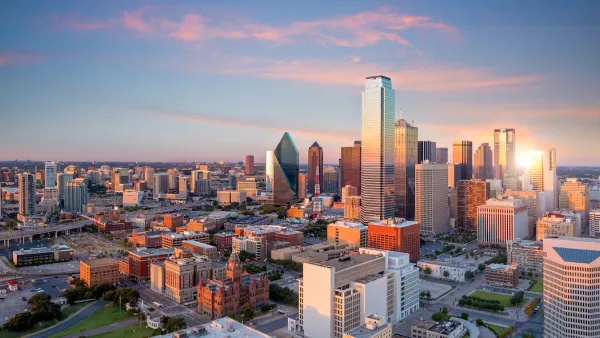
How the Post-Covid Reality Is Reshaping Central Business Districts and Urban Centers
U.S. cities are working to redefine their downtowns in response to the “donut effect:” people and businesses abandoning city centers and flocking to suburban areas and beyond.

Planetizen Federal Action Tracker
A weekly monitor of how Trump’s orders and actions are impacting planners and planning in America.

Northwest rail fans eager for Sept. 30 debut of Amtrak’s Airo fleet
Get ready for that new train smell and more seats. But they won’t go faster or run more frequently on the Cascades route in Washington and Oregon.

Trump is considering data centers on 6 states' public land — some state officials say they had no idea
If the administration approves the proposed projects, data center and data center-related developments will cover 17,600 acres of public land.

After decades of planning, Sacramento gains new light rail station
Trains will arrive every 15 minutes during peak hours and every 30 minutes during non-peak hours.

Massive tunnel-boring machine breaks ground on Gateway Project
The Trump administration revoked funding for the project in October 2025, and then restored it earlier this year.

Airo trainsets begin service on Amtrak Cascades route
The trains feature panoramic windows, complementary wifi and over 300 seats per train set.

FREE Course: Walkable City 1: Why Walkability?
After describing his path towards focusing on walkability as the essence of good planning, Jeff Speck marches through his five principal reasons for making more walkable places.
Reinventing Malls: Planning Alchemy—Turning Gray Fields Into Gold
The course focuses on the opportunities and imperatives that shape reinvention of mall sites.

City of Thousand Oaks
City of Wisconsin Rapids
Harvard University Graduate School of Design
The Architects Foundation
University of Cincinnati Online
The Pocatello Development Authority
The Urban Renewal Agency of the City of Pocatello