More evidence finds that the root cause of homelessness is, ultimately, a lack of sufficient housing.


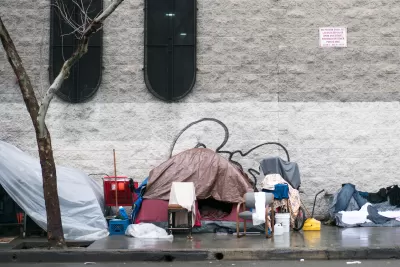
Despite a commonly repeated assumption that unhoused people flock to warm West Coast cities and exacerbate the housing and homelessness crisis there, research from UC San Francisco contradicts these claims, reports Jerusalem Demsas in The Atlantic.
The survey, “the largest representative survey of homeless people in more than 25 years,” found that only 10 percent of respondents became homeless outside of California, and many of them had prior ties to the state that prompted them to return.
Demsas points out that the theory doesn’t stand up to scrutiny: “Moving is expensive. People who lose their housing rarely have the means to transport themselves, their families, their pets, and their belongings across the country.”
The most frequently reported reason for loss of housing was reduction of income due to unemployment or a decrease in work hours. Economic reasons were followed by two social ones: conflict among residents, and concerns about imposing on roommates or family members. These social reasons would, in a more affordable environment, lead simply to a change of address, not homelessness.
Ultimately, Demsas points out, regardless of the services available to unhoused people, “the crisis of homelessness is a crisis of homes.” California and other states with expensive housing have to build their way out of the crisis.
FULL STORY: The Root Cause of the Homelessness Crisis

Local Governments Sue HUD Over Funding Cuts
A new lawsuit alleges that the Trump administration’s revised guidelines for housing and homelessness assistance funds will decimate key programs.

‘Minnesota Nice’ Isn’t so Nice When You Can’t Find a Place to Live
The Economic Development and Housing Challenge Program can help address the scourge of homelessness among Indigenous people.

How Houston Can Be a Model for Housing Reform
The city builds more new housing than almost any other and has dramatically reduced homelessness, yet low-income families struggle to find affordable housing.

Planetizen Federal Action Tracker
A weekly monitor of how Trump’s orders and actions are impacting planners and planning in America.

The state-sanctioned urbicide of Austin
People don’t kill cities. Freeways do.

US to reduce Colorado River water deliveries to Mexico
A new Colorado Treaty amendment reduces Mexico’s Colorado River water allocation by 250,000 acre feet.

5 New England states march closer to 800 megawatt wind energy project
Securing federal approval for the project may be complicated under the Trump administration, which has historically been hostile towards domestic wind power.

Baltimore to break ground on $50 million Transit Priority Project
The project will bring faster bus trips, safer streets and better bike connections to Baltimore.

Airbnb launches $250 million 'last-dollar financing' housing accelerator, makes first investment in Austin
The company will put $6.4 million towards affordable housing development in Texas’ capital.

FREE Course: Walkable City 1: Why Walkability?
After describing his path towards focusing on walkability as the essence of good planning, Jeff Speck marches through his five principal reasons for making more walkable places.
Reinventing Malls: Planning Alchemy—Turning Gray Fields Into Gold
The course focuses on the opportunities and imperatives that shape reinvention of mall sites.

Eagle County Government
Harvard University Graduate School of Design
Nashville Planning Department
The Architects Foundation
University of Cincinnati Online
The Pocatello Development Authority
The Urban Renewal Agency of the City of Pocatello
Journal of the American Planning Association