Thousands of remote workers moved to Tulsa to take advantage of a $10,000 incentive program. The vast majority of them stayed.


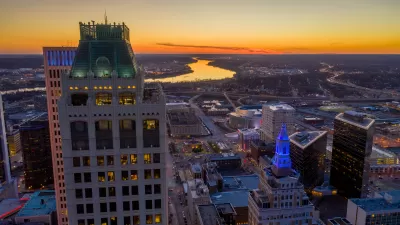
An incentive program that offers remote workers $10,000 to move to Tulsa, Oklahoma is proving remarkably successful as new residents build community and grow to love their new home.
In a piece on Vox, Rani Molla describes how the Tulsa Remote initiative has transformed the city. “The latest Tulsa Remote economic impact report, which the organization conducted itself, found that in 2022, full-year Tulsa Remote members each generated $150,000 in labor income, which includes their salaries plus the estimated income Tulsans got based on their spending. That’s more than 10 times what the George Kaiser Family Foundation, which funds Tulsa Remote and a lot of the city’s other programs and public works, paid out to bring them there.” That’s not including an estimated $2.5 million in added sales tax revenue for the county.
For potential new residents, the money isn’t Tulsa Remote’s only draw: “The program also offered a place where they could find relatively affordable housing, access to free coworking space, and the subsidized opportunity to reimagine their lives anew somewhere else.”
Molla describes the program’s success and the resurgence of many Tulsa neighborhoods, but adds that conservative policies pose a barrier to many young people moving to Oklahoma. Over 2,400 people have participated so far. “Impressively, 90 percent have remained in Tulsa beyond the requisite one-year commitment, and 76 percent of all members have been there since the program launched. People are buying homes, starting families, and getting involved in the community.”
For Tulsa, the key to sustained success will be finding “a way to retain what makes it special while adapting to a new future” by protecting affordable housing and the other amenities that drew people there in the first place.
Read the full story: Tulsa will pay you to live there. And you’ll love it.


Tulsa Paid Remote Workers $10,000 to Move In — Nearly All of Them Stayed
The Tulsa Remote program generated more than $4 in local economic benefits for every dollar spent.
Americans Are Moving, but Staying Close to Home
Despite fears of a mass exodus, most cities are seeing only modest population losses, with the majority of movers staying in the same metro area.
Towns Offering Cash to Lure Remote Workers
Smaller cities are luring newly untethered workers with cash incentives, bikes, and other local perks.

Planetizen Federal Action Tracker
A weekly monitor of how Trump’s orders and actions are impacting planners and planning in America.

California plans to bury El Niño’s downpour
If the state plays its cards right, it may be able to store a billion acre-feet of El Niño’s water in aquifers.

Chicago breaks ground on $3 billion megadevelopment
The new neighborhood, titled Foundry Park, will one day host 3,700 residences.

California High-Speed Rail Authority CEO resigns after $600,000 scandal
Under Ian Choudri, the authority used taxpayer dollars to fund first class flights and trips to nightclubs.

Want to study the Missouri River? Soon, you may need unanimous approval from 10 states
Legislation would require 10 governors’ permission to study or build projects moving water outside the basin.

Desperate measures: Advocates weigh draining Lake Powell to fill Colorado River
Draining the reservoir could reduce evaporation losses by a couple hundred thousand acre-feet.

FREE Course: Walkable City 1: Why Walkability?
After describing his path towards focusing on walkability as the essence of good planning, Jeff Speck marches through his five principal reasons for making more walkable places.
Reinventing Malls: Planning Alchemy—Turning Gray Fields Into Gold
The course focuses on the opportunities and imperatives that shape reinvention of mall sites.

City of Rosemead
Rutgers University, Edward J. Bloustein School of Planning and Public Policy
One Hundred Miles
Hunter College, City University of New York (CUNY)
The Architects Foundation
University of Cincinnati Online
City of Cambridge
Montrose County
The Pocatello Development Authority