An analysis of Connecticut zoning laws finds single-family neighborhoods are associated with higher incomes and whiter populations than the 2 percent of the state that permits multifamily housing.



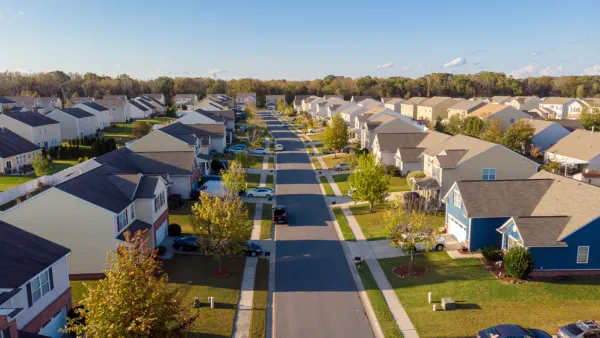
A new study from the Urban Institute adds to the growing body of evidence linking single-family zoning to segregation and exclusion in housing. Jared Brey outlines the results in Governing, noting that the study used the Connecticut Zoning Atlas to analyze zoning laws in Connecticut, where 62 percent of land is designated for single-family housing only. Meanwhile, building housing with more than two units is only permitted on 2 percent of the state’s land.
According to the study authors, “Single-family areas are associated with higher home values, higher median incomes and greater proportions of white people than other areas, according to the report.” The report concludes that “strict zoning regulations … are associated with inadequate access to affordable housing and with the segregation of people by income, race and ethnicity.”
As more and more data bears out the impact of single-family zoning, researchers hope “It could add understanding into hot debates about how zoning is linked with affordability and exclusion, but could also help policymakers make decisions about things like small-business development and climate adaptation.”
FULL STORY: Single-Family Zoning Linked With Income and Race Segregation

The Social and Economic Impacts of Exclusionary Zoning
A new book further reveals the inequities perpetuated by restrictive zoning policies.

Biden Wants to Incentivize Inclusionary Zoning
Traditionally the purview of local governments, single-family zoning has come under fire as ‘exclusionary.’ Now, the federal government wants to encourage cities to loosen restrictions.
Seattle City Council Changes Single-Family Zoning Name, But Not Substance
The name change to "neighborhood residential zoning" is meant to more accurately reflect the city's diverse neighborhoods, but the new legislation does not change permitted uses.

Planetizen Federal Action Tracker
A weekly monitor of how Trump’s orders and actions are impacting planners and planning in America.

The state-sanctioned urbicide of Austin
People don’t kill cities. Freeways do.

US to reduce Colorado River water deliveries to Mexico
A new Colorado Treaty amendment reduces Mexico’s Colorado River water allocation by 250,000 acre feet.

Mamdani overhauls NYC's Vision Zero plan with 100 new policy goals
The overhaul aims to reduce traffic deaths and make streets safer for pedestrians, cyclists and drivers through lower speed limits, new safety infrastructure and more.

Amtrak not solely to blame for New Jersey commuter rail's unreliability, report finds
A new study from the Garden State Initiative found that NJ Transit’s budget grew 20% across a 4 year period, but reliability declined significantly over the same period.

EPA erases limits on planet-warming pollution from power plants
Under Monday’s plan, power plants would still have some limits on how much mercury, arsenic and other contaminants they can emit.

FREE Course: Walkable City 1: Why Walkability?
After describing his path towards focusing on walkability as the essence of good planning, Jeff Speck marches through his five principal reasons for making more walkable places.
Reinventing Malls: Planning Alchemy—Turning Gray Fields Into Gold
The course focuses on the opportunities and imperatives that shape reinvention of mall sites.

Eagle County Government
Harvard University Graduate School of Design
Nashville Planning Department
The Architects Foundation
University of Cincinnati Online
The Pocatello Development Authority
The Urban Renewal Agency of the City of Pocatello
Journal of the American Planning Association