U.S. public transit agencies haven’t yet seen the bottom of a pandemic-induced fiscal crisis.


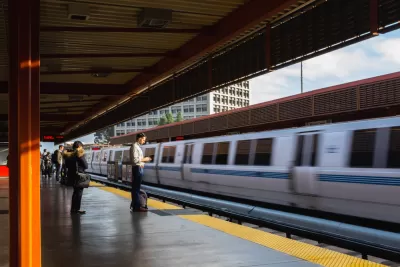
S&P Global Ratings dropped Bay Area Rapid Transit’s (BART) credit rating two notches last week. The new credit rating of A+ will make it more expensive for BART to borrow money—all while facing an increasingly dire fiscal cliff.
An article by Skylar Woodhouse for Bloomberg explains that BART might not be the only transit agency facing credit rating adjustments. BART is” one of several public-transit agencies put on notice by S&P, including the San Francisco Municipal Transportation Agency and DC’s Washington Metropolitan Area Transit Authority,” according to Woodhouse.
“New debt sales by public transit systems are already depressed. Municipal-bond issuance for mass transportation totaled about $4.3 billion this year, down about 44% from the same period in 2022 and the lowest since 2018, according to Refinitiv data as of May 25,” adds Woodhouse.
The fiscal plight of BART and public transit more generally was also the subject of an on-air segment on WBUR’s Here and Now.
[Update: news broke late last night that California Governor Gavin Newsom and Democratic legislative leaders had stuck a deal to prevent service cuts on BART and other transit systems in the state. More coverage of that news to come.]
FULL STORY: US Public Transit Systems Face Credit Downgrades as Riders Stay Away

Breaking: Budget Deal Saves California’s Transit Systems, For Now
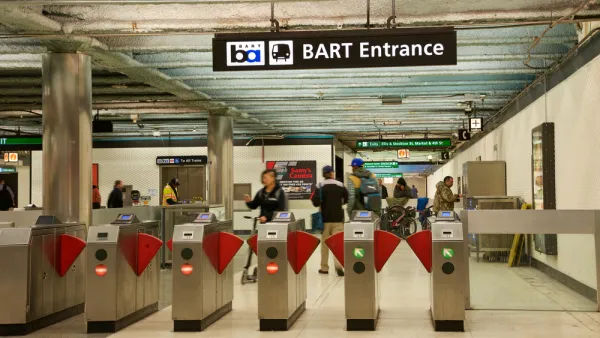
California state political leaders last night struck a deal to keep the state’s transit systems afloat as ridership continues to recover and federal pandemic stimulus money runs dry.
Opinion: Free Fares Won’t Solve the Transit Crisis
“The biggest US transit agencies must be allowed to simply focus on delivering high-quality service. There is no Plan B.”

The Deepening Transit Crisis: L.A. Times Reports Drug Use on Transit
An article by the L.A. Times earlier this week has raised the temperature of the debate about drug users and crime on rail transit. Concerns about public safety on transit are a common symptom of post-pandemic transit around the country.

Planetizen Federal Action Tracker
A weekly monitor of how Trump’s orders and actions are impacting planners and planning in America.

The state-sanctioned urbicide of Austin
People don’t kill cities. Freeways do.

US to reduce Colorado River water deliveries to Mexico
A new Colorado Treaty amendment reduces Mexico’s Colorado River water allocation by 250,000 acre feet.

5 New England states march closer to 800 megawatt wind energy project
Securing federal approval for the project may be complicated under the Trump administration, which has historically been hostile towards domestic wind power.

Baltimore to break ground on $50 million Transit Priority Project
The project will bring faster bus trips, safer streets and better bike connections to Baltimore.

Airbnb launches $250 million 'last-dollar financing' housing accelerator, makes first investment in Austin
The company will put $6.4 million towards affordable housing development in Texas’ capital.

FREE Course: Walkable City 1: Why Walkability?
After describing his path towards focusing on walkability as the essence of good planning, Jeff Speck marches through his five principal reasons for making more walkable places.
Reinventing Malls: Planning Alchemy—Turning Gray Fields Into Gold
The course focuses on the opportunities and imperatives that shape reinvention of mall sites.

Eagle County Government
Harvard University Graduate School of Design
Nashville Planning Department
The Architects Foundation
University of Cincinnati Online
The Pocatello Development Authority
The Urban Renewal Agency of the City of Pocatello
Journal of the American Planning Association