The city can no longer require developers to pay for or build sidewalks.


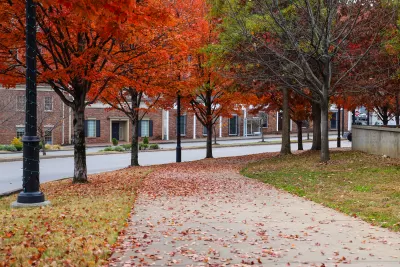
The Sixth Circuit court ruled against the city of Nashville’s effort to require developers to build or pay for new sidewalks on their projects or pay into a city sidewalk fund, reports Gabriel Tynes in Courthouse News. “On Wednesday, the Sixth Circuit ruled the city’s 2019 sidewalk ordinance leaves property owners vulnerable to unconstitutional takings under the Fifth Amendment and remanded the case for the district court to decide the appropriate remedy.”
According to Judge Eric E. Murphy, “In short, the relevant constitutional provisions on their face offer no plausible path for Nashville’s request that we adopt different takings rules for conditions imposed by different branches of government.”
The decision deals a blow to accessibility and safe streets advocates. As Tynes points out, “Nashville is among the deadliest cities in the nation for pedestrians. Despite increasing its annual capital spending on sidewalks to $30 million, the city estimates it would take 20 years to increase its sidewalk infrastructure by just 71 miles in critical areas, according to the ruling.”
Read the full story: Nashville loses battle over sidewalk ordinance at Sixth Circuit


West Hollywood makes delivery robots paying road users
Cities are looking for creative ways to regulate food delivery robots, in some cases putting them to work gathering data for ADA compliance or collecting revenue for sidewalk maintenance.
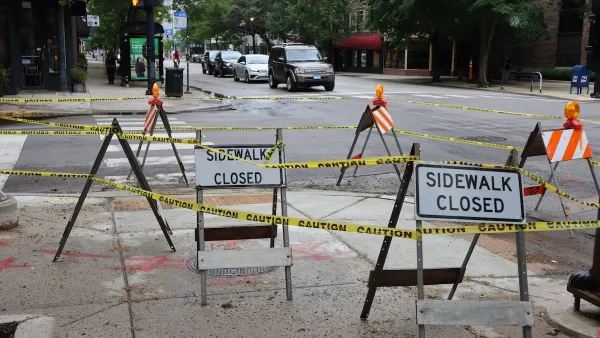
Chicago Residents Sue City Over Inaccessible Sidewalks
The suit alleges the city has failed to create a “coordinated, proactive system” for complying with ADA and ensuring accessibility on the city’s sidewalks and crosswalks.
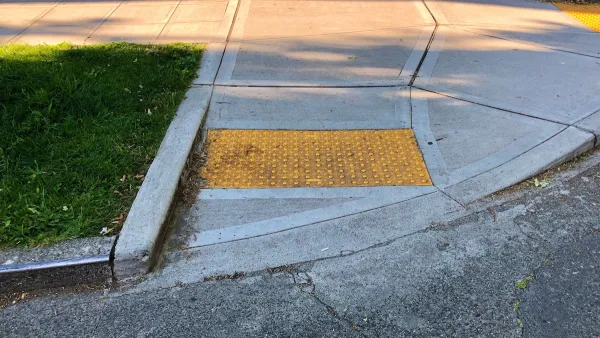
Baltimore Ordered to Improve Sidewalk Accessibility
The city is one of many to face lawsuits for failing to comply with the Americans with Disabilities Act.

Planetizen Federal Action Tracker
A weekly monitor of how Trump’s orders and actions are impacting planners and planning in America.

The state-sanctioned urbicide of Austin
People don’t kill cities. Freeways do.

US to reduce Colorado River water deliveries to Mexico
A new Colorado Treaty amendment reduces Mexico’s Colorado River water allocation by 250,000 acre feet.

Nation's most wind-powered state turns to coal as data centers increase energy demand
For the first time in decades, Iowa has increased its generation of coal power.

NYC cools commuters with city's first rain garden above a bus stop
New York City officials say the plants in the rain garden can absorb 16 gallons of rainwater during heavy storms.

Brightline West’s future may rely on $6 billion federal loan
The company has until Nov. 2 to make a $400 million equity investment into its proposed high-speed rail line.

FREE Course: Walkable City 1: Why Walkability?
After describing his path towards focusing on walkability as the essence of good planning, Jeff Speck marches through his five principal reasons for making more walkable places.
Reinventing Malls: Planning Alchemy—Turning Gray Fields Into Gold
The course focuses on the opportunities and imperatives that shape reinvention of mall sites.

Greater Baltimore Committee
Eagle County Government
Harvard University Graduate School of Design
The Architects Foundation
University of Cincinnati Online
The Pocatello Development Authority
The Urban Renewal Agency of the City of Pocatello
Journal of the American Planning Association