One quick way to build sprawl.


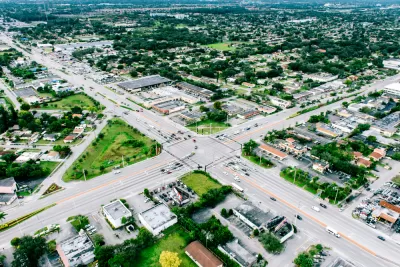
The Florida State Legislature is responding to ongoing growth pressure by making it easier to build sprawling development.
HB 439, under consideration by the Florida Legislature would change the legal definition of “sprawl,” along with other key terms of land use regulation, such as “intensity” and “density.”
According to an article by Ben Abramson for Strong Towns, the changes are designed to “remove existing guardrails on a certain type of development in Florida.”
So, for example, the definition of sprawl would be changed from ‘a development pattern characterized by low-density, automobile-dependent development with either a single use or multiple uses that are not functionally related, requiring the extension of public facilities and services in an inefficient manner’ to ‘an unplanned development pattern.’
“The definition of ‘intensity’ would omit existing language that considers ‘the measurement of the use of or demand on natural resources, and the measurement of the use of or demand on facilities and services,’ and henceforth be ‘expressed in square feet per unit of land,’” according to Abramson’s explanation. “A redefining of ‘density’ would replace references to people, residents, or employees with ‘dwelling unit per acre.’”
Strong Towns’ Director of Community Action Edward Erfurt is quoted in the article saying that the legislation ‘knocks the wind out of the definition by leveling the playing field for all development to be equal.’
FULL STORY: Don’t Like Sprawl? Just Call It Something Else.

Different Approaches to Fast Growth in Idaho's Treasure Valley
Three cities on the periphery of the fast-growing Treasure Valley showcase different approaches to a sudden influx of newcomers.
Cascadia Expects Millions of New Residents. Should it Build New Cities or New Density?
A recent report calls for the region stretching from Oregon to British Columbia to think big about accommodating expected population growth. The report's recommendation to build four new, large cities isn't universally accepted, however.
Texas Could Have the Nation’s 3 Largest Cities by 2100. Are They Ready to Embrace Density?
Houston, Dallas, and Austin are growing fast. The old sprawl model is no longer sustainable.

Planetizen Federal Action Tracker
A weekly monitor of how Trump’s orders and actions are impacting planners and planning in America.

The state-sanctioned urbicide of Austin
People don’t kill cities. Freeways do.

US to reduce Colorado River water deliveries to Mexico
A new Colorado Treaty amendment reduces Mexico’s Colorado River water allocation by 250,000 acre feet.

Baltimore to break ground on $50 million Transit Priority Project
The project will bring faster bus trips, safer streets and better bike connections to Baltimore.

Airbnb launches $250 million 'last-dollar financing' housing accelerator, makes first investment in Austin
The company will put $6.4 million towards affordable housing development in Texas’ capital.

Guerilla urbanists are building DIY bus stop benches in Chicago
A before-and-after of one of the bus stops with a new bench. The new benches are not officially sanctioned or permitted, but the residents who placed them hope they will be the start of a network of DIY benches across the city.

FREE Course: Walkable City 1: Why Walkability?
After describing his path towards focusing on walkability as the essence of good planning, Jeff Speck marches through his five principal reasons for making more walkable places.
Reinventing Malls: Planning Alchemy—Turning Gray Fields Into Gold
The course focuses on the opportunities and imperatives that shape reinvention of mall sites.

Eagle County Government
Harvard University Graduate School of Design
Nashville Planning Department
The Architects Foundation
University of Cincinnati Online
The Pocatello Development Authority
The Urban Renewal Agency of the City of Pocatello
Journal of the American Planning Association