The planet is not doing enough to reduce greenhouse gas emissions, according to a recent report published by the United Nations’ International Panel on Climate Change (IPCC).


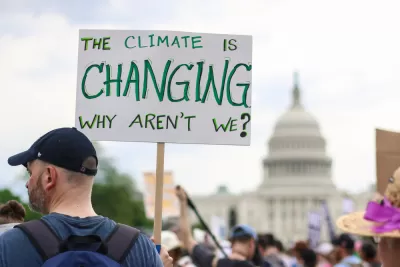
The International Panel on Climate Change (IPCC) this week released a synthesis report on the 6th Assessment Report, published in 2021. The 6th Assessment set very real deadlines for climate action to prevent 1.5 degrees Celsius of warming by the end of the century.
The new Synthesis Report assessment finds that little progress is being made toward the emission reductions necessary to avoid the worst outcomes of climate change, and time is running out. Moreover, the report explains that although humans created this problem for the planet, they can also still fix it. U.N. Secretary General António Guterres has been quoted in the media describing the report as a “how-to guide to defuse the climate time-bomb.”
“Emissions from burning fossil fuels and other planet-warming activities have increased global average temperatures by at least 1.1 degrees Celsius (2 degrees Fahrenheit) since the start of the industrial era. The amount of carbon dioxide in the atmosphere hasn’t been this high since archaic humans carved the first stone tools,” explains Sarah Kaplan in an article for the Washington Post in an article that describes the unequal burdens facing countries as a result of climate change.
“In 2018, the IPCC found that a 1.5C world is overwhelmingly safer than one that is 2 degrees Celsius (3.6 degrees Fahrenheit) warmer than the preindustrial era,” adds Kaplan. “Five years later, humanity isn’t anywhere close to reaching either goal. Unless nations adopt new environmental policies — and follow through on the ones already in place — global average temperatures could warm by 3.2 degrees Celsius (5.8 degrees Fahrenheit) by the end of the century, the synthesis report says.”
“Yet the report also details how public officials, private investors and other powerful groups have repeatedly failed to heed those warnings,” according to Kaplan. Additional news coverage and commentary on the Synthesis Report is available from Vox and Quartz.
The report assumes that humans are responsible for climate change as an ‘unassailable fact,’ citing widespread consensus and ‘high confidence’ among the scientific community.
Read the full story: AR6 Synthesis Report: Climate Change 2023


Time Is Running Out to Limit the Damage of Climate Change, According to Historic UN Report
The role of humans in creating immense risks from extreme weather, drought, sea-level rise, and bio-diversity loss is "unequivocal," according to a landmark study by the International Panel on Climate Change (IPCC).
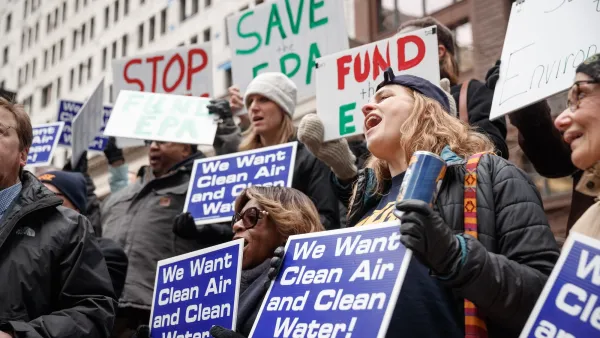
EPA Guts Emissions Regulations
The agency is eliminating the endangerment finding that underpins the agency’s authority to regulate greenhouse gas emissions.
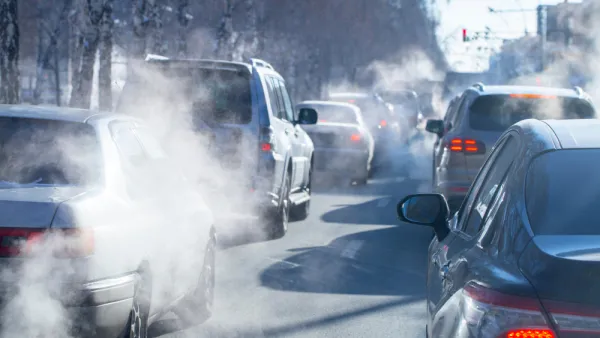
House Moves to Rescind California’s Emissions Standards
The state has been allowed to set its own emissions goals, including a mandate to transition to electric or zero-emissions vehicles by 2035.

Planetizen Federal Action Tracker
A weekly monitor of how Trump’s orders and actions are impacting planners and planning in America.

California plans to bury El Niño’s downpour
If the state plays its cards right, it may be able to store a billion acre-feet of El Niño’s water in aquifers.

Chicago breaks ground on $3 billion megadevelopment
The new neighborhood, titled Foundry Park, will one day host 3,700 residences.

Satanic Place Names
From streams and lakes to valleys and canyons, I mapped more than 1,000 places named after the Devil.

California High-Speed Rail Authority CEO resigns after $600,000 scandal
Under Ian Choudri, the authority used taxpayer dollars to fund first class flights and trips to nightclubs.

Want to study the Missouri River? Soon, you may need unanimous approval from 10 states
Legislation would require 10 governors’ permission to study or build projects moving water outside the basin.

FREE Course: Walkable City 1: Why Walkability?
After describing his path towards focusing on walkability as the essence of good planning, Jeff Speck marches through his five principal reasons for making more walkable places.
Reinventing Malls: Planning Alchemy—Turning Gray Fields Into Gold
The course focuses on the opportunities and imperatives that shape reinvention of mall sites.

City of Rosemead
Rutgers University, Edward J. Bloustein School of Planning and Public Policy
One Hundred Miles
Hunter College, City University of New York (CUNY)
The Architects Foundation
University of Cincinnati Online
City of Cambridge
Montrose County
The Pocatello Development Authority