Migratory birds are often lured away from their normal paths by the bright lights of cities, with deadly results.


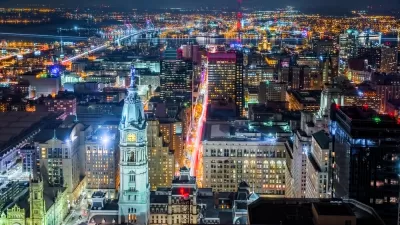
Roughly 100 Philadelphia buildings have signed on to a ‘lights out pledge’ aimed at preventing migratory birds from deviating from their migration paths and striking buildings, reports Bridget Reed Morawski in Next City. The Lights Out Philly program was developed over decades by Keith Russell and Audubon Mid-Atlantic, who tried to draw attention to the issue but had little luck until a massively publicized bird strike event in 2020.
“While light pollution initially draws birds into the city, it’s the combined effect of an abundance of lights and the resulting glare of windows and other reflective glasses that makes it hard to safely navigate — if those surfaces haven’t been modified with bird deterrent films or treatments, that is,” the article explains. “To help reduce migratory bird strikes and deaths, programs in Pittsburgh, Houston and Greensboro, N.C., and other cities across the country have focused on light pollution to encourage residents, businesses and municipalities to shut off their lights during late-night hours during typical spring and fall migration periods.”
These programs seem to have a powerful effect. “According to a 2021 study published in the Proceedings of the National Academy of Sciences, “decreasing lighted window area [to minimum levels historically recorded] could reduce bird mortality by ∼60%” at a large Chicago building.”
Read the full story: How Mass Bird Death In Philadelphia Catalyzed A Local Lights-out Program

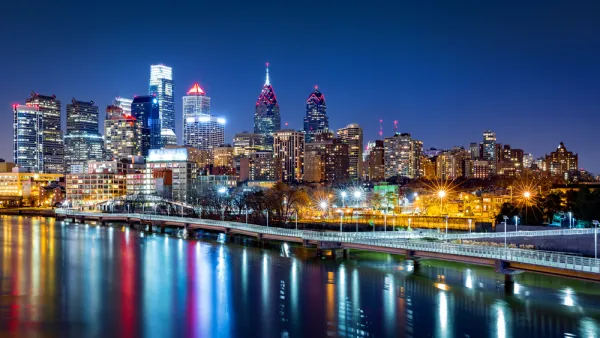
'Lights Out Philly' Initiative Will Save Birds From Building Collisions
More than 15 years of advocacy, and one particularly galvanizing bird kill event, have created the momentum necessary for widespread adoption of the Lights Out Philly initiative.
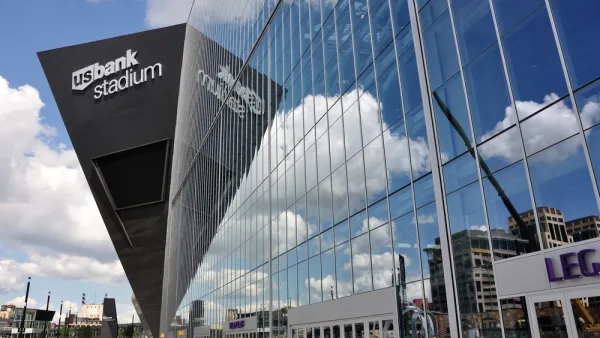
U.S. Bank Stadium: Home to Super Bowl LII and a Death Trap for Migratory Birds
This isn't a joke about the Philadelphia Eagles. This story is about the deadly consequences of planning and architecture decisions.

Galveston Building Causes Bird Massacre
Galveston, Texas stands on the Gulf of Mexico and sits on the path of a number of bird migrations. 395 of those birds were killed Wednesday night striking a single building in the city's downtown.

Planetizen Federal Action Tracker
A weekly monitor of how Trump’s orders and actions are impacting planners and planning in America.

The state-sanctioned urbicide of Austin
People don’t kill cities. Freeways do.

US to reduce Colorado River water deliveries to Mexico
A new Colorado Treaty amendment reduces Mexico’s Colorado River water allocation by 250,000 acre feet.

Nation's most wind-powered state turns to coal as data centers increase energy demand
For the first time in decades, Iowa has increased its generation of coal power.

NYC cools commuters with city's first rain garden above a bus stop
New York City officials say the plants in the rain garden can absorb 16 gallons of rainwater during heavy storms.

Brightline West’s future may rely on $6 billion federal loan
The company has until Nov. 2 to make a $400 million equity investment into its proposed high-speed rail line.

FREE Course: Walkable City 1: Why Walkability?
After describing his path towards focusing on walkability as the essence of good planning, Jeff Speck marches through his five principal reasons for making more walkable places.
Reinventing Malls: Planning Alchemy—Turning Gray Fields Into Gold
The course focuses on the opportunities and imperatives that shape reinvention of mall sites.

Greater Baltimore Committee
Eagle County Government
Harvard University Graduate School of Design
The Architects Foundation
University of Cincinnati Online
The Pocatello Development Authority
The Urban Renewal Agency of the City of Pocatello
Journal of the American Planning Association