The bill would have eliminated some parking requirements, legalized more types of affordable housing, and promoted increased housing production.


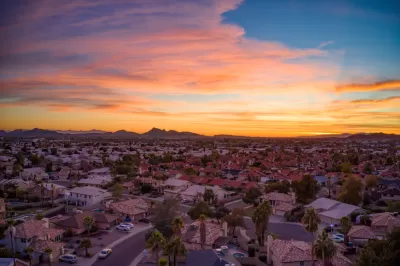
A bill that aimed to boost housing production by loosening zoning regulations did not pass out of the Arizona Senate, reports Kevin Reagan for 12News, giving in to pressure from local leaders. “Many cities publicly opposed SB 1117 because they believed the legislation would have taken away their ability to make important zoning decisions.”
In an opinion piece in The Independent, the bill’s sponsor, Sen. Steve Kaiser, explained that the bill would only apply to cities of over 25,000 and would not “eliminate single-family zoning,” a commonly cited fear during zoning reform debates. Kaiser argues that the bill “would make it possible to accomplish the necessity laid out by the Arizona Department of Housing: We must build 270,000 new homes to repair the massive shortfall currently being experienced in our housing market.” According to Kaiser, it would bring down rent costs and put homeownership within reach for more Arizonans. The bill proposed eliminating off-street parking requirements, permitting small-lot homebuilding, and streamlining development by eliminating municipal design review panels, and legalizing accessory dwelling units (ADUs).
Reagan writes that “Kaiser, a Republican representing District 2, said Monday he'll continue working on finding solutions to fix the housing crisis.”
Read the full story: Arizona Senate rejects 'affordable housing' bill
‘Montana Miracle:’ The State Actually Succeeding at Housing Reform
A series of ambitious zoning reforms is having a significant impact on the state’s housing supply.

Pittsburgh Mayor Proposes Zoning Changes to Curb Housing Shortage
The mayor’s plan includes legalizing ADUs in single-family neighborhoods, eliminating parking requirements, and adding new affordability requirements to buildings with over 20 units.

Arizona Legalizes ADUs and Higher Downtown Density Statewide
Two new laws require cities to permit ‘missing middle housing’ near city centers and ADUs on all single-family lots.

Planetizen Federal Action Tracker
A weekly monitor of how Trump’s orders and actions are impacting planners and planning in America.

California plans to bury El Niño’s downpour
If the state plays its cards right, it may be able to store a billion acre-feet of El Niño’s water in aquifers.

Desperate measures: Advocates weigh draining Lake Powell to fill Colorado River
Draining the reservoir could reduce evaporation losses by a couple hundred thousand acre-feet.

In Texas, data centers are swallowing promised parkland
Residents who moved to Taylor, Texas for a rural community now have to contend with three data centers in their backyard.

How a Chicago-sized wind farm beat the odds and powered on
The project spanned five presidential administrations and a standoff with a U.S. military base.

MTA gives itself 30 days to transform pit into basketball court
The site has been under construction since 2022; the city originally estimated it would finish the court in 2024.

FREE Course: Walkable City 1: Why Walkability?
After describing his path towards focusing on walkability as the essence of good planning, Jeff Speck marches through his five principal reasons for making more walkable places.
Reinventing Malls: Planning Alchemy—Turning Gray Fields Into Gold
The course focuses on the opportunities and imperatives that shape reinvention of mall sites.

City of Rosemead
Rutgers University, Edward J. Bloustein School of Planning and Public Policy
One Hundred Miles
Hunter College, City University of New York (CUNY)
The Architects Foundation
University of Cincinnati Online
City of Cambridge
Montrose County
The Pocatello Development Authority