Pre-pandemic housing crisis, meet the post-pandemic office vacancy crisis.


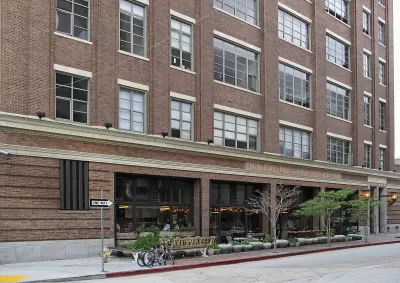
The opportunity for adaptive reuse to overhaul downtowns and commercial corridors for a post-pandemic future by converting vacant office and commercial uses to sorely needed housing is well documented—and communities have taken notice. From Chattanooga to San Francisco to D.C. to San Antonio to Maine to Philadelphia and Pittsburgh, adaptive reuse is more popular than ever.
But, experts warn, it won’t be that easy to convert every vacant office building into housing. A paywalled article by Michelle Chang for Quartz is the latest to explain why adaptive reuse isn’t a mutually beneficial silver bullet for the post-pandemic recovery and the pre-and-post-pandemic housing affordable crisis.
Despite picking up the adaptive reuse pace considerably, the net result still isn’t much compared to the scale of the problem. “So while the number of office-to-apartment conversions in the US is expected to more than double, from 11 this year to 34 in 2023, according to CBRE, that’s a tiny portion of the overall office market, which includes both large office towers and smaller developments. The 89 total housing conversions Morin’s company has identified since 2016 amount to fewer than 15,000 units,” writes Chang.
As it tuns out, office-to-residential conversions are quite expensive, which makes these projects cost prohibitive in many cases and also ensures that completed projects are only available at the high of the market—where there is considerably less demand than at lower ends of the market.
“Then there’s just the very act of turning large office floors into multiple livable spaces. Each apartment unit needs windows and light (not to mention plumbing) to turn these buildings into desirable places to live, forcing developers to gut the inside of massive office buildings,” writes Chang.
Chang also notes that so far government incentives for adaptive reuse are helping build momentum for the cause. “For example, office-to-residential projects are moving ahead in so-called opportunity zones, where investors can receive tax benefits. In some places, other tax credits, such as historical preservation tax credits or national tax credits, also help developers profitably turn offices into apartments.” More incentives that similarly lower the price of these conversions could continue to build on the momentum of early efforts, according to the article.
FULL STORY: Why it’s so hard to convert offices into housing


With Zero Office Conversions in Four Years, San Francisco Pins Hopes on New Special Financing District
City leaders hope the new incentive will spur the redevelopment of some of the city’s 30,000 square feet of vacant office space into housing.
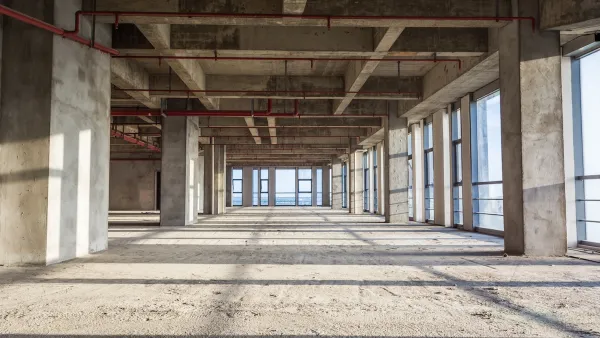
Dorm-Style Housing: A Solution for DC’s Vacant Office Buildings
Adapting office buildings to dorm-style housing with shared spaces is a much more affordable option than repurposing offices into apartments.
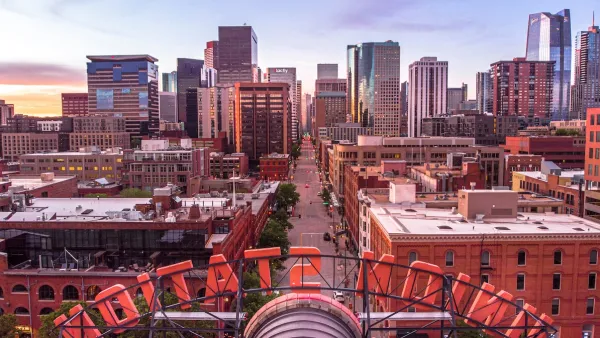
Denver Voters Approve Downtown Revitalization Bonds
The city wants to bring new projects and residents to the downtown core, where 13 million feet of vacant office and retail space await new tenants.

Planetizen Federal Action Tracker
A weekly monitor of how Trump’s orders and actions are impacting planners and planning in America.

The state-sanctioned urbicide of Austin
People don’t kill cities. Freeways do.

US to reduce Colorado River water deliveries to Mexico
A new Colorado Treaty amendment reduces Mexico’s Colorado River water allocation by 250,000 acre feet.

5 New England states march closer to 800 megawatt wind energy project
Securing federal approval for the project may be complicated under the Trump administration, which has historically been hostile towards domestic wind power.

Baltimore to break ground on $50 million Transit Priority Project
The project will bring faster bus trips, safer streets and better bike connections to Baltimore.

Airbnb launches $250 million 'last-dollar financing' housing accelerator, makes first investment in Austin
The company will put $6.4 million towards affordable housing development in Texas’ capital.

FREE Course: Walkable City 1: Why Walkability?
After describing his path towards focusing on walkability as the essence of good planning, Jeff Speck marches through his five principal reasons for making more walkable places.
Reinventing Malls: Planning Alchemy—Turning Gray Fields Into Gold
The course focuses on the opportunities and imperatives that shape reinvention of mall sites.


Eagle County Government
Harvard University Graduate School of Design
Nashville Planning Department
The Architects Foundation
University of Cincinnati Online
The Pocatello Development Authority
The Urban Renewal Agency of the City of Pocatello
Journal of the American Planning Association