The MTA announced plans for new or improved elevators at almost two dozen stations as part of its pledge to make more of its stations fully accessible.


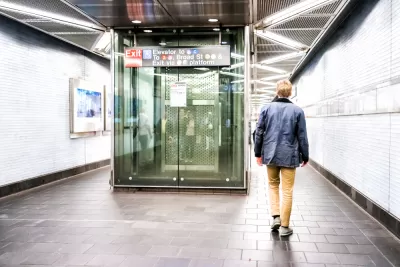
New York’s Metropolitan Transportation Authority (MTA) announced plans to improve accessibility by installing or replacing elevators at 23 stations, acting on its pledge earlier this year to make 95 percent of its stations fully accessible by 2055 in the wake of multiple lawsuits.
As Audrey Wachs reports in The Architect’s Newspaper, “Varied station designs across the aging system make upgrades challenging, but advocates have long contended that the MTA can and should be doing more to improve accessibility: The city has one of the lowest percentages of accessible stations of any major transit system worldwide.”
The agency is entering into a public-private partnership, known as P3, to fund the work on eight stations. “Under the P3 model, the developer will partially finance the project, with equity repaid only if the elevators and other improvements are built and maintained to the MTA’s standards.”
As advocates repeatedly point out, “Accessible transit doesn’t just benefit people who use mobility aids: they also benefits seniors, caregivers lugging strollers—there are 553,000 young children in the city—visitors with heavy suitcases, and people who are just plain tired.” Moreover, accessibility includes more than just elevators and ramps. One lawsuit filed against the MTA calls on the agency to close the vertical and horizontal gaps that can pose a danger to people with mobility or visual impairments.
FULL STORY: MTA announces much-needed elevator upgrades at multiple subway and train stations

New York Must Make Almost All Subway Stations Accessible by 2055, Judge Rules
Another recent ruling is forcing the agency to accelerate its efforts to make all New York subway stations accessible to people with disabilities and mobility issues.
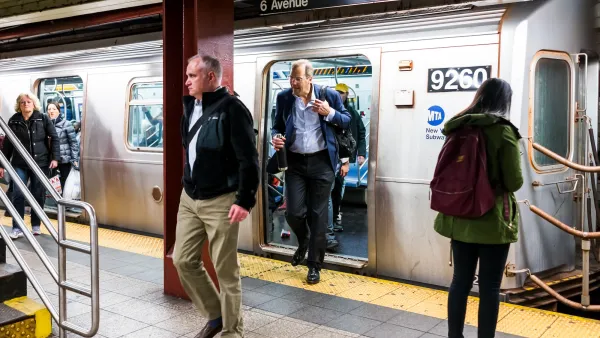
NYC to Upgrade 1/3 of its Subway Car Fleet
The MTA is seeking proposals for up to 2,390 new subway cars to upgrade its aging fleet.
Report: NYC Transit Accessibility Depends on Congestion Pricing Revenue
The ability of the MTA to complete its accessibility upgrades relies on funding from the upcoming congestion pricing program.

The state-sanctioned urbicide of Austin
People don’t kill cities. Freeways do.

US to reduce Colorado River water deliveries to Mexico
A new Colorado Treaty amendment reduces Mexico’s Colorado River water allocation by 250,000 acre feet.

New Jersey’s second-largest city bans standalone data centers
Jersey City will continue to allow co-location facilities, such as those meant for research institutions that store their own data.

Amtrak not solely to blame for New Jersey commuter rail's unreliability, report finds
A new study from the Garden State Initiative found that NJ Transit’s budget grew 20% across a 4 year period, but reliability declined significantly over the same period.

EPA erases limits on planet-warming pollution from power plants
Under Monday’s plan, power plants would still have some limits on how much mercury, arsenic and other contaminants they can emit.

Phoenix announces new on-demand transit service, more frequent RAPID buses
Both new services will launch in October, and are part of Phoenix's Project Effective Access Solutions for Easing Congestion.

FREE Course: Walkable City 1: Why Walkability?
After describing his path towards focusing on walkability as the essence of good planning, Jeff Speck marches through his five principal reasons for making more walkable places.
Reinventing Malls: Planning Alchemy—Turning Gray Fields Into Gold
The course focuses on the opportunities and imperatives that shape reinvention of mall sites.

Eagle County Government
Harvard University Graduate School of Design
Nashville Planning Department
The Architects Foundation
University of Cincinnati Online
The Pocatello Development Authority
The Urban Renewal Agency of the City of Pocatello
Journal of the American Planning Association