The city expanded the areas where homeowners can build ADUs in an effort to boost housing supply and affordable rental units.



Two bills passed by the Jacksonville City Council will legalize accessory dwelling units (ADUs) in most Jacksonville neighborhoods, except where prohibited by homeowners associations. As Mike Mendenhall reports in the Jacksonville Daily Record, council member Rory Diamond, who sponsored the bills, says “the new structures would increase property values where they’re built, particularly in Jacksonville’s urban neighborhoods where advocates say the need is greatest.”
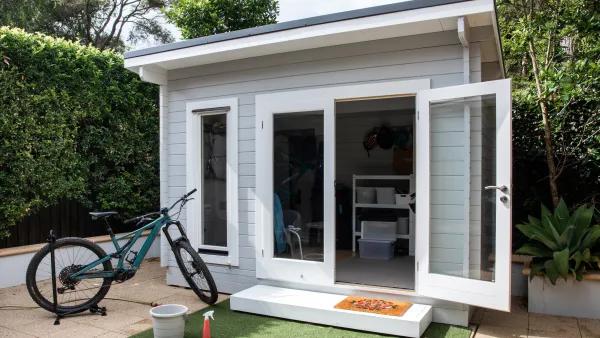
Restrictions in the bills include an owner-occupancy requirement and a rule stating that the ADU must adhere to a similar aesthetic style as the main home. The addition’s footprint must be limited to 25 percent of the house or 750 square feet, and the structure cannot be taller than the house.
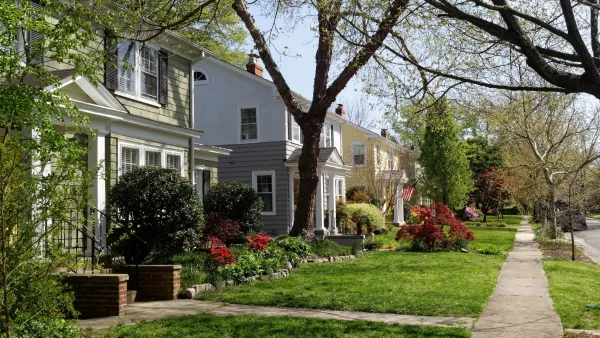
Opponents say the proliferation of ADUs could “ruin the ‘ambiance’” of the city’s traditional single-family neighborhoods, a common concern among ADU detractors. Yet ADUs, once known as carriage houses, are common in some of Jacksonville’s most historic neighborhoods. Accessory units only fell out of favor more recently, when single-family zoning began to dominate America’s residential neighborhoods.
Other supporters of the bills say many Jacksonville residents were already building ADUs, and that legalizing the process would make their construction safer while adding sorely needed housing stock.
Read the full story: Council approves plan to expand accessory dwelling units in Jacksonville


Reno Revisits Zoning Reform
After roundly rejecting a proposal to legalize granny flats in 2018, the city council is revising it and other zoning reform proposals that could increase the city’s affordable housing supply.
Richmond Poised to Make ADUs By-Right
A new ordinance would reduce costs and delays for building or converting accessory dwelling units in single-family neighborhoods.
ADU Demand Grows Across the West Coast
In communities from California to Washington, permit applications for accessory dwelling units outpace the ability of permitting and construction to keep pace.

Planetizen Federal Action Tracker
A weekly monitor of how Trump’s orders and actions are impacting planners and planning in America.

The state-sanctioned urbicide of Austin
People don’t kill cities. Freeways do.

US to reduce Colorado River water deliveries to Mexico
A new Colorado Treaty amendment reduces Mexico’s Colorado River water allocation by 250,000 acre feet.

Brightline West’s future may rely on $6 billion federal loan
The company has until Nov. 2 to make a $400 million equity investment into its proposed high-speed rail line.

LA Metro’s ultimatum: no extra buses for LA28 if federal funding isn’t imminently secured
If Metro does not provide additional buses, LA28 organizers will have to find a new way to manage Olympic traffic. LA28’s budget does not include a line item for transit.

Colorado’s Largest Data Center Could Rise Next to Homes — Without a Public Hearing
The proposed campus would consume 11 times the power of Denver International Airport; as it has across the country, opposition mounts.

FREE Course: Walkable City 1: Why Walkability?
After describing his path towards focusing on walkability as the essence of good planning, Jeff Speck marches through his five principal reasons for making more walkable places.
Reinventing Malls: Planning Alchemy—Turning Gray Fields Into Gold
The course focuses on the opportunities and imperatives that shape reinvention of mall sites.

Eagle County Government
Harvard University Graduate School of Design
Nashville Planning Department
The Architects Foundation
University of Cincinnati Online
The Pocatello Development Authority
The Urban Renewal Agency of the City of Pocatello
Journal of the American Planning Association