The number of unhoused vets fell by more than 50 percent since 2016, with significant gains made in the last two years.


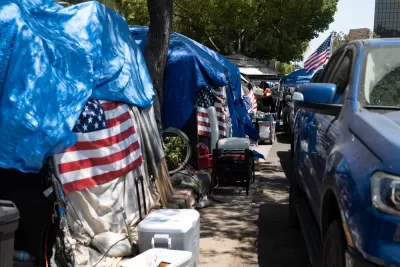
Targeted efforts to assist unhoused U.S. veterans seem to be working, reports Leo Shane III for Military Times, as the number of vets experiencing homelessness fell by 11 percent over the last two years.
According to Shane’s article, “Since 2010 — when President Barack Obama announced a new focus on ending veterans homelessness — the number has dropped by more than 55% (from 76,329). However, from 2016 to 2020, improvement in the numbers was largely flat, falling only about 6% over the four-year span.” Shane adds that “Officials did not release any data on the geographic location of the remaining homeless veterans or information about their race, gender or other demographics. That detail is expected to be made public in coming days.”
Official HUD data for homelessness across the board has not been released yet, but experts “familiar with the data said that the rate of improvement among veterans outpaced that of the general population.” While this news is encouraging, Shane points out that “the results of the annual national Point-in-Time count still show about 33,000 veterans across the country without reliable housing options.”
Read the full story: The number of homeless vets dropped sharply over the last two years

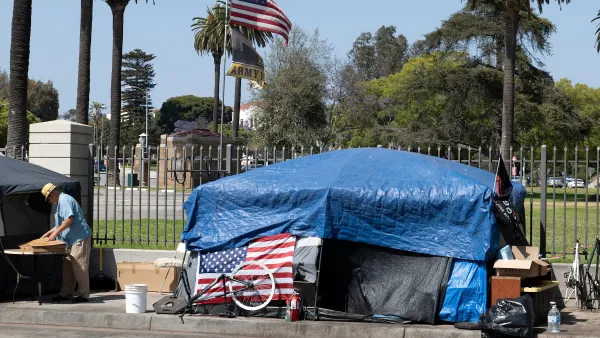
Trump's promise to house 6,000 homeless veterans on a Los Angeles VA campus missing from budget proposal
The president's proposed budget fails to include any funding for the proposed 'Center for Warrior Independence.'
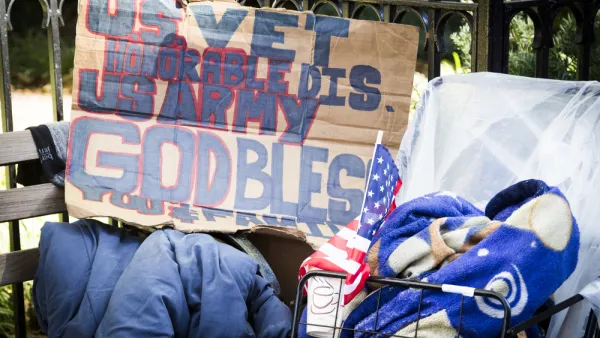
Veteran Homelessness on the Rise Again in Expensive Cities
The news about veteran homelessness rising in expensive cities might come as a surprise, after years of reported progress.
How to End Homelessness? Start—and Finish—With Veterans
We are so close to this goal. We should not change our focus before we meet it.

Planetizen Federal Action Tracker
A weekly monitor of how Trump’s orders and actions are impacting planners and planning in America.

California plans to bury El Niño’s downpour
If the state plays its cards right, it may be able to store a billion acre-feet of El Niño’s water in aquifers.

Chicago breaks ground on $3 billion megadevelopment
The new neighborhood, titled Foundry Park, will one day host 3,700 residences.

California High-Speed Rail Authority CEO resigns after $600,000 scandal
Under Ian Choudri, the authority used taxpayer dollars to fund first class flights and trips to nightclubs.

Want to study the Missouri River? Soon, you may need unanimous approval from 10 states
Legislation would require 10 governors’ permission to study or build projects moving water outside the basin.

Desperate measures: Advocates weigh draining Lake Powell to fill Colorado River
Draining the reservoir could reduce evaporation losses by a couple hundred thousand acre-feet.

FREE Course: Walkable City 1: Why Walkability?
After describing his path towards focusing on walkability as the essence of good planning, Jeff Speck marches through his five principal reasons for making more walkable places.
Reinventing Malls: Planning Alchemy—Turning Gray Fields Into Gold
The course focuses on the opportunities and imperatives that shape reinvention of mall sites.

City of Rosemead
Rutgers University, Edward J. Bloustein School of Planning and Public Policy
One Hundred Miles
Hunter College, City University of New York (CUNY)
The Architects Foundation
University of Cincinnati Online
City of Cambridge
Montrose County
The Pocatello Development Authority