The city is seeing rapid growth in residential development in its downtown core, signaling a shift to accommodate a reduced need for office space and a renewed interest in mixed-use, transit-oriented neighborhoods.



An article in the Pittsburgh Post-Gazette assesses the recent movement to convert downtown Pittsburgh’s increasingly vacant office buildings to housing. According to the article, more than 3,300 units have already been created via adaptive reuse, with 1,500 more in the planning stages.
While no one sees residential supplanting office Downtown as the dominant driver, experts say there is a need for a better mix, particularly in light of changing work habits caused by the pandemic.
The article lists several important buildings slated to be converted to apartments, condos, and hotel rooms, such as the Gulf Tower and the former GNC headquarters. The population is growing fast, with the occupancy rate at 93 percent. “Colliers reported that the average rent for a studio apartment is $1,384; for a one-bedroom, $1,522; for a two-bedroom, $2,188; and for a three-bedroom, a whopping $4,879.”
FULL STORY: From skyscrapers to studios: How the residential boom is transforming Downtown Pittsburgh


Downtown Pittsburgh Set to Gain 1,300 New Housing Units
Pittsburgh’s office buildings, many of which date back to the early 20th century, are prime candidates for conversion to housing.
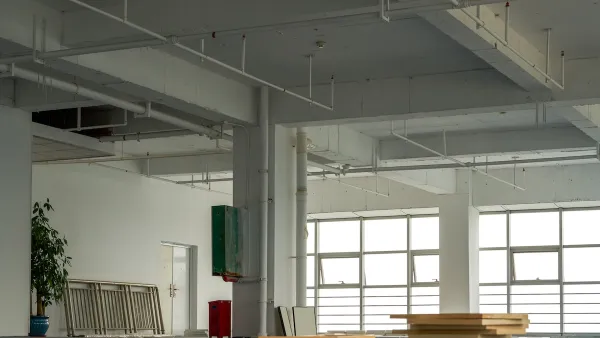
Over 71K Office-to-Apartment Units in the Pipeline for 2025
Adaptive reuse projects are continuing to bring thousands of new housing units onto the market as demand for office space remains low.

Office conversion is picking up steam in San Francisco
The city spent five years streamlining approval processes and reducing fees to encourage more adaptive reuse of vacant office buildings.

Planetizen Federal Action Tracker
A weekly monitor of how Trump’s orders and actions are impacting planners and planning in America.

The state-sanctioned urbicide of Austin
People don’t kill cities. Freeways do.

US to reduce Colorado River water deliveries to Mexico
A new Colorado Treaty amendment reduces Mexico’s Colorado River water allocation by 250,000 acre feet.

5 New England states march closer to 800 megawatt wind energy project
Securing federal approval for the project may be complicated under the Trump administration, which has historically been hostile towards domestic wind power.

Baltimore to break ground on $50 million Transit Priority Project
The project will bring faster bus trips, safer streets and better bike connections to Baltimore.

Airbnb launches $250 million 'last-dollar financing' housing accelerator, makes first investment in Austin
The company will put $6.4 million towards affordable housing development in Texas’ capital.

FREE Course: Walkable City 1: Why Walkability?
After describing his path towards focusing on walkability as the essence of good planning, Jeff Speck marches through his five principal reasons for making more walkable places.
Reinventing Malls: Planning Alchemy—Turning Gray Fields Into Gold
The course focuses on the opportunities and imperatives that shape reinvention of mall sites.

Eagle County Government
Harvard University Graduate School of Design
Nashville Planning Department
The Architects Foundation
University of Cincinnati Online
The Pocatello Development Authority
The Urban Renewal Agency of the City of Pocatello
Journal of the American Planning Association