The unpredictability of constantly changing commuting trends has some workers seeing much longer commute times as transportation agencies work to adjust to new travel patterns.


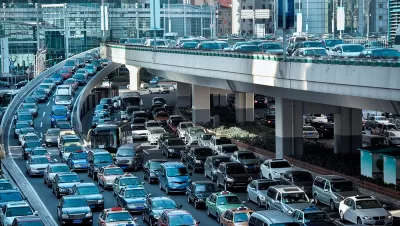
Despite expectations that the rise of remote work would shorten commutes—and data from the Census Bureau showing that to be, on average, true—“Experts say they are seeing traffic turmoil in many U.S. metropolitan areas, particularly those with government, tech and other jobs that lend themselves to hybrid schedules.”
As Katherine Shaver reports in the Washington Post, “Commutes now concentrated into a few days a week are causing noticeable swings in daily traffic volumes — motorists say Wednesdays are the worst — while greater flexibility in when to leave home has changed the timing of the morning rush.” According to Shaver, “Traffic at the height of rush hour feels as bad as ever in the Washington region and other large metro areas, experts say, because even a small increase tips a heavily saturated road network from free-flowing to stop-and-go.” The morning rush has been more affected by the pandemic than the evening rush hour, when more people run personal errands.
In Montgomery County, the traffic management system has been adjusting the timing of traffic lights to adapt to changing commute patterns, and Washington, D.C.’s Department of Transportation is working on an analysis of whether similar adjustments are necessary in the District. The region’s rail system, Metrorail, hit its highest ridership numbers since the pandemic began last Wednesday, but is still at only 44 percent of pre-pandemic trips.
FULL STORY: Why hybrid work schedules have made some commutes worse

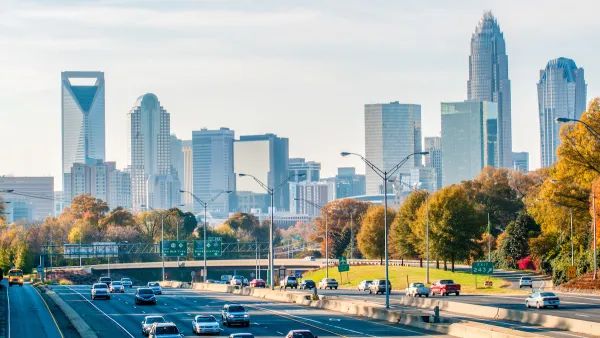
Charlotte’s Changing Commute Patterns
With more people working from home since the pandemic, the area is seeing shorter commute times for cars and public transit.
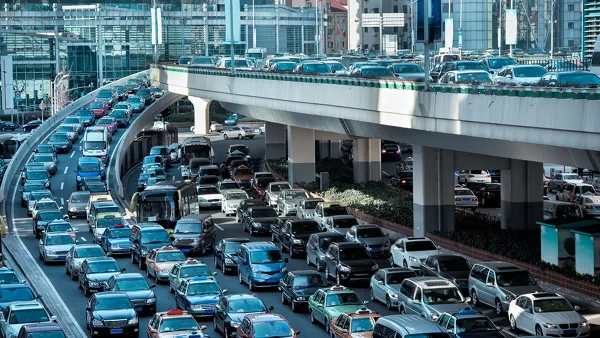
How Americans Spend Former Commute Time
Unsurprisingly, American workers whose commutes have been reduced or eliminated by new remote work arrangements are spending more time on rest, leisure, and childcare activities.
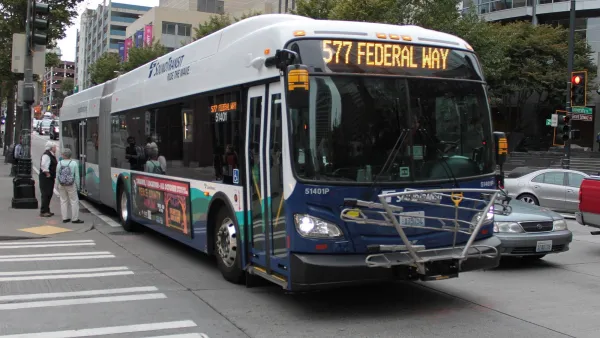
Transit Use Down, Remote Work Up in Seattle
Fewer workers in downtown Seattle are taking public transit to work thanks in large part to an ongoing move to remote work.

Planetizen Federal Action Tracker
A weekly monitor of how Trump’s orders and actions are impacting planners and planning in America.

The state-sanctioned urbicide of Austin
People don’t kill cities. Freeways do.

US to reduce Colorado River water deliveries to Mexico
A new Colorado Treaty amendment reduces Mexico’s Colorado River water allocation by 250,000 acre feet.

5 New England states march closer to 800 megawatt wind energy project
Securing federal approval for the project may be complicated under the Trump administration, which has historically been hostile towards domestic wind power.

Baltimore to break ground on $50 million Transit Priority Project
The project will bring faster bus trips, safer streets and better bike connections to Baltimore.

Airbnb launches $250 million 'last-dollar financing' housing accelerator, makes first investment in Austin
The company will put $6.4 million towards affordable housing development in Texas’ capital.

FREE Course: Walkable City 1: Why Walkability?
After describing his path towards focusing on walkability as the essence of good planning, Jeff Speck marches through his five principal reasons for making more walkable places.
Reinventing Malls: Planning Alchemy—Turning Gray Fields Into Gold
The course focuses on the opportunities and imperatives that shape reinvention of mall sites.

Eagle County Government
Harvard University Graduate School of Design
Nashville Planning Department
The Architects Foundation
University of Cincinnati Online
The Pocatello Development Authority
The Urban Renewal Agency of the City of Pocatello
Journal of the American Planning Association