There may be plenty of reasons to hail the rise of electric vehicles, including California's policy to ban the sale of gas-powered cars by 2035. But what may be good for the air is not necessarily good for cities.


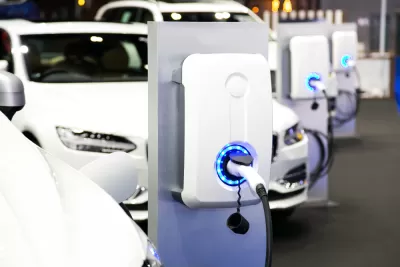
Economists, energy analysts, and even psychologists will debate and anticipate the impacts of a gas-free future. I expect it will, on balance, be far better than the status quo. But tradeoffs will be made (oil drilling for cobalt and nickel mining, for instance) and unintended consequences will arise, as they always do with major technological shifts.
Back in 2005, the prospect of widespread use of electric vehicles—much less ones that could outdrive the gnarliest hot rods of the day—was, if not unthinkable, at least implausible. That year, Californian drivers emitted roughly 180 million tons of carbon into our 1.01 million cubic miles of troposphere.
California surely needs to reduce pollution. But, just as surely, it also needs to make nicer cities. The trouble with “nicer cities” is inherent in the phrase itself: it's vague, subjective, and debatable. Public policy loves metrics, though. The more definitive a measure, the better. If you can say what you want, you can figure out how to get it, and, later on, you can evaluate whether you've gotten what you want.
Cars are still cars, electric or not. They still take up space. They still require energy and infrastructure. They can still kill occupants and bystanders alike. They still make people lazy and antisocial. Walking, biking, rolling, scooting, and bus-riding are all preferable to lithium mining and highway-building if we want to be sustainable.
FULL STORY: The Internal-Combustion Car Did Us A Favor

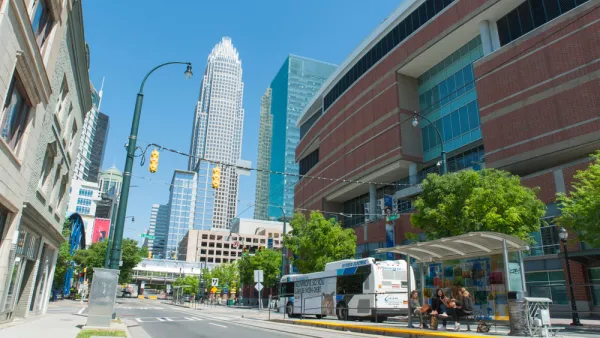
North Carolina Drafts Clean Transportation Plan
Similar to other plans focused on reducing emissions from the transportation plan, North Carolina’s draft Clean Transportation Plan will rely on electric vehicles to reduce emissions from the state’s transportation sector.
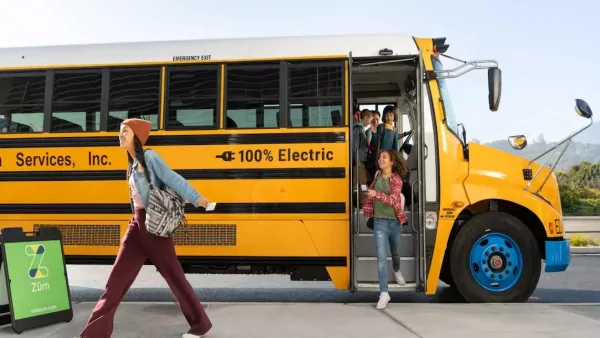
California Invests Additional $5M in Electric School Buses
The state wants to electrify all of its school bus fleets by 2035.
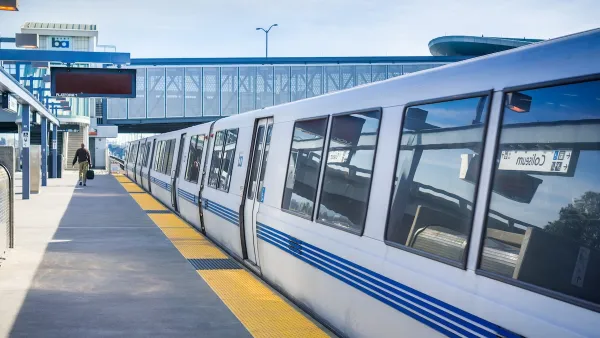
NRDC Releases State Transportation Scorecard
The Getting Transportation Right report highlights which states are making the most progress on reducing transportation emissions and improving access to clean transportation options.

Planetizen Federal Action Tracker
A weekly monitor of how Trump’s orders and actions are impacting planners and planning in America.

The state-sanctioned urbicide of Austin
People don’t kill cities. Freeways do.

US to reduce Colorado River water deliveries to Mexico
A new Colorado Treaty amendment reduces Mexico’s Colorado River water allocation by 250,000 acre feet.

5 New England states march closer to 800 megawatt wind energy project
Securing federal approval for the project may be complicated under the Trump administration, which has historically been hostile towards domestic wind power.

Baltimore to break ground on $50 million Transit Priority Project
The project will bring faster bus trips, safer streets and better bike connections to Baltimore.

Airbnb launches $250 million 'last-dollar financing' housing accelerator, makes first investment in Austin
The company will put $6.4 million towards affordable housing development in Texas’ capital.

FREE Course: Walkable City 1: Why Walkability?
After describing his path towards focusing on walkability as the essence of good planning, Jeff Speck marches through his five principal reasons for making more walkable places.
Reinventing Malls: Planning Alchemy—Turning Gray Fields Into Gold
The course focuses on the opportunities and imperatives that shape reinvention of mall sites.

Eagle County Government
Harvard University Graduate School of Design
Nashville Planning Department
The Architects Foundation
University of Cincinnati Online
The Pocatello Development Authority
The Urban Renewal Agency of the City of Pocatello
Journal of the American Planning Association