Neighborhoods not previously at risk of flooding face new challenges as burn scars from recent fires leave them vulnerable to floods.


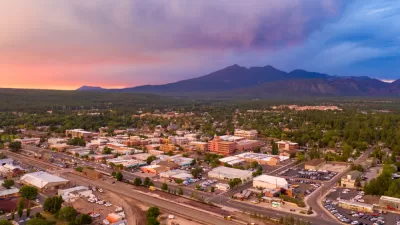
Like other Western states, Arizona is experiencing longer, more destructive wildfires. “And now,” writes Ryan Heinsius for Arizona Public Radio, “the burn scars left behind are causing flooding in neighborhoods that previously weren’t flood prone.” According to Heinsius, “Local emergency officials have scrambled to ease the impacts on residents, but long-term solutions won’t come immediately.”
“Arizona’s experiencing about a 2-degree increase in temperature Celsius, resulting in really just a variety of conditions that provide a huge hazard,” says Andrew Sanchez Meador, executive director of the Ecological Restoration Institute at Northern Arizona University.
For now, “Officials have provided as much short-term mitigation as they can in the form of hundreds of thousands of sandbags and miles of concrete barriers just to weather monsoon season.” Experts say long-term solutions include forest restoration projects that can protect communities in the coming years.
FULL STORY: The inevitable next time: Flagstaff residents grapple with the new reality of wildfire and flood

How US Cities Can Prepare for Climate Disasters
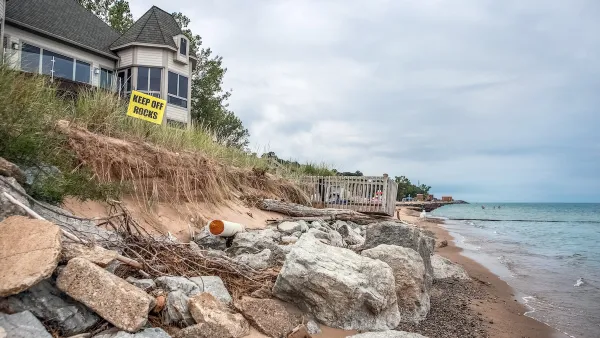
Resilience, encompassing infrastructure, governance, economic strength, and social cohesion, is critical for cities to mitigate rising climate risks like flooding, wildfires, and heat, ensuring long-term recovery and adaptability.
Saving Lower Manhattan
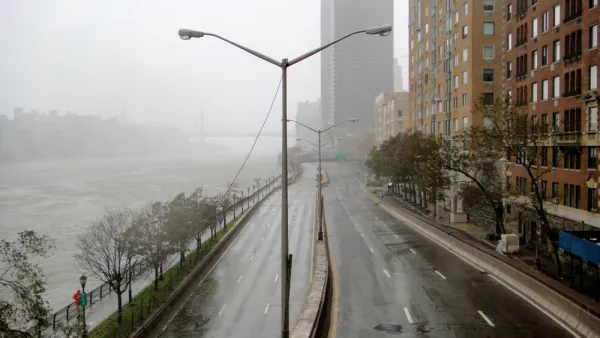
A debate over how to protect the East River waterfront from Sandy-level flooding and storm damage has delayed the project as community activists decry the city's last-minute change of plans.
Flooding Less of a Concern as Hurricane Memories Fade
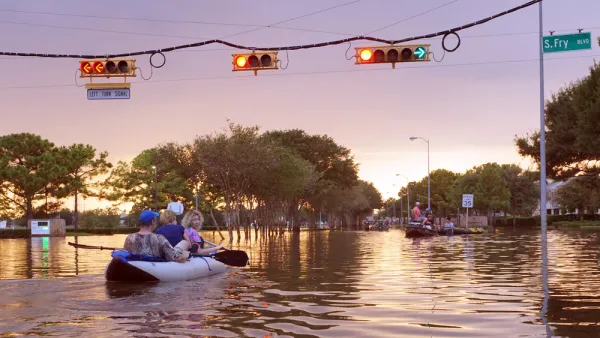
Residents of Houston are less likely to think of flooding as a concern, or to think development should be prohibited in flood-prone areas, as in the years immediately following Hurricane Harvey.

Planetizen Federal Action Tracker
A weekly monitor of how Trump’s orders and actions are impacting planners and planning in America.

The state-sanctioned urbicide of Austin
People don’t kill cities. Freeways do.

US to reduce Colorado River water deliveries to Mexico
A new Colorado Treaty amendment reduces Mexico’s Colorado River water allocation by 250,000 acre feet.

Colorado’s Largest Data Center Could Rise Next to Homes — Without a Public Hearing
The proposed campus would consume 11 times the power of Denver International Airport; as it has across the country, opposition mounts.

5 New England states march closer to 800 megawatt wind energy project
Securing federal approval for the project may be complicated under the Trump administration, which has historically been hostile towards domestic wind power.

Baltimore to break ground on $50 million Transit Priority Project
The project will bring faster bus trips, safer streets and better bike connections to Baltimore.

FREE Course: Walkable City 1: Why Walkability?
After describing his path towards focusing on walkability as the essence of good planning, Jeff Speck marches through his five principal reasons for making more walkable places.
Reinventing Malls: Planning Alchemy—Turning Gray Fields Into Gold
The course focuses on the opportunities and imperatives that shape reinvention of mall sites.

Eagle County Government
Harvard University Graduate School of Design
Nashville Planning Department
The Architects Foundation
University of Cincinnati Online
The Pocatello Development Authority
The Urban Renewal Agency of the City of Pocatello
Journal of the American Planning Association