Based on available data, working from home is likely to remain a popular option with a high percentage of workers, changing the ways and places Americans live, work, and travel.



Writing in the Washington Post, Andrew Van Dam analyzes the economic and demographic shifts caused by the rise of remote work. Although the rate of remote work peaked at the height of pandemic shutdowns, “it has since stabilized at an extraordinarily high level: Around a third of work was done remotely in the United States in 2021 and 2022, according to economists José María Barrero (Autonomous Technological Institute of Mexico), Nicholas Bloom (Stanford University) and Steven Davis (University of Chicago).”
According to Van Dam, remote work is having an impact in some unexpected industries. “The data hints that the real remote revolution is taking place not at tech giants but at firms like the Inside Out Co., an Illinois construction, roofing and painting outfit that has found it provides a competitive advantage.” After shifting to remote work and taking its systems into the digital space during the pandemic, the company realized it could now broaden its scope across the country. “A business that just two years ago was hyper-focused on the Chicago area now would see no problem hiring back-office personnel who could work remotely from anywhere in the country,” Van Dam writes.
The growth of remote work tracks with migration: “Notably, two of the counties with the most remote-eligible jobs, Manhattan (New York County) and San Francisco, experienced the fastest population loss of any county with more than 10,000 residents from 2020 to 2021” as people disperse to find more affordable housing or better amenities.
Understanding the full impact of these changes will require more data from federal agencies, Van Dam notes. “[U]ntil we have better federal data on who works remotely and where they do it, we can’t produce the detailed analyses necessary to understand the winners and losers of the remote-work revolution — and to deal with the inevitable fallout.”
Read the full story: The remote work revolution is already reshaping America
D.C., San Francisco Lead Pandemic Work From Home Trend
Remote work increased threefold during the pandemic, but the numbers vary significantly from city to city and region to region. Almost half of D.C.-area employees, for example, worked from home in 2021, according to American Community Survey data.
Remote Workers: The New Supercommuters
Workers who moved away from their jobs during the pandemic are adjusting to longer commutes as employers start asking them to return to the office.
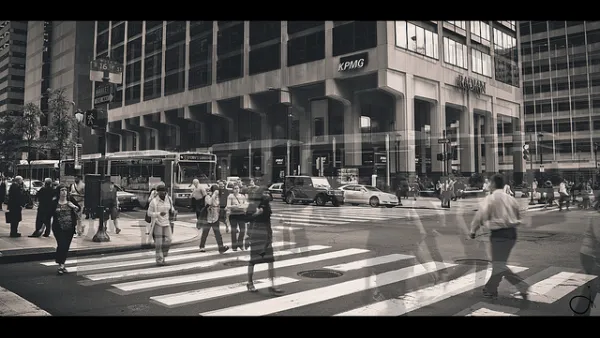
The Future of Downtowns Still Hangs in the Balance
Center City in Philadelphia offers a case study for one of the largest and potentially most consequential contingencies of the pandemic: What happens to downtowns is most workers never come back to the office?

Planetizen Federal Action Tracker
A weekly monitor of how Trump’s orders and actions are impacting planners and planning in America.

California plans to bury El Niño’s downpour
If the state plays its cards right, it may be able to store a billion acre-feet of El Niño’s water in aquifers.

Desperate measures: Advocates weigh draining Lake Powell to fill Colorado River
Draining the reservoir could reduce evaporation losses by a couple hundred thousand acre-feet.

In Texas, data centers are swallowing promised parkland
Residents who moved to Taylor, Texas for a rural community now have to contend with three data centers in their backyard.

How a Chicago-sized wind farm beat the odds and powered on
The project spanned five presidential administrations and a standoff with a U.S. military base.

MTA gives itself 30 days to transform pit into basketball court
The site has been under construction since 2022; the city originally estimated it would finish the court in 2024.

FREE Course: Walkable City 1: Why Walkability?
After describing his path towards focusing on walkability as the essence of good planning, Jeff Speck marches through his five principal reasons for making more walkable places.
Reinventing Malls: Planning Alchemy—Turning Gray Fields Into Gold
The course focuses on the opportunities and imperatives that shape reinvention of mall sites.

City of Rosemead
Rutgers University, Edward J. Bloustein School of Planning and Public Policy
One Hundred Miles
Hunter College, City University of New York (CUNY)
The Architects Foundation
University of Cincinnati Online
City of Cambridge
Montrose County
The Pocatello Development Authority