Residents in the 76104 ZIP code, where life expectancy is the lowest in Texas, lack access to effective transit and essential needs.


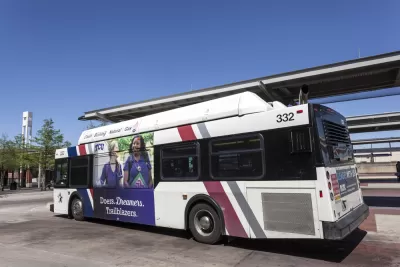
“The North Central Texas Council of Governments was awarded a grant of approximately $270,000 to identify innovative, affordable transit solutions to improve access to basic needs such as grocery stores and doctors offices” in one of the region’s poorest zip codes. The grant is part of a $16.2 million Federal Transit Administration (FTA) program aimed at fighting persistent poverty, according to an article by Nichole Manna written for the Fort Worth Star-Telegram and republished in Mass Transit.
A 2019 study from UT Southwestern revealed that people residing in the 76104 zip code had the lowest life expectancy in Texas. “The irony of the story of 76104 is that the ZIP code takes in the city’s medical district, which includes five hospitals and hundreds of medical offices. Yet residents described a lack of access to health care driven by a lack of transportation, insurance, and awareness of programs available to help.”
The grant will support a study to develop transit solutions that improve access to essential services for transit-dependent residents. “In part, the study will examine current transit options available in the 76104 ZIP code and whether they should be enhanced or revised to better meet demand. The study will also look at transit fares and their impact on equitable access to these transit services.”
Read the full story: TX: Improved transit might be coming to some of Fort Worth’s poorest neighborhoods

Transit Agencies Direct Resources to Core Ridership
As commuter ridership continues to lag due to the pandemic, transit systems are adjusting to better serve the essential workers and transit-dependent households who need them the most.
Transit Dependence in the U.S. Cuts Across Geographies, Income Classes
Transit-dependent neighborhoods can be found in almost all major U.S. cities, according to a new analysis of Census data.
Ten extraordinary women making cities work better for everyone
A new book profiles women leaders shaping the future of modern cities. These are some of their stories.

Planetizen Federal Action Tracker
A weekly monitor of how Trump’s orders and actions are impacting planners and planning in America.

The state-sanctioned urbicide of Austin
People don’t kill cities. Freeways do.

Colorado’s Largest Data Center Could Rise Next to Homes — Without a Public Hearing
The proposed campus would consume 11 times the power of Denver International Airport; as it has across the country, opposition mounts.

Nation's most wind-powered state turns to coal as data centers increase energy demand
For the first time in decades, Iowa has increased its generation of coal power.

NYC cools commuters with city's first rain garden above a bus stop
New York City officials say the plants in the rain garden can absorb 16 gallons of rainwater during heavy storms.

Brightline West’s future may rely on $6 billion federal loan
The company has until Nov. 2 to make a $400 million equity investment into its proposed high-speed rail line.

FREE Course: Walkable City 1: Why Walkability?
After describing his path towards focusing on walkability as the essence of good planning, Jeff Speck marches through his five principal reasons for making more walkable places.
Reinventing Malls: Planning Alchemy—Turning Gray Fields Into Gold
The course focuses on the opportunities and imperatives that shape reinvention of mall sites.

Greater Baltimore Committee
Eagle County Government
Harvard University Graduate School of Design
The Architects Foundation
University of Cincinnati Online
The Pocatello Development Authority
The Urban Renewal Agency of the City of Pocatello
Journal of the American Planning Association