The Metropolitan Atlanta Rapid Transit Authority says it is ‘well-positioned’ to resume pre-pandemic operations and make capital improvements in the coming years.


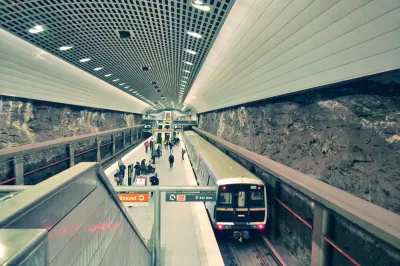
An article in Mass Transit reports on the $1.3 billion budget recently approved by the Metropolitan Atlanta Rapid Transit Authority (MARTA). “MARTA relies more heavily on sales tax revenue than some peer transit agencies, and with those revenues experiencing strong growth, combined with the last draw down from the federal COVID-19 relief money, the authority says it is well-positioned to resume pre-COVID-19 operation levels and advance its capital improvement program.”
According to the article, “Ridership demand has increased, with rail slightly outperforming bus. Recently, climbing fuel prices have presented an opportunity to gain customers without impacting MARTA’s bottom line.”
MARTA is also exploring other ways to gain ridership including a comprehensive redesign of its bus network to ensure service meets the changing demographics and development of the service area, and by launching an on-demand transit pilot program to connect those in areas underserved by transit to the larger MARTA system.
The source article outlines MARTA’s other plans for the coming years, such as their Capital Improvement Program and the $9 million SMART Restroom Program. The full, detailed budget is available on MARTA’s website.
FULL STORY: MARTA adopts balanced budget, advances capital projects, resumes pre-COVID-19 operations

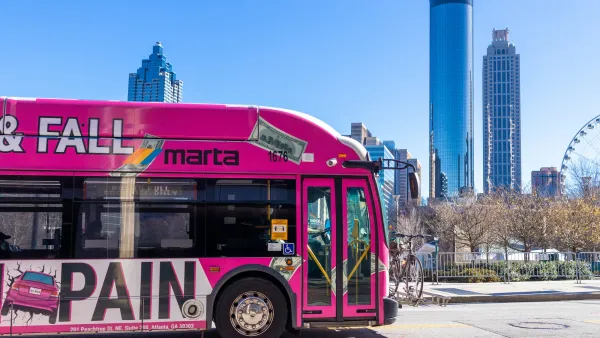
MARTA’s NextGen Bus System to Relaunch With Increased Frequency, New Last-mile Rideshare Program
Atlanta’s transit agency will enhance service on some routes while compensating for service cuts on others with a new on-demand service.
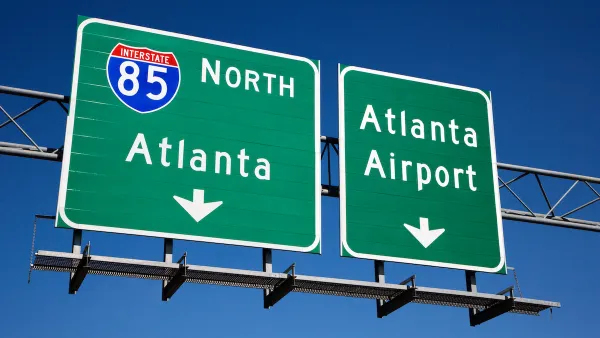
MARTA To Add BRT Connection to Airport
A new rapid bus line in Atlanta will link residents to one of the nation’s busiest airports.

What Is ‘Arterial Rapid Transit?’
Atlanta is planning to build ‘BRT lite,’ a version of bus service that offers signal priority and fewer stops but keeps buses in mixed-traffic lanes.

Planetizen Federal Action Tracker
A weekly monitor of how Trump’s orders and actions are impacting planners and planning in America.

The state-sanctioned urbicide of Austin
People don’t kill cities. Freeways do.

US to reduce Colorado River water deliveries to Mexico
A new Colorado Treaty amendment reduces Mexico’s Colorado River water allocation by 250,000 acre feet.

5 New England states march closer to 800 megawatt wind energy project
Securing federal approval for the project may be complicated under the Trump administration, which has historically been hostile towards domestic wind power.

Baltimore to break ground on $50 million Transit Priority Project
The project will bring faster bus trips, safer streets and better bike connections to Baltimore.

Airbnb launches $250 million 'last-dollar financing' housing accelerator, makes first investment in Austin
The company will put $6.4 million towards affordable housing development in Texas’ capital.

FREE Course: Walkable City 1: Why Walkability?
After describing his path towards focusing on walkability as the essence of good planning, Jeff Speck marches through his five principal reasons for making more walkable places.
Reinventing Malls: Planning Alchemy—Turning Gray Fields Into Gold
The course focuses on the opportunities and imperatives that shape reinvention of mall sites.

Eagle County Government
Harvard University Graduate School of Design
Nashville Planning Department
The Architects Foundation
University of Cincinnati Online
The Pocatello Development Authority
The Urban Renewal Agency of the City of Pocatello
Journal of the American Planning Association