Thanks to state and regional funding, the city eliminated fares while making service improvements.


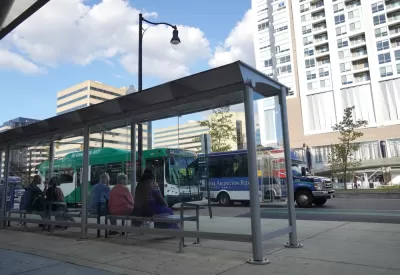
“Many cities enacted fare-free transit options during the pandemic, both as a means to help essential workers and to limit interactions. But as life returns to a semblance of normal, some cities are backing away from the idea.”
Not so in Alexandria, Virginia, where buses remain free two years after fares were first eliminated during the early part of the pandemic, writes Jake Blumgart in Governing.
“Ridership on Alexandria’s buses has surged back to almost pre-pandemic levels not only because of free fares. A redesign of the bus system that allowed for increased frequencies is an equally important part of the story,” Blumgart notes. Critics of fare-free transit often argue that cutting fares often sacrifices service. In Alexandria’s case, state and regional funding allowed the city to maintain and improve service while keeping fares free. “Alexandria was able to compete for funds from Virginia’s Department of Rail and Public Transportation, which allowed them to provide free fares for the next three years. Competitive monies from the Northern Virginia Transportation Commission are used to increase frequencies on the city’s bus lines and redesign the system.”
City leaders are optimistic that they will be able to continue financing free fares and service improvements thanks to Alexandria’s robust tax base. “The city is in the midst of a decadeslong growth spurt and the population is the highest ever. Valuations of properties are greater than during the pandemic too, so Alexandria policymakers won’t face the hard choices of more depressed municipalities.”
FULL STORY: For This City, Fare-Free Transit Is a Big Success

Opinion: To Increase Equity, Make Buses Free
With buses as a dominant transport mode for low-income households and "essential workers," free fares would increase access to economic opportunities and free up limited income for cash-strapped commuters.
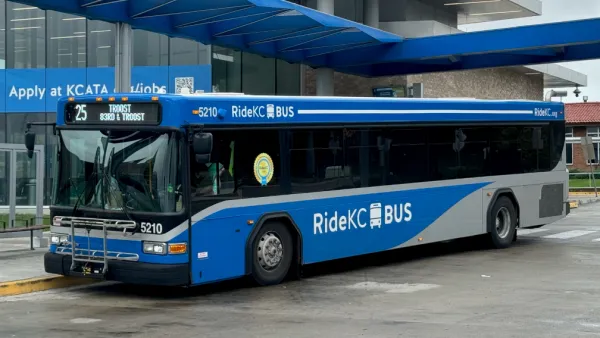
Kansas City Will Start Charging Bus Fares in June — With no Plan in Place for Low-income Riders
Service providers say they haven’t been told how their clients can access free or reduced fares after the agency starts charging again this summer.
The City Where Free Buses Changed Everything
New York’s new mayor Zohran Mamdani has said he’ll make every bus free to ride. This French city did just that — and is reaping the rewards.

The state-sanctioned urbicide of Austin
People don’t kill cities. Freeways do.

US to reduce Colorado River water deliveries to Mexico
A new Colorado Treaty amendment reduces Mexico’s Colorado River water allocation by 250,000 acre feet.

New Jersey’s second-largest city bans standalone data centers
Jersey City will continue to allow co-location facilities, such as those meant for research institutions that store their own data.

Amtrak not solely to blame for New Jersey commuter rail's unreliability, report finds
A new study from the Garden State Initiative found that NJ Transit’s budget grew 20% across a 4 year period, but reliability declined significantly over the same period.

EPA erases limits on planet-warming pollution from power plants
Under Monday’s plan, power plants would still have some limits on how much mercury, arsenic and other contaminants they can emit.

Phoenix announces new on-demand transit service, more frequent RAPID buses
Both new services will launch in October, and are part of Phoenix's Project Effective Access Solutions for Easing Congestion.

FREE Course: Walkable City 1: Why Walkability?
After describing his path towards focusing on walkability as the essence of good planning, Jeff Speck marches through his five principal reasons for making more walkable places.
Reinventing Malls: Planning Alchemy—Turning Gray Fields Into Gold
The course focuses on the opportunities and imperatives that shape reinvention of mall sites.

Eagle County Government
Harvard University Graduate School of Design
Nashville Planning Department
The Architects Foundation
University of Cincinnati Online
The Pocatello Development Authority
The Urban Renewal Agency of the City of Pocatello
Journal of the American Planning Association