Pending Gov. Polis's signature on a bill approved recently by the Colorado State Legislature, Colorado will become the latest state to allow people on bikes to yield at stop signs.



Another state is inching closer to allowing people on bikes to roll through stop signs and treat stop lights as stop signs: Colorado. The maneuver is known as the Idaho Stop, and it seems to gain more political and legal traction with every passing year.
"If enacted, House Bill 1028 would permit bicycles, e-scooters and other non-motorized vehicles to treat stop signs as yield signs and to treat red lights as stop signs when motorized vehicles are not around. This practice — colloquially called Idaho stops or rolling stops — lets bicyclists avoid making unnecessary stops if cars aren’t there," reports Hannah Metzger for Colorado Politics. Bill sponsor Sen. Faith Winter, D-Westminster, is quoted in the article touting the safety benefits of the Idaho Stop.
“It’s safer for bicyclists, it’s safer for drivers [….] Bikes are more able to stay within the flow of traffic, they’re more visible and it increases safety.” -Colorado Sen. Faith Winter, D-Westminster.
The Colorado Legislature approved HB 1028 on March 23—the bill still awaits final changes in the state's House of Representatives and the signature of Governor Jared Polis. We won't assume it's a done deal, however. The last state to approve an Idaho Stop bill, California, saw the bill die by governor's veto in October 2021.
A separate article by Nathaniel Minor, published by CPR News, discusses the racial equity benefits of legalizing the Idaho Stop. Bike advocates in the state say the new law will keep riders of color safer from cars and the police.
FULL STORY: Colorado legislature OKs ‘Idaho stops’ for bicyclists statewide

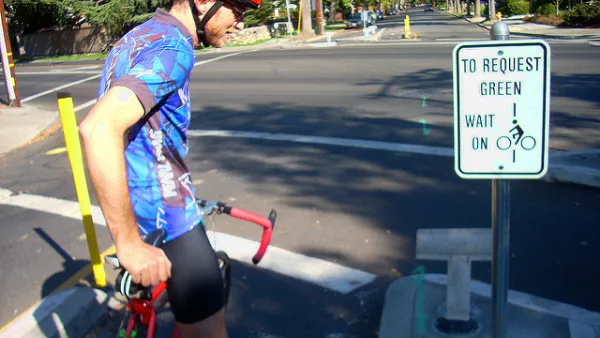
‘Idaho Stop’ Now Legal in Colorado
Colorado is the latest state to make it legal for people on bikes to treat stop signs like yield signs when no cars are in the intersection.
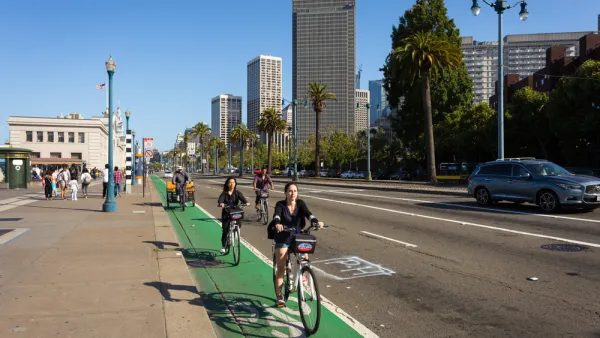
Bill Legalizing the Idaho Stop in California Waits for Governor's Signature
The Idaho Stop—allowing people on bikes to treat stop signs in empty intersections as yield signs—is gaining popularity around the country. Next (not quite) stop: California.

Starting Today: The Idaho Stop Is Legal in Washington State
A law passed in March allowing people on bikes to treat stop signs as yield signs when conditions permit takes effect today in Washington State.

Planetizen Federal Action Tracker
A weekly monitor of how Trump’s orders and actions are impacting planners and planning in America.

The state-sanctioned urbicide of Austin
People don’t kill cities. Freeways do.

US to reduce Colorado River water deliveries to Mexico
A new Colorado Treaty amendment reduces Mexico’s Colorado River water allocation by 250,000 acre feet.

Mamdani overhauls NYC's Vision Zero plan with 100 new policy goals
The overhaul aims to reduce traffic deaths and make streets safer for pedestrians, cyclists and drivers through lower speed limits, new safety infrastructure and more.

Amtrak not solely to blame for New Jersey commuter rail's unreliability, report finds
A new study from the Garden State Initiative found that NJ Transit’s budget grew 20% across a 4 year period, but reliability declined significantly over the same period.

EPA erases limits on planet-warming pollution from power plants
Under Monday’s plan, power plants would still have some limits on how much mercury, arsenic and other contaminants they can emit.

FREE Course: Walkable City 1: Why Walkability?
After describing his path towards focusing on walkability as the essence of good planning, Jeff Speck marches through his five principal reasons for making more walkable places.
Reinventing Malls: Planning Alchemy—Turning Gray Fields Into Gold
The course focuses on the opportunities and imperatives that shape reinvention of mall sites.

Eagle County Government
Harvard University Graduate School of Design
Nashville Planning Department
The Architects Foundation
University of Cincinnati Online
The Pocatello Development Authority
The Urban Renewal Agency of the City of Pocatello
Journal of the American Planning Association