The location of a proposed crossing in the fast-growing southwest Houston suburbs could have a significant impact on the area's development.


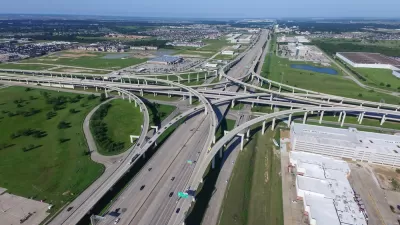
The decision over where to place a new intersection has become a major debate in Fort Bend County, just west of Houston. According to an article by Dug Begley, "Where county leaders eventually decide to put that intersection will have an impact far beyond the typical road, with potential ripple effects on the cost to build the toll roads, the types of development that will replace that tranquil farmland and how much philanthropic money comes to Fort Bend County. The land closest to the intersection is expected to have a future worth of $500 million."
The crossing was originally planned for an area located on land owned by the George Foundation, but last October, the Commissioners Court voted to move the future intersection, giving developer The Signorelli Company the option to buy the land under the new proposed site. While the crossing won't be built for years, the current development of new neighborhoods and roads, including a 4,700-acre development by Signorelli scheduled to break ground later this year, will have an impact on the eventual location.
As Begley notes, "What George Foundation officials envision, however, is a project that will take much longer to sprout, but could become far larger and more profitable for county residents. It also would pour tens of millions into the charity’s bank account that eventually could be used to reduce homelessness, award scholarships for hundreds of college-bound and nursing students, provide materials for disaster relief and invest in local public health programs."
Commissioners involved in the recent decision have so far declined to comment on their reasoning. The issue remains unresolved, as the state and county plans for the Grand Parkway and its intersection with the Fort Bend Tollway remain unaligned.
Read the full story: A fight has erupted over where to put a Grand Parkway intersection. Millions of dollars are at stake.

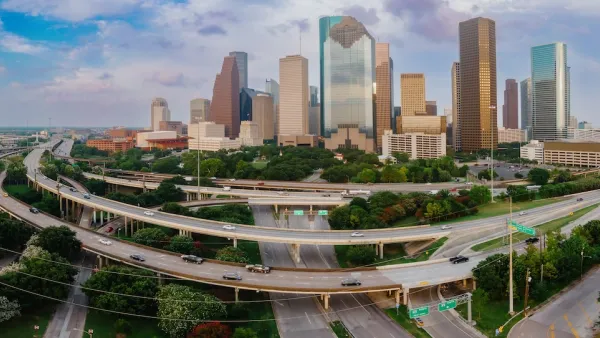
Interactive Map Highlights Freeway-Related Displacement in Houston
A new map illustrates the neighborhoods and buildings that were razed to make way for freeways and estimates the number of people displaced by roadways.
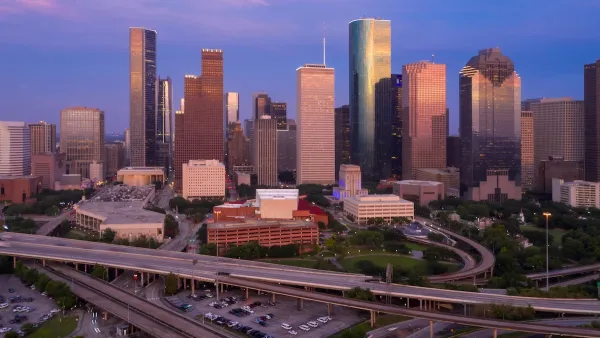
Reimagining the Space Beneath Houston’s Freeways
Opportunities abound for Houston to capitalize on otherwise unused space beneath its wide network of freeways.
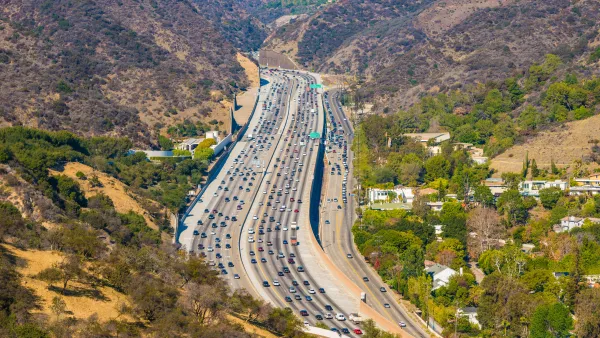
Report: Bike Lanes Can't Make up for New Roads
If California wants to meet its climate goals, the state must stop funding its myriad road construction and expansion projects.

Planetizen Federal Action Tracker
A weekly monitor of how Trump’s orders and actions are impacting planners and planning in America.

The state-sanctioned urbicide of Austin
People don’t kill cities. Freeways do.

US to reduce Colorado River water deliveries to Mexico
A new Colorado Treaty amendment reduces Mexico’s Colorado River water allocation by 250,000 acre feet.

Nation's most wind-powered state turns to coal as data centers increase energy demand
For the first time in decades, Iowa has increased its generation of coal power.

NYC cools commuters with city's first rain garden above a bus stop
New York City officials say the plants in the rain garden can absorb 16 gallons of rainwater during heavy storms.

Brightline West’s future may rely on $6 billion federal loan
The company has until Nov. 2 to make a $400 million equity investment into its proposed high-speed rail line.

FREE Course: Walkable City 1: Why Walkability?
After describing his path towards focusing on walkability as the essence of good planning, Jeff Speck marches through his five principal reasons for making more walkable places.
Reinventing Malls: Planning Alchemy—Turning Gray Fields Into Gold
The course focuses on the opportunities and imperatives that shape reinvention of mall sites.

Greater Baltimore Committee
Eagle County Government
Harvard University Graduate School of Design
The Architects Foundation
University of Cincinnati Online
The Pocatello Development Authority
The Urban Renewal Agency of the City of Pocatello
Journal of the American Planning Association