A new last-mile service set to launch in February will connect the city's residents with job-rich suburbs.


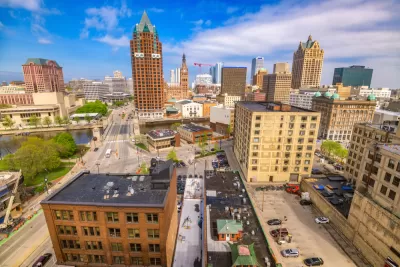
"A new transportation service will attempt to provide a low-cost, on-demand connection between central city Milwaukee residents and Waukesha County employers," reports Jeramey Jannene.
The service, known as FlexRide Milwaukee, will pick up passengers at five locations and drop them off within two designated "employment zones" in an attempt to fill a gap in existing bus service. As Jannene writes, "the pilot study is being billed as a micro-transit effort that will attempt to bridge the spatial mismatch between residents on the north side of Milwaukee and suburban employers."
Milwaukee implemented a similar service on a fixed schedule, JobLines, in 2015, which was shut down in 2019. The Southeastern Wisconsin Regional Planning Commission (SEWRPC), which is leading the study along with UW-Milwaukee, hopes the new on-demand service will serve as a more effective connection for commuters.
When the service launches in February, riders will be able to request a ride by phone or using a mobile app. A similar effort is underway to provide the service in other nearby communities.
FULL STORY: New ‘Last Mile’ Solution Will Connect Suburban Employers, City Residents


El Paso launches improved bus network, new microtransit service
Sun Metro is eliminating some bus lines in favor of more frequent service, estimating that only 1% of riders will have to walk farther to reach a station.
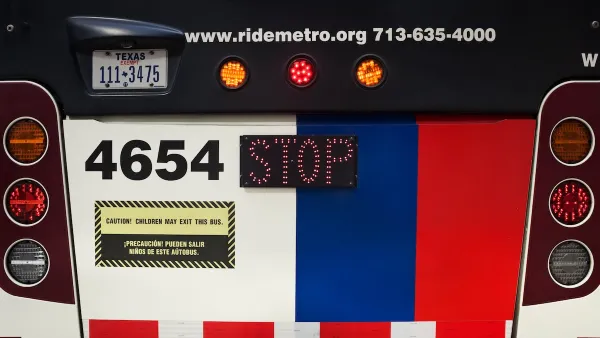
Houston Council Member Questions Microtransit Investment
METRO’s support of an on-demand microtransit service comes as the agency is scaling back its bigger bus projects.
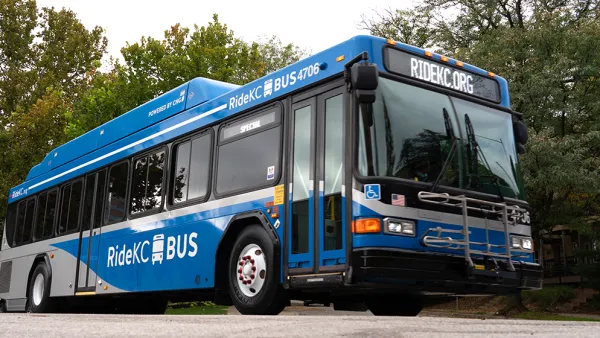
Transit Advocates Fear On-Demand Microtransit Undermines Bus Service
A new on-demand transit service is meant to fill gaps in Kansas City regional bus service, but some transit supporters worry the service is drawing funding away from fixed-route buses.

The state-sanctioned urbicide of Austin
People don’t kill cities. Freeways do.

US to reduce Colorado River water deliveries to Mexico
A new Colorado Treaty amendment reduces Mexico’s Colorado River water allocation by 250,000 acre feet.

New Jersey’s second-largest city bans standalone data centers
Jersey City will continue to allow co-location facilities, such as those meant for research institutions that store their own data.

Amtrak not solely to blame for New Jersey commuter rail's unreliability, report finds
A new study from the Garden State Initiative found that NJ Transit’s budget grew 20% across a 4 year period, but reliability declined significantly over the same period.

EPA erases limits on planet-warming pollution from power plants
Under Monday’s plan, power plants would still have some limits on how much mercury, arsenic and other contaminants they can emit.

Phoenix announces new on-demand transit service, more frequent RAPID buses
Both new services will launch in October, and are part of Phoenix's Project Effective Access Solutions for Easing Congestion.

FREE Course: Walkable City 1: Why Walkability?
After describing his path towards focusing on walkability as the essence of good planning, Jeff Speck marches through his five principal reasons for making more walkable places.
Reinventing Malls: Planning Alchemy—Turning Gray Fields Into Gold
The course focuses on the opportunities and imperatives that shape reinvention of mall sites.

Eagle County Government
Harvard University Graduate School of Design
Nashville Planning Department
The Architects Foundation
University of Cincinnati Online
The Pocatello Development Authority
The Urban Renewal Agency of the City of Pocatello
Journal of the American Planning Association