A proposed bill in the Washington state legislature that would legalize more multi-family housing in the state could add hundreds of thousands of units to the state's strained housing stock.


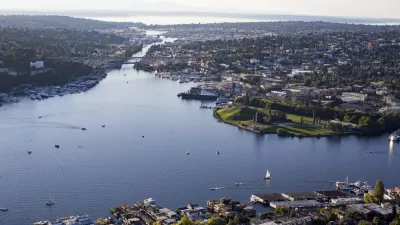
A proposed bill in the Washington state legislature would open the door to more "missing middle housing" in the state, reports Dan Bertolet. "A new bill would not only help correct the historic injustice of zoning laws originally enacted to exclude Black families, but also would relieve the root cause of Washington’s housing crisis: a shortage of homes."
The law would lift local laws that ban multi-family buildings, legalizing denser housing based on its location, local population, and proximity to transit. Based on a California study, this could lead to the construction of more than 200,000 units in Washington. "For a second comparison, a recent University of Washington report estimated that legalizing fourplexes within a quarter-mile of transit stations would create capacity for nearly half a million more homes in the Puget Sound region, which is home to 4.3 million of the state’s 7.6 million residents."
The proposed bill would also limit parking requirements to reduce the cost of construction and encourage multi-modal transportation and transit use. Further, the bill attempts to prevent displacement by requiring citied to adhere to the anti-displacement standards enacted by the state in 2021.
According to the source article, linked below, Washington's proposed legislation differs in key ways from similar laws in California and Oregon, notably by permitting six-unit buildings near transit. While it excludes unincorporated areas and gives cities a minimum density alternative that could let some localities perpetuate exclusionary zoning, the bill has the potential to create hundreds of thousands of new homes for Washingtonians.
FULL STORY: WASHINGTON BILL WOULD LEGALIZE HUNDREDS OF THOUSANDS MORE HOMES

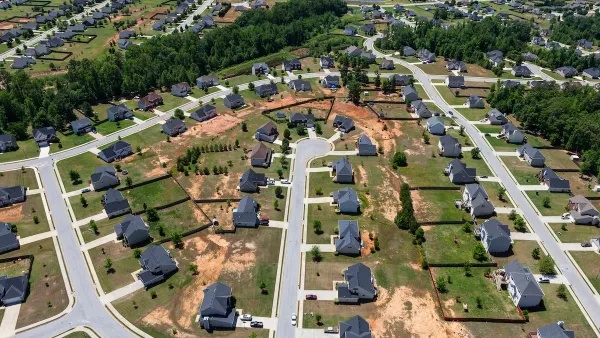
Commentary: Minimum Lot Sizes Drive Up Housing Costs
How making residential building requirements more flexible can ease the housing crisis and make neighborhoods more livable for more households.

Survey: Seattle-Area Residents Support Upzoning
To fight the growing housing crisis, most King County residents support an end to single-family zoning and accelerated housing development, according to a new poll.
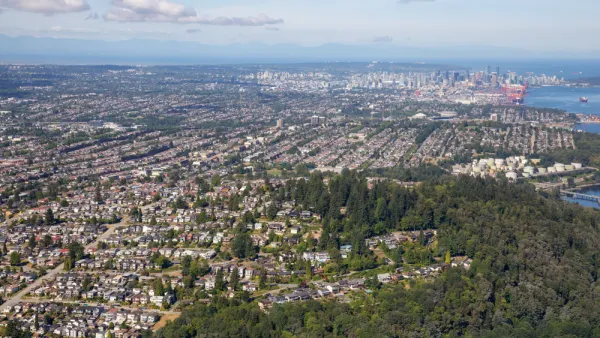
Vancouver's New Housing Plan Takes Shape
If its proposals are effectively implemented, Vancouver's new housing plan would promote 'missing middle housing' and increase density near jobs and transit.

The state-sanctioned urbicide of Austin
People don’t kill cities. Freeways do.

US to reduce Colorado River water deliveries to Mexico
A new Colorado Treaty amendment reduces Mexico’s Colorado River water allocation by 250,000 acre feet.

New Jersey’s second-largest city bans standalone data centers
Jersey City will continue to allow co-location facilities, such as those meant for research institutions that store their own data.

Amtrak not solely to blame for New Jersey commuter rail's unreliability, report finds
A new study from the Garden State Initiative found that NJ Transit’s budget grew 20% across a 4 year period, but reliability declined significantly over the same period.

EPA erases limits on planet-warming pollution from power plants
Under Monday’s plan, power plants would still have some limits on how much mercury, arsenic and other contaminants they can emit.

Phoenix announces new on-demand transit service, more frequent RAPID buses
Both new services will launch in October, and are part of Phoenix's Project Effective Access Solutions for Easing Congestion.

FREE Course: Walkable City 1: Why Walkability?
After describing his path towards focusing on walkability as the essence of good planning, Jeff Speck marches through his five principal reasons for making more walkable places.
Reinventing Malls: Planning Alchemy—Turning Gray Fields Into Gold
The course focuses on the opportunities and imperatives that shape reinvention of mall sites.

Eagle County Government
Harvard University Graduate School of Design
Nashville Planning Department
The Architects Foundation
University of Cincinnati Online
The Pocatello Development Authority
The Urban Renewal Agency of the City of Pocatello
Journal of the American Planning Association