As evidence showing the benefits of dark skies builds, Pittsburgh becomes the first eastern American city to enact a dark sky policy.


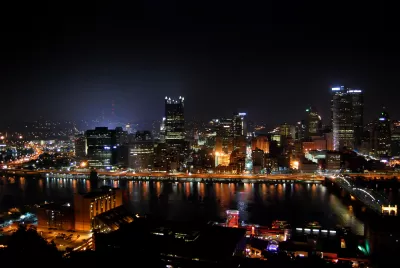
Pittsburgh became the first city in the eastern U.S. to adopt a 'dark sky' policy, reports Josyana Joshua, " meaning that it will switch to lower wattage LED bulbs and add shades along bridges, roads and other public areas" to reduce light pollution and energy use from public lighting.
Although it joins 34 other 'dark sky' communities that have committed to reduced lighting guidelines, "Pittsburgh will be the first city in the world to follow the International Dark Sky Association’s new values-centered outdoor lighting, which means it will follow the group’s more comprehensive suggestions surrounding wattage and color temperature as well as when and how to keep lights on." Dark sky advocates say light pollution disrupts ecosystems and natural processes that depend on light cues, writes Joshua. "It can also confuse the natural 24 hour day/night cycle for humans — a darker sky has been found to have positive effects on mental health, with stargazing and less blue light playing a part."
Despite concerns about safety, research from England and Wales shows that street lighting reductions did not negatively affect crime or car crash rates. Since Pittsburgh's announcement, other eastern cities and states have pushed forward dark sky initiatives of their own.
FULL STORY: Why Pittsburgh Is Dimming Its Streetlights


Turning Out the Lights on Light Pollution
Limiting light pollution can have beneficial effects for humans, animals, and the local economy.

Preserving LA’s Dark Skies
Learn about the importance of dark skies for the health and enjoyment of individuals and wildlife, and how L.A. County's Rural Outdoor Lighting District is helping to reduce light pollution.

The Importance of Dark Skies
Why light pollution harms humans and the environment.

Planetizen Federal Action Tracker
A weekly monitor of how Trump’s orders and actions are impacting planners and planning in America.

The state-sanctioned urbicide of Austin
People don’t kill cities. Freeways do.

US to reduce Colorado River water deliveries to Mexico
A new Colorado Treaty amendment reduces Mexico’s Colorado River water allocation by 250,000 acre feet.

5 New England states march closer to 800 megawatt wind energy project
Securing federal approval for the project may be complicated under the Trump administration, which has historically been hostile towards domestic wind power.

Baltimore to break ground on $50 million Transit Priority Project
The project will bring faster bus trips, safer streets and better bike connections to Baltimore.

Airbnb launches $250 million 'last-dollar financing' housing accelerator, makes first investment in Austin
The company will put $6.4 million towards affordable housing development in Texas’ capital.

FREE Course: Walkable City 1: Why Walkability?
After describing his path towards focusing on walkability as the essence of good planning, Jeff Speck marches through his five principal reasons for making more walkable places.
Reinventing Malls: Planning Alchemy—Turning Gray Fields Into Gold
The course focuses on the opportunities and imperatives that shape reinvention of mall sites.

Eagle County Government
Harvard University Graduate School of Design
Nashville Planning Department
The Architects Foundation
University of Cincinnati Online
The Pocatello Development Authority
The Urban Renewal Agency of the City of Pocatello
Journal of the American Planning Association