Researchers at the University of Washington published a new study of the disparate impacts of air pollution in the United States


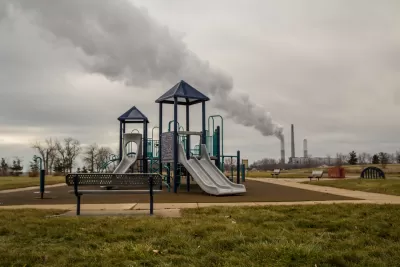
Across multiple pollution types, in different locations, and across the decades, people of color in the United States suffer worse consequences of air pollution that white people, according to an expansive new study.
The research, published today with open access in the Environmental Health Perspectives journal, investigated air pollution exposure disparities by race, ethnicity, and income for multiple criteria of air pollutants and in multiple locations and time periods.
"For all years and pollutants, the racial/ethnic group with the highest national average exposure was a racial/ethnic minority group," according to the study's abstract.
"While overall pollutant levels have dropped since 1990, when Congress amended the Clean Air Act, people of color are still more likely to be exposed to all six pollutants than White people in all 50 states and D.C." -Maxine Joselow for The Washington Post.
Maxine Joselow picked up the news of the research for The Washington Post, placing the findings in context of the efforts by the Biden administration to "[steer] federal investments in clean energy toward communities that have borne the brunt of pollution for decades, including low-income neighborhoods and communities of color."
FULL STORY: Air pollution still disproportionately harms communities of color, study says

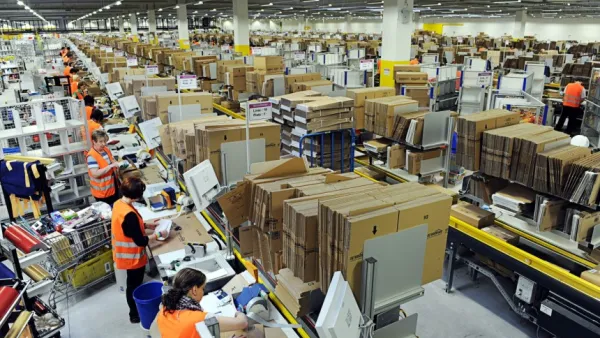
The Impact of Amazon Warehouses on Communities
Often located in low-income communities of color, Amazon's warehouses contribute to public health impacts like poor air quality, noise pollution, and traffic congestion.
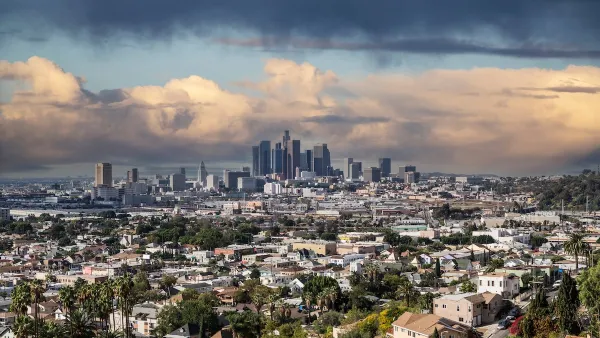
LA Neighborhood Residents Unite to Block Warehouse Project
A group of Lincoln Heights residents expressed concerns about a proposed warehouse that would have brought increased truck traffic to an already overburdened area.
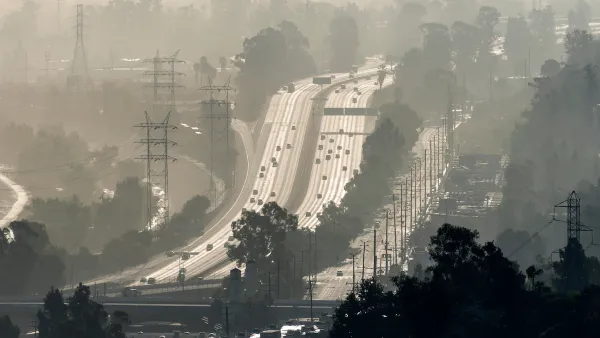
Study: Air Pollution Disproportionately Impacts Communities of Color
The negative effects of poor air quality occur at higher rates in low-income neighborhoods and communities of color, according to new research.

Planetizen Federal Action Tracker
A weekly monitor of how Trump’s orders and actions are impacting planners and planning in America.

The state-sanctioned urbicide of Austin
People don’t kill cities. Freeways do.

US to reduce Colorado River water deliveries to Mexico
A new Colorado Treaty amendment reduces Mexico’s Colorado River water allocation by 250,000 acre feet.

Mamdani overhauls NYC's Vision Zero plan with 100 new policy goals
The overhaul aims to reduce traffic deaths and make streets safer for pedestrians, cyclists and drivers through lower speed limits, new safety infrastructure and more.

Amtrak not solely to blame for New Jersey commuter rail's unreliability, report finds
A new study from the Garden State Initiative found that NJ Transit’s budget grew 20% across a 4 year period, but reliability declined significantly over the same period.

EPA erases limits on planet-warming pollution from power plants
Under Monday’s plan, power plants would still have some limits on how much mercury, arsenic and other contaminants they can emit.

FREE Course: Walkable City 1: Why Walkability?
After describing his path towards focusing on walkability as the essence of good planning, Jeff Speck marches through his five principal reasons for making more walkable places.
Reinventing Malls: Planning Alchemy—Turning Gray Fields Into Gold
The course focuses on the opportunities and imperatives that shape reinvention of mall sites.

Eagle County Government
Harvard University Graduate School of Design
Nashville Planning Department
The Architects Foundation
University of Cincinnati Online
The Pocatello Development Authority
The Urban Renewal Agency of the City of Pocatello
Journal of the American Planning Association