While COVID-19 is a unique moment in American history, experiences from past pandemics shed light on how the pandemic might shape public transit ridership.


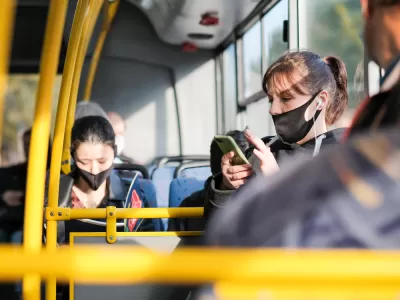
'What does history suggest will happen to transit ridership in America after COVID-19?' asks an article by Jake Blumgart, noting that "It’s impossible to know when, or if, ridership will ever fully recover because there’s no comparable analog to this moment in America’s modern history."
The unique challenges of our era don't compare to the 1918 flu pandemic, when remote work was essentially non-existent and people needed to leave their homes to complete daily tasks. At the same time, governments did not provide economic support, making staying at home and social distancing out of the question, and most Americans did not yet own automobiles. At that time, most transit users had no choice but to continue riding. Today, remote work and widespread car ownership allow more riders to choose a different option, despite the steps taken by transit agencies to reduce the chance of transmission on trains and buses.
As Blumgart writes, the 2003 SARS epidemic presents a more apt comparison. "A 2014 study by Kuo-Ying Wang found that for every new SARS case reported by the media, 1,200 subway users were lost. If anything remotely close to that holds, transit systems in the U.S. will have a long, long path to recovery." Facing continuing uncertainty, American transit agencies are debating a variety of options for adjusting service to better serve post-COVID travel patterns.
FULL STORY: What Does History Teach Us About Pandemics and Transit Ridership?

How to Attract Post-Pandemic Transit Riders
After seeing dramatic cuts in service and ridership during the pandemic, transit agencies have a small window of opportunity to gain and retain regular passengers.
Falling Transit Ridership 'Disastrous' for Greenhouse Gas Reductions
With ridership at record lows and agencies struggling to stay afloat, public transit around the world will need robust investment to recover after the pandemic.
Transit Ridership Dropping Due to Coronavirus; Long-Term Funding Consequences Feared
The effects of a global pandemic on American shores are beginning to emerge for public transit systems. The consequences of a drop in transit ridership could extend beyond the end of the pandemic.

Planetizen Federal Action Tracker
A weekly monitor of how Trump’s orders and actions are impacting planners and planning in America.

The state-sanctioned urbicide of Austin
People don’t kill cities. Freeways do.

US to reduce Colorado River water deliveries to Mexico
A new Colorado Treaty amendment reduces Mexico’s Colorado River water allocation by 250,000 acre feet.

Mamdani overhauls NYC's Vision Zero plan with 100 new policy goals
The overhaul aims to reduce traffic deaths and make streets safer for pedestrians, cyclists and drivers through lower speed limits, new safety infrastructure and more.

Amtrak not solely to blame for New Jersey commuter rail's unreliability, report finds
A new study from the Garden State Initiative found that NJ Transit’s budget grew 20% across a 4 year period, but reliability declined significantly over the same period.

EPA erases limits on planet-warming pollution from power plants
Under Monday’s plan, power plants would still have some limits on how much mercury, arsenic and other contaminants they can emit.

FREE Course: Walkable City 1: Why Walkability?
After describing his path towards focusing on walkability as the essence of good planning, Jeff Speck marches through his five principal reasons for making more walkable places.
Reinventing Malls: Planning Alchemy—Turning Gray Fields Into Gold
The course focuses on the opportunities and imperatives that shape reinvention of mall sites.

Eagle County Government
Harvard University Graduate School of Design
Nashville Planning Department
The Architects Foundation
University of Cincinnati Online
The Pocatello Development Authority
The Urban Renewal Agency of the City of Pocatello
Journal of the American Planning Association