Attention to the human and economic costs of evictions predate the pandemic, but the economic disruption of the past two years has increased the need for better tools to measure and respond to evictions.


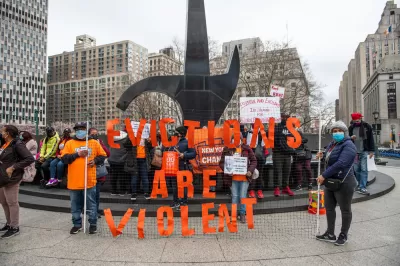
An eviction crisis has loomed over the United States since the lockdowns and stay-at-home orders of Spring 2020, but it's always been hard to tell how bad the effects if the pandemic would be for vulnerable renters.
To clarify an assessment of the eviction crisis, an article for the National league of Cities, written by Lauren Lowery, Tina Lee, Samantha Carr, Sabiha Zainulbhai, and Nóra Al Haider, advocates for the resources necessary for cities to grapple with the ongoing waves of evictions.
The organization of the article reveals the work being done here: 1) What cities need, 2) barriers, 3) addressing data gaps, and 4) what cities can do to increase access to eviction data. While the first two sections of the article lay out the scope of the problem, the second two sections provide case studies of best practices and lay out a forward looking agenda for improving the ability of cities to assess and respond to the eviction crisis.
Read the full story: The Data Cities Need to Understand & Address Their Eviction Crises
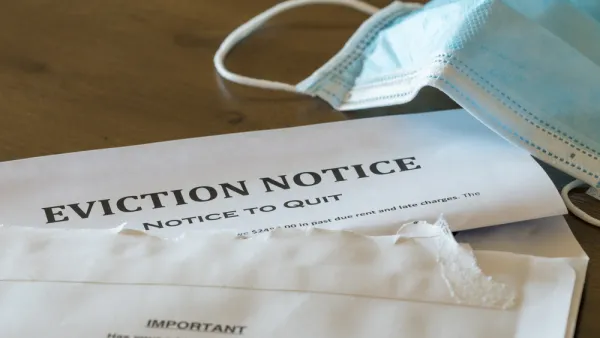
Federal Judge Tosses CDC's Eviction Moratorium
"The CDC order must be set aside," said U.S. District Judge Dabney Friedrich in a ruling announced Wednesday, May 5.
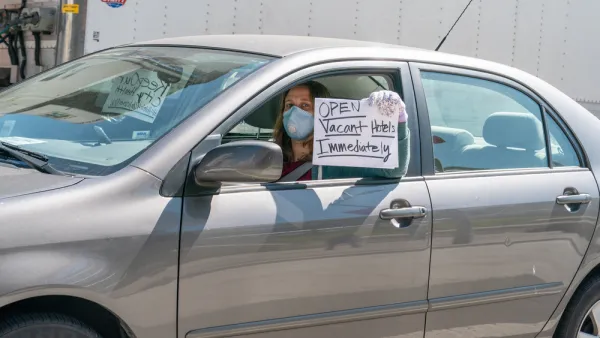
Report: $15.5 Billion Per Month Needed for Housing Market Relief
A new report from researchers at the Urban Institute makes the case for federal and state relief for renters and property owners hurt by the economic realities of the coronavirus pandemic.
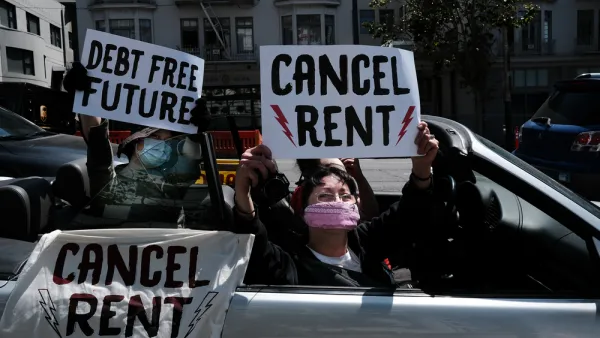
The Looming Eviction Crisis
Of all the nightmare scenarios that became possible when the coronavirus hit the shores of the United States, the possibility of massive evictions and a rental market failure seems to have averted the worst possible outcomes. That could still change.

Planetizen Federal Action Tracker
A weekly monitor of how Trump’s orders and actions are impacting planners and planning in America.

California plans to bury El Niño’s downpour
If the state plays its cards right, it may be able to store a billion acre-feet of El Niño’s water in aquifers.

Desperate measures: Advocates weigh draining Lake Powell to fill Colorado River
Draining the reservoir could reduce evaporation losses by a couple hundred thousand acre-feet.

US buildings threatened, destroyed by fires set to triple by 2060
Researchers found a high fire risk for socioeconomically vulnerable neighborhoods in the American West.

LA residents may be allowed to paint their own crosswalks
Councilwoman Katy Yaroslavsky put out a motion instructing the Los Angeles Department of Public Transportation to study the feasibility of allowing volunteers to paint crosswalks.

Dallas moves to overhaul its zoning code
The city's zoning reform will allow more multi-family and mixed-use developments.

FREE Course: Walkable City 1: Why Walkability?
After describing his path towards focusing on walkability as the essence of good planning, Jeff Speck marches through his five principal reasons for making more walkable places.
Reinventing Malls: Planning Alchemy—Turning Gray Fields Into Gold
The course focuses on the opportunities and imperatives that shape reinvention of mall sites.

City of Rosemead
Rutgers University, Edward J. Bloustein School of Planning and Public Policy
One Hundred Miles
Hunter College, City University of New York (CUNY)
The Architects Foundation
University of Cincinnati Online
City of Cambridge
Montrose County
The Pocatello Development Authority