In a sign that the pandemic is far from over, Colorado reactivated its crisis standards of care for staffing of health care systems on Nov. 9 as infections increased modestly nationwide. Gov. Polis made all vaccinated adults eligible for a booster.



"The pandemic isn’t over," wrote The Washington Post's health policy reporter, Yasmeen Abutaleb, and science and politics reporter, Joel Achenbach, in a provocatively titled article on Oct. 31 that suggested that time was fast-approaching.
But new cases nationally have dropped below 75,000 a day, less than half the number in August. The United States will soon reopen land borders to vaccinated visitors and lift several international travel restrictions.
Eleven days later, The Washington Post coronavirus tracker shows the seven-day average of daily new cases at just over 76,000, a 7% increase in the past week. In a rare alignment, The New York Times tracker shows the same percentage increase over the last two weeks, suggesting a plateau may have been reached, if only temporarily.
There could still be a winter surge since respiratory viruses thrive when people huddle in heated rooms. Some experts said they expect at least a modest uptick in infections over the next few weeks. Last year’s brutal winter wave of infections, which peaked in January, was just getting rolling at this point on the calendar.
Western surge
"Hospitals in some parts of the U.S. are already starting to see the impact of an autumn wave of Covid-19 infections, the latest sign that the health-care system still faces serious pressure from the virus, even in places that have achieved relatively high vaccination rates," report Jonathan Levin and Vincent Del Giudice for Bloomberg Prognosis on Nov. 11 (source article).
Intensive-care unit beds occupied by Covid-19 patients are climbing in 12 states from two weeks earlier, with most of them in a contiguous strip running from Arizona and New Mexico, through the Great Plains and into Minnesota. In several Western states, many doctors and nurses haven’t caught their breath from the last round of infections.
Which brings us to Colorado
"Citing burnout and dwindling ranks of workers, Colorado has activated a 'crisis standards of care' hospital staffing plan giving the health care industry broad authority to fill personnel gaps as Covid-19 cases surge statewide, officials announced Tuesday," reported Del Giudice on Nov. 9.
Colorado’s surge in cases, mainly among the unvaccinated, has led to a shortage of “staffed hospital beds” with intensive care unit bed availability at less than 100 for a state with a population of 5.7 million. Colorado’s hospitals have also activated a mutual aid plan allowing statewide patient transfers to ease crowding even with 80% of eligible state residents having received at least one vaccine dose.
According to The New York Times coronavirus tracker, 62% of the population is fully vaccinated, 3% higher than the national average.
Boosters for all
Two days after authorizing the Colorado Department of Public Health and Environment to reactivate the crisis standards, originally written early in the pandemic in April 2020, Gov. Jared Polis signed an executive order [pdf] making every vaccinated adult eligible for a booster shot, superseding the Centers for Disease Control and Prevention's eligibility guidelines by "declaring Colorado as high risk for exposure or transmission of COVID-19."
"The order is meant to help protect public health, reduce virus transmission, preserve hospital capacity and alleviate the stress on health care workers from the COVID-19 pandemic in Colorado," reported Jake Shapiro for The Denver Post on Nov. 11.
Of the 1,431 people in a Colorado hospital with a confirmed case of COVID-19, 80% are unvaccinated. The governor is urging Coloradans to get any vaccine immediately.
The Post reported earlier that "[n]ew modeling...showed more than 2,000 people could be hospitalized with the virus across the state by year’s end, surpassing the high point of last fall’s deadly wave."
While the unvaccinated are most at risk for severe disease, the vaccines do not ensure full protection from the virus due in part to waning immunity.
Massachusetts breakthrough cases and hospitalizations
The percentage of vaccinated patients hospitalized with COVID in Massachusetts is considerably higher than in Colorado due to its higher vaccination rate: 70% of the population is fully vaccinated, tied with Puerto Rico in having the sixth-highest level after Guam and Vermont with 72%, and Rhode Island, Maine, and Connecticut with 71%, according to the Times tracker.
NBC Boston reported on Nov. 10 that breakthrough infections rose 44% from the preceding week. On Nov. 9, they reported that of the 515 people hospitalized with COVID, 181, or 35%, were vaccinated.
Headed for endemicity
As with Alaska and Idaho that recently activated the crisis care standards, Gov. Polis did not order any restrictions to slow transmission despite Colorado having the nation's second-highest daily case incidence, 65 per 100,000 people, after North Dakota, according to the Times tracker on Nov. 11. The national average is 22 per100k.
The political reluctance to take steps to mitigate spread, particularly in blue states, reflects what Abutaleb and Achenbach wrote earlier in The Washington post—the pandemic may be winding down.
With most people vaccinated and infection rates dropping, the United States has entered a new phase of the pandemic in which people are adapting to the persistent presence of an endemic but usually nonlethal pathogen. They really have no choice. The virus isn’t going away.
Related posts in Planetizen:
-
Boosters and Breakthroughs in Vermont, October 4, 2021
-
Alaska Activates Crisis Standards of Care, September 27, 2021
-
The Pandemic Crisis Is a Hospital Crisis, September 23, 2021
-
Louisiana's Health Care System on Brink of Collapse, August 26, 2021
FULL STORY: Hospitals in Western U.S. Under Siege as Covid-19 Packs ICUs

Let the Endemic Planning Begin
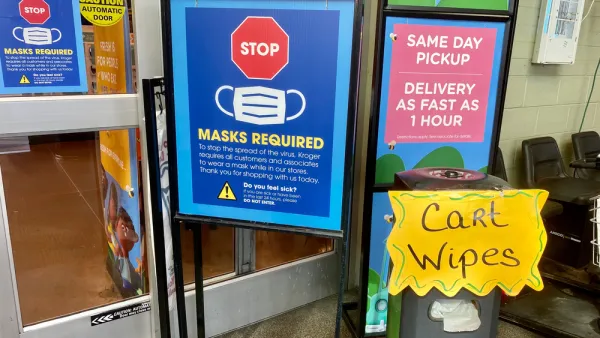
The first state in the nation to issue a stay-at-home order to slow the spread of a novel coronavirus that humans had no immunity from became the first to release an actual endemic plan, complete with a fancy acronym, SMARTER.
Revisiting Vermont: A COVID Update
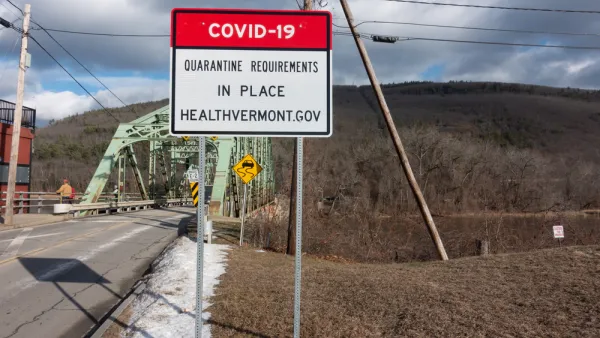
PBS NewsHour investigates the surging coronavirus cases and hospitalizations in Vermont which, along with Rhode Island, has 75% of its total population fully vaccinated, the nation's highest, as the U.S. appears to enter a winter surge.

Pandemic Geography: What's Going on in Singapore?
With 82% of its population fully vaccinated, mostly with mRNA vaccines, COVID case incidence on Nov. 1 is the same as Wyoming, where 44% of the population is fully vaccinated. Hospitals are feeling the strain, and deaths are at their highest level.

Planetizen Federal Action Tracker
A weekly monitor of how Trump’s orders and actions are impacting planners and planning in America.

The state-sanctioned urbicide of Austin
People don’t kill cities. Freeways do.

US to reduce Colorado River water deliveries to Mexico
A new Colorado Treaty amendment reduces Mexico’s Colorado River water allocation by 250,000 acre feet.

Mamdani overhauls NYC's Vision Zero plan with 100 new policy goals
The overhaul aims to reduce traffic deaths and make streets safer for pedestrians, cyclists and drivers through lower speed limits, new safety infrastructure and more.

Amtrak not solely to blame for New Jersey commuter rail's unreliability, report finds
A new study from the Garden State Initiative found that NJ Transit’s budget grew 20% across a 4 year period, but reliability declined significantly over the same period.

EPA erases limits on planet-warming pollution from power plants
Under Monday’s plan, power plants would still have some limits on how much mercury, arsenic and other contaminants they can emit.

FREE Course: Walkable City 1: Why Walkability?
After describing his path towards focusing on walkability as the essence of good planning, Jeff Speck marches through his five principal reasons for making more walkable places.
Reinventing Malls: Planning Alchemy—Turning Gray Fields Into Gold
The course focuses on the opportunities and imperatives that shape reinvention of mall sites.

Eagle County Government
Harvard University Graduate School of Design
Nashville Planning Department
The Architects Foundation
University of Cincinnati Online
The Pocatello Development Authority
The Urban Renewal Agency of the City of Pocatello
Journal of the American Planning Association