The city of College Park will weigh recommendations from a newly formed Restorative Justice Steering Committee aimed at acknowledging and mitigating the damage to Black communities caused by urban renewal policies.


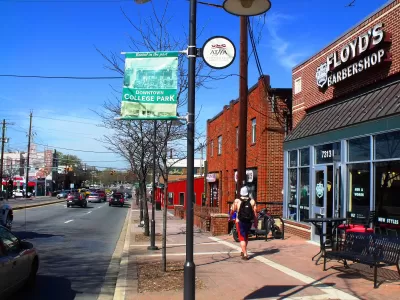
As reported by Diane Bernard, next week, College Park, Maryland's Restorative Justice Steering Committee will give the city a list of recommendations for a restorative justice program aimed at uncovering the stories of residents harmed by urban renewal policies and finding ways to compensate them.
While the specific form the reparations will take is still unclear, writes Bernard,
Potential reparations include neighborhood stabilization programs, which are used to assist communities with high foreclosure rates and provide funds to low- and middle-income households, and formal preservation of the community’s history through a cultural center and public projects. Compensation could also take the form of low-income housing and other kinds of financial support, which Wojahn said will unfold as the commission gets underway.
Like other Black communities around the country, Lakeland experienced the negative impacts of urban renewal as officials branded the area 'blighted' and forced residents out in the name of redevelopment. The city's reparations program seeks to acknowledge and address some of the damage done by these policies by providing resources and support to the households affected and creating programs aimed at promoting equity.
Other cities such as Evanston, Illinois, Asheville, North Carolina, and St. Paul, Minnesota have voted to create programs that fund housing assistance for families affected by redlining and other discriminatory housing policies.
Read the full story: A university town explores reparations for a Black community uprooted by urban renewal
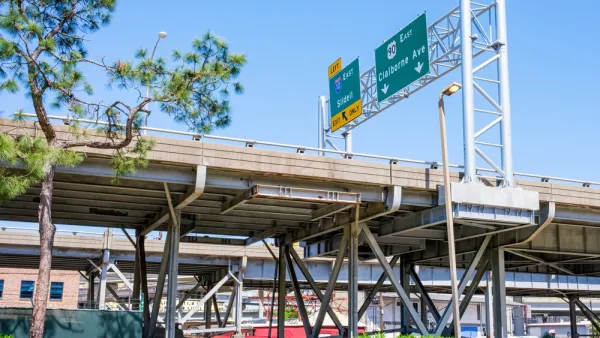
‘Reconnecting Communities’ Could Fund Highway Expansions
Applications to the program reveal a pattern of state agencies requesting funds for projects that perpetuate car-centric development with only nominal equity components.

Santa Monica Offers Affordable Housing to Residents Displaced by Freeway Construction
A new program seeks to make restitution for the damage inflicted on Black communities by highway construction and urban renewal.
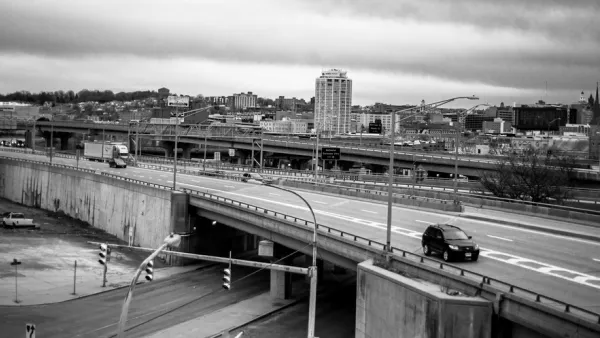
Can Reparations Right the Wrongs Caused by a Highway?
An elevated highway destroyed an African American community in Syracuse, New York. Is just removing it enough?

Planetizen Federal Action Tracker
A weekly monitor of how Trump’s orders and actions are impacting planners and planning in America.

California plans to bury El Niño’s downpour
If the state plays its cards right, it may be able to store a billion acre-feet of El Niño’s water in aquifers.

Desperate measures: Advocates weigh draining Lake Powell to fill Colorado River
Draining the reservoir could reduce evaporation losses by a couple hundred thousand acre-feet.

Mamdani’s pied-à-terre tax survives legal challenge
A panel of judges found that the plaintiffs failed to demonstrate injury as a result of New York City's implementation of the tax.

Eastern Nebraska is running out of electricity
Data centers and electrification are straining eastern Nebraska’s grid, throttling economic development.

Seattle passes record-breaking transit services expansion
Proposition 1 will double the city’s transit tax to add 95,000 more bus trips and preserve 180,000 bus trips annually.

FREE Course: Walkable City 1: Why Walkability?
After describing his path towards focusing on walkability as the essence of good planning, Jeff Speck marches through his five principal reasons for making more walkable places.
Reinventing Malls: Planning Alchemy—Turning Gray Fields Into Gold
The course focuses on the opportunities and imperatives that shape reinvention of mall sites.


City of Rosemead
Rutgers University, Edward J. Bloustein School of Planning and Public Policy
One Hundred Miles
University of Michigan School for Environment and Sustainability (SEAS)
Hunter College, City University of New York (CUNY)
The Architects Foundation
City of Cambridge
Montrose County
The Pocatello Development Authority