Corruption is a common companion to the development approvals process—Cincinnati is no exception. But Cincinnati is attempting a new approach to conflicts of interest.


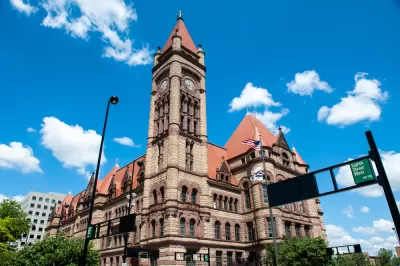
Madeline Ottilie reports on a drastic response to a corruption scandal rocking the Cincinnati City Council: a ban on developer political contributions.
Ottilie reports that a law approved last week by the Cincinnati City Council bars elected officials "from accepting or asking for donations from developers that have business before council."
Three city councilmembers faced federal indictment on corruption charges in 2020: Tamaya Dennard, Jeff Pastor, and PG Sittenfeld.
Among the large cities in the United States, only Los Angeles rivals Cincinnati with the breadth and depth of corruption indictments in recent years. In October, Los Angeles Councilmember Mark Ridley-Thomas became the latest to face federal indictment in that city, but Los Angeles has yet to take such drastic action to quell the recent spate of corruption charges.
All three corruption charges in Cincinnati involved the development process, according to Ottilie's article, and accordiing to sources cited in the article, the city now has a reputation as a "pay-to-play" government. Liz Keating, Cincinnati council member and candidate for reelection, is quoted in the article saying the council should have gone further in limiting the potential for corruption in the development approvals process. The source article includes more detail about the limits of local power in limiting political donations.
Read the full story: Cincinnati city council passes ban on developers to cut down on corruption
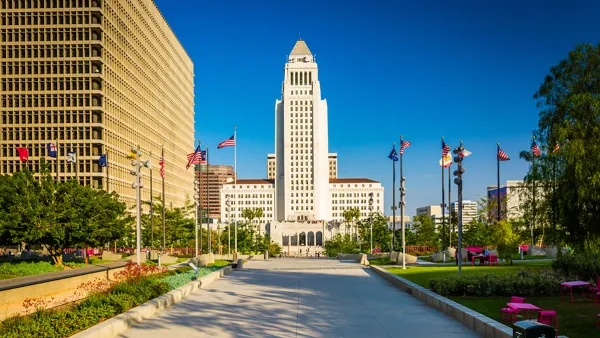
L.A. City Councilmember Arrested, to Face Charges in Development Corruption Scheme
Longtime City Councilmember Jose Huizar was arrested at his home in Boyle Heights this morning, in the latest signal of a culture of corruption at Los Angeles City Hall.
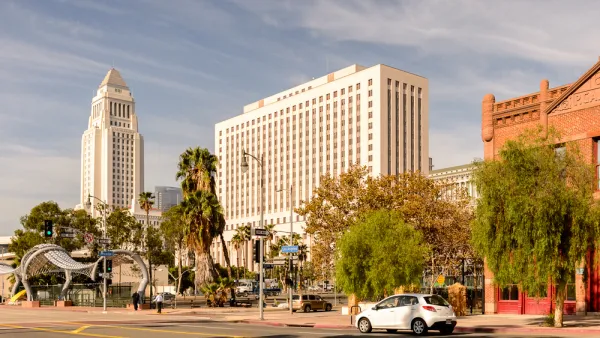
Keeping Bees Away from Honey? Corruption Cases Expose Flaws in L.A. City’s Land Entitlement Process
Three former Los Angeles public officials share their collective perspective on how best to reform the city of Los Angeles' corrupted land use approval process.
The High Costs of Housing Development: It's Complicated
The high costs of housing development do not fit a convenient narrative, according to new analysis by Jenny Schuetz from the Brookings Institution.

Planetizen Federal Action Tracker
A weekly monitor of how Trump’s orders and actions are impacting planners and planning in America.

Eastern Nebraska is running out of electricity
Data centers and electrification are straining eastern Nebraska’s grid, throttling economic development.

Washington state to charge fee to drivers with fuel-efficient cars
Revenue from the fee will go towards supporting the state’s highways.

Instead of building new housing, LA developers are turning mansions into mega-mansions
In the richest areas, the number of houses valued at $30 million with demolition permits has skyrocketed since 2018.

Illinois considers spending $1 billion in taxpayer money on data center
A quantum computing campus and data center are currently under construction in Chicago.

As development costs rise, Boston moves to lessen affordable housing requirements
The Boston Zoning Commission and the City Council still need to approve Boston Mayor Michelle Wu’s proposed changes

FREE Course: Walkable City 1: Why Walkability?
After describing his path towards focusing on walkability as the essence of good planning, Jeff Speck marches through his five principal reasons for making more walkable places.
Reinventing Malls: Planning Alchemy—Turning Gray Fields Into Gold
The course focuses on the opportunities and imperatives that shape reinvention of mall sites.

City of Charlotte
City of Rosemead
Rutgers University, Edward J. Bloustein School of Planning and Public Policy
University of Michigan School for Environment and Sustainability (SEAS)
Hunter College, City University of New York (CUNY)
The Architects Foundation
City of Cambridge
The Pocatello Development Authority
The Urban Renewal Agency of the City of Pocatello