A NOAA-led task force warns that the drought facing the western U.S. will continue well into 2022 or later without serious efforts to mitigate human-caused global warming.


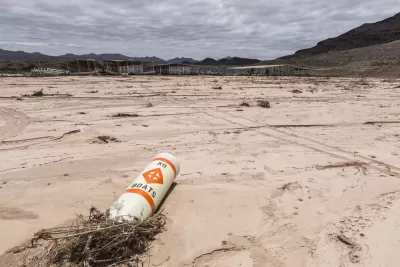
As the years-long drought in the Southwest continues to intensify, Rebecca Lindsey writes that the "extremely high temperatures brought by human-caused global warming" combined with record-low precipitation to create devastating conditions–and that, without more aggressive interventions to control global warming, the current drought may just be "a preview of coming attractions." This is according to a new report from a National Oceanic and Atmospheric Administration (NOAA)-led task force, which found that "almost the entire western half of the contiguous United States" faced "some level of drought" by the end of August 2021, while temperatures for the prior months reached "near-record highs."
Exactly how devastating these conditions will be in different parts of the Southwest will depend on regional and seasonal variability in future precipitation as well as the decisions people make about how to manage the region’s scarce water resources. But the current drought suggests that the costs will be steep and the impacts far-reaching. The NOAA Drought Task Force estimated that the 2020 economic cost of drought in the Southwest was between $515 million and $1.3 billion—not including the costs associated with fires.
The task force warns that this year's winter precipitation will likely "be below average once again," dashing hopes for a break in the current drought.
Read the full story: NOAA-led drought task force concludes current Southwest drought is a preview of coming attractions

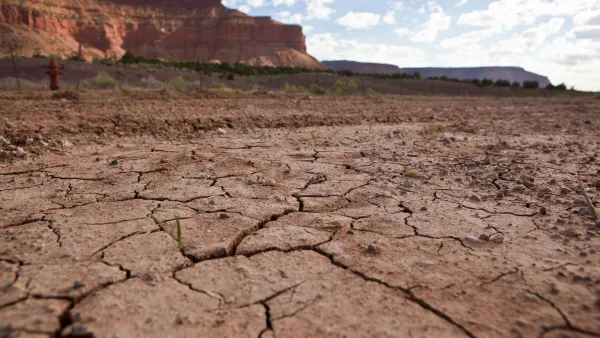
Researchers Propose the Concept of 'Anthropogenic Drought'
As climate change heightens the risk of intense drought periods, a new framework can help scientists better understand the interconnected causes and effects of drought.
FTA Kills ‘Social Cost of Carbon’ in Transit Grant Criteria
The Capital Investments Grant program will no longer factor in the future impacts of carbon emissions.
How Cities Can Curb Climate Change and Protect Vulnerable Residents
A new U.N. report urges cities to upgrade their infrastructure to bolster climate resilience and build more sustainable, climate-friendly places.

Planetizen Federal Action Tracker
A weekly monitor of how Trump’s orders and actions are impacting planners and planning in America.

Amtrak, CN end decades-long dispute with eight-year agreement
The new operating agreement establishes an updated framework for the companies to work together, including processes to resolve disputes.
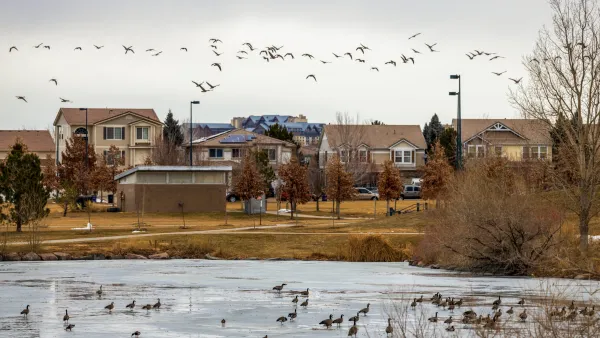
Colorado’s Largest Data Center Could Rise Next to Homes — Without a Public Hearing
The proposed campus would consume 11 times the power of Denver International Airport; as it has across the country, opposition mounts.

'This is going to be painful:’ Virginia stares down $1.7 billion funding gap for highway maintenance
The state may address the deficit by shifting $290 million from its construction budget to maintenance projects.
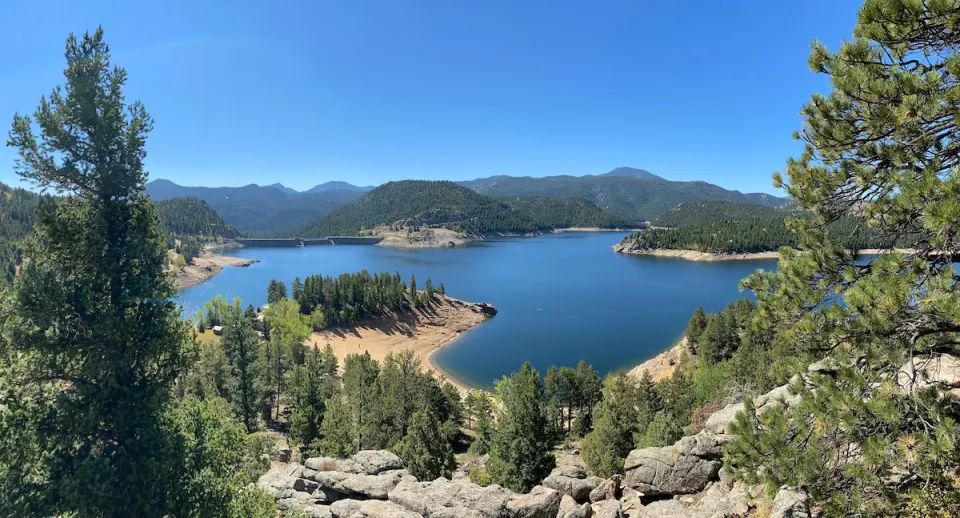
Judges permit Denver to divert 77,000 acre feet from the Colorado River for reservoir expansion
Overuse and climate change have caused the Colorado River’s water levels to plummet.

Amtrak, CN end decades-long dispute with eight-year agreement
The new operating agreement establishes an updated framework for the companies to work together, including processes to resolve disputes.

FREE Course: Walkable City 1: Why Walkability?
After describing his path towards focusing on walkability as the essence of good planning, Jeff Speck marches through his five principal reasons for making more walkable places.
Reinventing Malls: Planning Alchemy—Turning Gray Fields Into Gold
The course focuses on the opportunities and imperatives that shape reinvention of mall sites.

KFH Group Inc.
Greater Baltimore Committee
Eagle County Government
The Architects Foundation
University of Cincinnati Online
The Pocatello Development Authority
The Urban Renewal Agency of the City of Pocatello