European countries are committing to making intercity rail the preferable option compared to domestic and intra-continental flights. The shift seems to be working in Italy.



Over two thirds of people traveling between Roma and Milan take the train, with the number of passengers on the route (the main business route in Italy) quadrupling over the past decade. The trend in Italy reflects a broader cultural movement in Europe and achieves the desired effect of specific policy efforts of countries like Germany and France.
An article by Julia Buckley speculates about whether the success of intercity rail in Italy contributed to the demise of Alitalia—the national airline is shutting down business today.
According to the article, Alitalia tended to focus on domestic flights, so it "was a bird with its wings very much clipped from the start." The article mostly credits the demise of the airline on the market, not public policy. According to sources cited in the article, a "cocktail" of low-cost airlines and high-speed trains proved too much competition for the airline. On the rail side, there are now two high-speed rail companies (one public, Trenitalia, and one private, Nuovo Trasporto Viaggiatori) to choose from, and the rail infrastructure of the country is dramatically improved from the country's past.
According to Buckley's sources, tourists and Italians alike find the trains easier, cheaper, and quicker than flying. The consequences of this shift have spread to other sectors of the economy as well. "While real estate prices in Milan dipped 20.5% from 2008 to 2018, prices for offices around the high-speed stations of Rogoredo and Porta Garibaldi were up around 10%," according to Buckley.
FULL STORY: How Italy's high-speed trains helped kill Alitalia

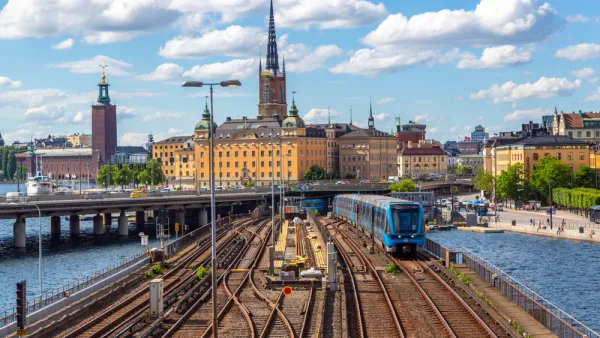
Train Travel Gains Popularity as 'Flight Shame' Trends in Europe
A greener life means fewer flights for many Europeans.

France to Ban Flights for Trips That Can Be Made by Train
One form of climate action gained major momentum in Europe over the weekend.
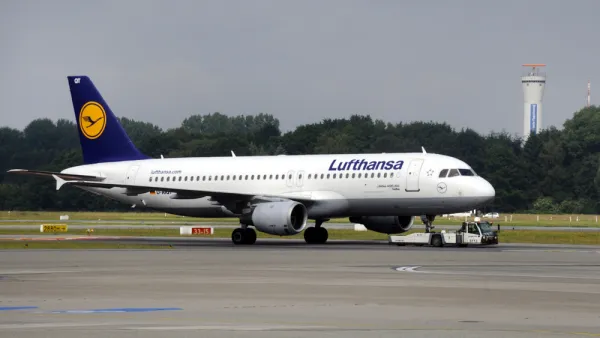
German Greens Want Domestic Air Travel to Be Obsolete by 2035
Alliance 90/The Greens, a political party in Germany, wants the country's domestic travel to shift completely to rail. Achieving that goal will require making air travel more expensive and rail travel cheaper and easier.

Planetizen Federal Action Tracker
A weekly monitor of how Trump’s orders and actions are impacting planners and planning in America.

The state-sanctioned urbicide of Austin
People don’t kill cities. Freeways do.

US to reduce Colorado River water deliveries to Mexico
A new Colorado Treaty amendment reduces Mexico’s Colorado River water allocation by 250,000 acre feet.

5 New England states march closer to 800 megawatt wind energy project
Securing federal approval for the project may be complicated under the Trump administration, which has historically been hostile towards domestic wind power.

Baltimore to break ground on $50 million Transit Priority Project
The project will bring faster bus trips, safer streets and better bike connections to Baltimore.

Airbnb launches $250 million 'last-dollar financing' housing accelerator, makes first investment in Austin
The company will put $6.4 million towards affordable housing development in Texas’ capital.

FREE Course: Walkable City 1: Why Walkability?
After describing his path towards focusing on walkability as the essence of good planning, Jeff Speck marches through his five principal reasons for making more walkable places.
Reinventing Malls: Planning Alchemy—Turning Gray Fields Into Gold
The course focuses on the opportunities and imperatives that shape reinvention of mall sites.

Eagle County Government
Harvard University Graduate School of Design
Nashville Planning Department
The Architects Foundation
University of Cincinnati Online
The Pocatello Development Authority
The Urban Renewal Agency of the City of Pocatello
Journal of the American Planning Association