The National Aquarium wants to recreate the tidal marshes that once lined the city's waterfront.


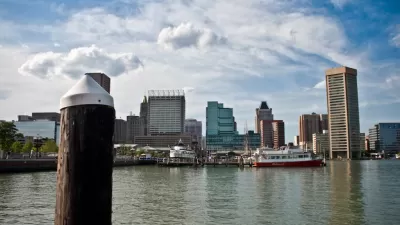
Baltimore's Inner Harbor "was once lined with tidal salt marshes, only a few feet deep and teeming with aquatic life," writes Elizabeth Shwe. But as the city industrialized, those marshes were dredged to make room for deepwater shipping ports. "Now the National Aquarium is trying to recreate those rich tidal marshes of yore by building an oasis of floating wetlands at the aquarium’s campus off Pratt Street."
"Floating wetlands can bring natural habitats back to the harbor, such as a nursery for hatching fish and a safe shallow place for blue crabs to shed their shells," as well as improve water quality and provide educational opportunities for local residents. Jack Cover, general curator of living exhibits at the National Aquarium, "has been maintaining a 400-square-foot floating wetland prototype for four years, testing the durability of materials in the Harbor and gathering information on what animals will inhabit this habitat to prepare for the aquarium’s larger project." He says "[f]loating wetlands are also examples of how low-tech green infrastructure can be added to a waterfront city to help clean air and water."
Cover hopes "[l]earning more about the harbor could motivate people to make small changes in their lives such as planting more trees to expand green infrastructure or advocating for better environmental legislation."
FULL STORY: Floating Wetlands Planned for Inner Harbor to Revive Urban Ecosystems, Clean Water

Plan to Heal Baltimore's Harbor Encounters Opposition from Officials
A local marina owner's plan to build a floating marsh in Baltimore's Inner Harbor to help clean up the city's main tourist attraction is being viewed skeptically by officials, who have raised a number of questions and concerns.
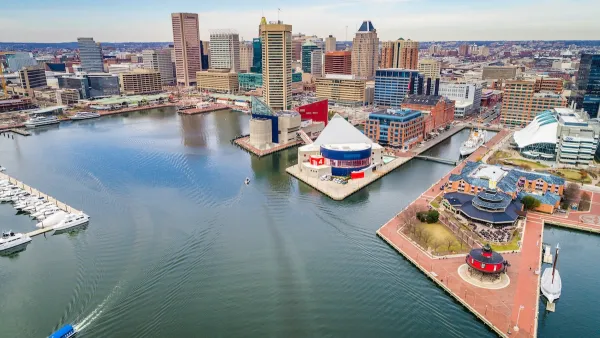
Baltimore Invests Billions to Clean its Waterways
Like Paris, the city has been working to improve its wastewater system and make local waterways safe for swimming.
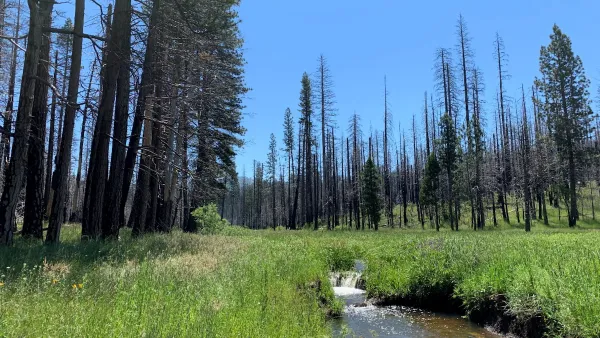
Yosemite Meadow Undergoing Major Restoration
Rangeland recently acquired from private owners is being restored to a more natural state thanks to a purchase by the Trust for Public Land.

Planetizen Federal Action Tracker
A weekly monitor of how Trump’s orders and actions are impacting planners and planning in America.

The state-sanctioned urbicide of Austin
People don’t kill cities. Freeways do.

US to reduce Colorado River water deliveries to Mexico
A new Colorado Treaty amendment reduces Mexico’s Colorado River water allocation by 250,000 acre feet.

5 New England states march closer to 800 megawatt wind energy project
Securing federal approval for the project may be complicated under the Trump administration, which has historically been hostile towards domestic wind power.

Baltimore to break ground on $50 million Transit Priority Project
The project will bring faster bus trips, safer streets and better bike connections to Baltimore.

Airbnb launches $250 million 'last-dollar financing' housing accelerator, makes first investment in Austin
The company will put $6.4 million towards affordable housing development in Texas’ capital.

FREE Course: Walkable City 1: Why Walkability?
After describing his path towards focusing on walkability as the essence of good planning, Jeff Speck marches through his five principal reasons for making more walkable places.
Reinventing Malls: Planning Alchemy—Turning Gray Fields Into Gold
The course focuses on the opportunities and imperatives that shape reinvention of mall sites.

Eagle County Government
Harvard University Graduate School of Design
Nashville Planning Department
The Architects Foundation
University of Cincinnati Online
The Pocatello Development Authority
The Urban Renewal Agency of the City of Pocatello
Journal of the American Planning Association