The proposed Comprehensive Housing Affordability Act would trade development fees for zoning relief.



"State Rep. Steve Elkins, DFL–Bloomington, announced his Comprehensive Housing Affordability Act to reform zoning laws preventing affordable construction statewide," reports Scott McClallen.
"The bill aims to let cities assess development impact fees and street improvement districts in exchange for removing certain zoning and regulatory burdens," according to McClallen.
Elkins cited a recent StarTribune exposé on exclusionary housing practices in the Twin Cities to justify the changes proposed by the law in a statement quoted in the article. Elkin also explained that the bill is designed to provide new revenue for cities to fund the infrastructure to support new development and to remove obstacles preventing developers from building an "adequate supply of new homes and apartments affordable to young families."
As proposed, the law builds on zoning reform momentum around the state, following shortly after the St. Paul City Council voted to remove parking minimums citywide and several years after the city of Minneapolis adopted the Minneapolis 2040 Comprehensive Plan, which led the city to allow multi-family dwellings up to three-plexes on residential properties citywide.
Read the full story: Minnesota lawmakers look to create more affordable housing
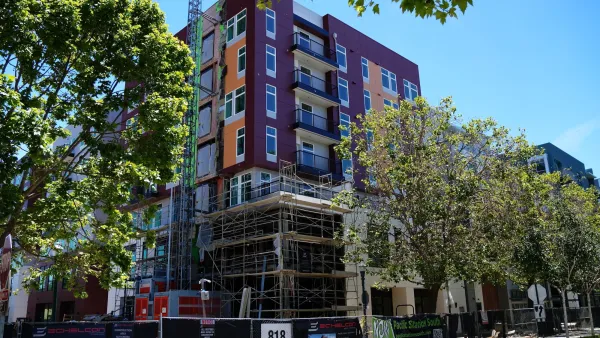
Report: California's density bonus is a 'win-win' for developers and affordable housing
Almost half of new multifamily projects in 2024 relied on a density bonus.
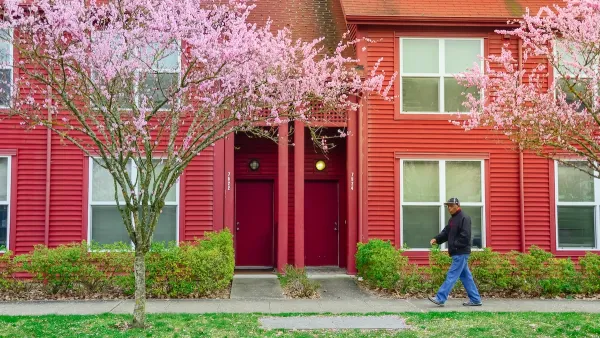
Seattle’s Zoning Reform Could Unlock a ‘Multiplex Boom’
A package of stackable density bonuses could make it easier for developers to build 12-plexes.
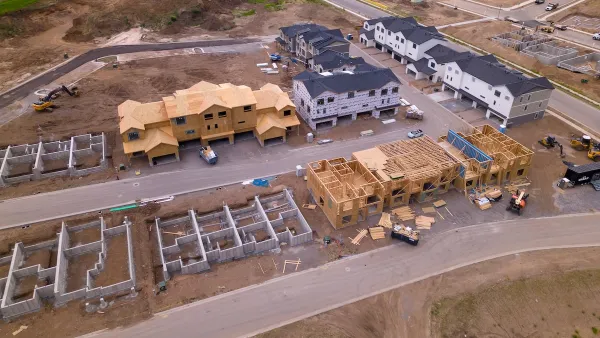
‘Montana Miracle:’ The State Actually Succeeding at Housing Reform
A series of ambitious zoning reforms is having a significant impact on the state’s housing supply.

Planetizen Federal Action Tracker
A weekly monitor of how Trump’s orders and actions are impacting planners and planning in America.

California plans to bury El Niño’s downpour
If the state plays its cards right, it may be able to store a billion acre-feet of El Niño’s water in aquifers.

Desperate measures: Advocates weigh draining Lake Powell to fill Colorado River
Draining the reservoir could reduce evaporation losses by a couple hundred thousand acre-feet.

In Texas, data centers are swallowing promised parkland
Residents who moved to Taylor, Texas for a rural community now have to contend with three data centers in their backyard.

How a Chicago-sized wind farm beat the odds and powered on
The project spanned five presidential administrations and a standoff with a U.S. military base.

MTA gives itself 30 days to transform pit into basketball court
The site has been under construction since 2022; the city originally estimated it would finish the court in 2024.

FREE Course: Walkable City 1: Why Walkability?
After describing his path towards focusing on walkability as the essence of good planning, Jeff Speck marches through his five principal reasons for making more walkable places.
Reinventing Malls: Planning Alchemy—Turning Gray Fields Into Gold
The course focuses on the opportunities and imperatives that shape reinvention of mall sites.

City of Rosemead
Rutgers University, Edward J. Bloustein School of Planning and Public Policy
One Hundred Miles
Hunter College, City University of New York (CUNY)
The Architects Foundation
University of Cincinnati Online
City of Cambridge
Montrose County
The Pocatello Development Authority