Efforts to revitalize declining downtowns have, in some cases, become catalysts for supporting small, minority-owned, local businesses.


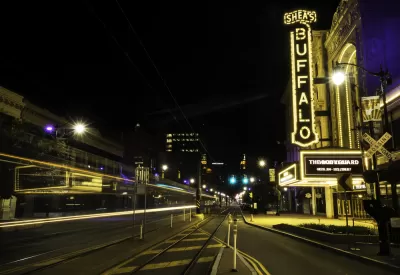
"What role should public spaces play as cities strive to recover more equitably? At a time when so many people and small businesses are suffering, what is the value of public space investments, and importantly, who stands to benefit from this value?" Hanna Love and Cailean Kok discuss the findings of research from Albuquerque, N.M., Buffalo, N.Y., and Flint, Mich., that found that public space investments play an important role in "shifting perceptions of places, in inspiring new infrastructure and private sector development, and in incubating underserved small businesses within the public spaces themselves." Each of the study cities "had wrestled with the well-known story of downtown 'decline' in the latter half of last century" and "invested in their public spaces as part of a larger effort to revitalize their downtown districts."
In addition to economic benefits, one stakeholder from Buffalo told researchers "I think the biggest impact Canalside has had is it’s demonstrated to us that we can have our downtown back. It gave the city confidence in its resurgence." In Albuquerque, "residents indicated that their views of downtown were slowly changing—largely due to programming at Civic Plaza, including concerts, movie nights, and farmers’ markets." Statements like this provide "further indication that a diverse activation of spaces and mixed uses in downtowns can be a critical component of economic resilience. Shifting perceptions of and increasing visitation to downtown was, of course, merely a first step in revitalization—but it arose as a common pattern across all three cities and all 78 interviews as one of the most impactful ways public spaces supported small businesses in the area." Public spaces seem to serve as "the 'catalyst' needed to demonstrate that new private sector investments (outside of solely office space) could be successful in downtowns, or the impetus for the public sector to increase public investment in the area."
The study's authors conclude that "[t]he way we plan, design, and program public spaces has far-reaching impacts for equity—shaping the amenities people have access to, the space available to them to grow a business, and the connections forged between people and places."
FULL STORY: The inclusive economic impacts of downtown public space investments

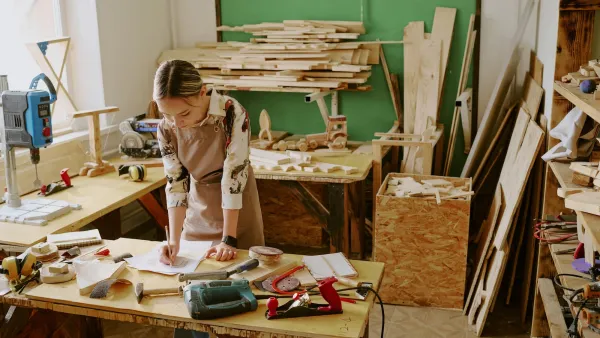
Small 'maker' businesses are good for downtowns — and data proves it
Small-scale manufacturers tend to be more engaged in the local supply chain, contributing to economic revitalization.
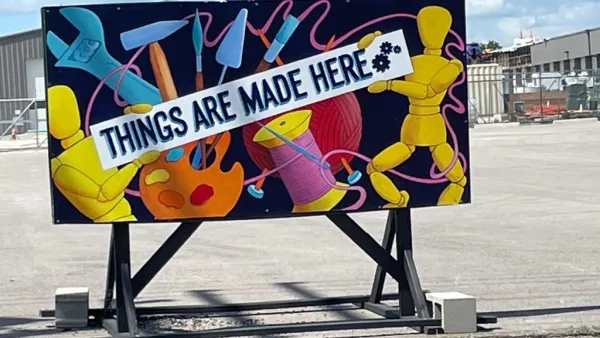
Columbia’s Revitalized ‘Loop’ Is a Hub for Local Entrepreneurs
A focus on small businesses is helping a commercial corridor in Columbia, Missouri thrive.
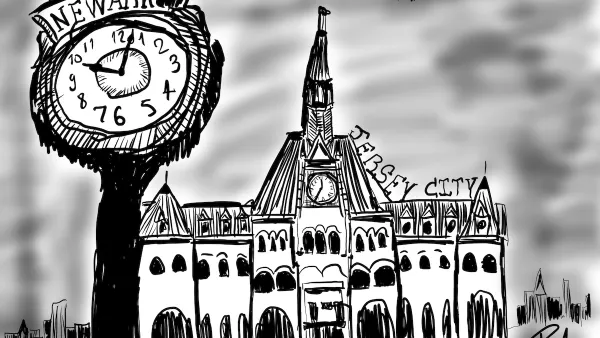
Jersey City and Newark: A Tale of Renaissance and Stagnation
The rise and fall (and rise again) of two great American cities teach us lessons about racism, economic opportunity, and more.

Planetizen Federal Action Tracker
A weekly monitor of how Trump’s orders and actions are impacting planners and planning in America.

The state-sanctioned urbicide of Austin
People don’t kill cities. Freeways do.

US to reduce Colorado River water deliveries to Mexico
A new Colorado Treaty amendment reduces Mexico’s Colorado River water allocation by 250,000 acre feet.

5 New England states march closer to 800 megawatt wind energy project
Securing federal approval for the project may be complicated under the Trump administration, which has historically been hostile towards domestic wind power.

Baltimore to break ground on $50 million Transit Priority Project
The project will bring faster bus trips, safer streets and better bike connections to Baltimore.

Airbnb launches $250 million 'last-dollar financing' housing accelerator, makes first investment in Austin
The company will put $6.4 million towards affordable housing development in Texas’ capital.

FREE Course: Walkable City 1: Why Walkability?
After describing his path towards focusing on walkability as the essence of good planning, Jeff Speck marches through his five principal reasons for making more walkable places.
Reinventing Malls: Planning Alchemy—Turning Gray Fields Into Gold
The course focuses on the opportunities and imperatives that shape reinvention of mall sites.

Eagle County Government
Harvard University Graduate School of Design
Nashville Planning Department
The Architects Foundation
University of Cincinnati Online
The Pocatello Development Authority
The Urban Renewal Agency of the City of Pocatello
Journal of the American Planning Association