The state is poised to gain nearly $1 billion from the federal plan for projects ranging from electric vehicle charging stations to bike lanes and zero-emission bus fleets.


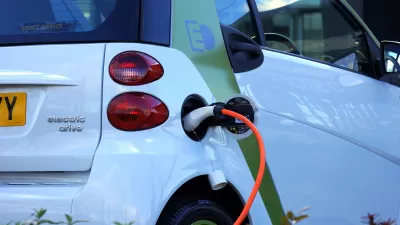
Writing in LA Magazine, Heidi Siegmund Cuda asserts that "California, with the fifth largest economy in the world, stands to gain big—nearly $1 billion—in the current $1 trillion infrastructure plan." But "if the bill is scuttled in the Senate, California could lose about $920 million dedicated to 200 projects." These include:
a dozen bridge repair and construction projects, including a $1 million dollar pedestrian bridge in Wilmington and a bridge safety barrier rail at in Burbank at a cost of $2 million; electric vehicle charging stations for Burbank, Oakland, and San Pedro at about $2.1 million; bike lane expansions and widening in such cities as L.A., North Hollywood, Pasadena, and Camarillo for $6.6 million; and statewide wastewater and drinking water projects; as well as preparing for rising sea levels by shoring up impacted infrastructure.
In Los Angeles, the funding would go toward the Sepulveda Transit Corridor, improvements in the Vermont transit district, bike path improvements, and traffic light upgrades, among other projects. "Zero-emission bus fleets, training, and charging infrastructure are planned for Gardena, Oxnard, Pasadena, San Bernardino, and Wilmington, as part of an $18.2 million investment."
"[U]ltimately, the final bill needs the support of at least ten Senate Republicans as well as that of every Democrat to pass."
FULL STORY: If the Bipartisan Infrastructure Plan Fails, California and L.A. Lose Big

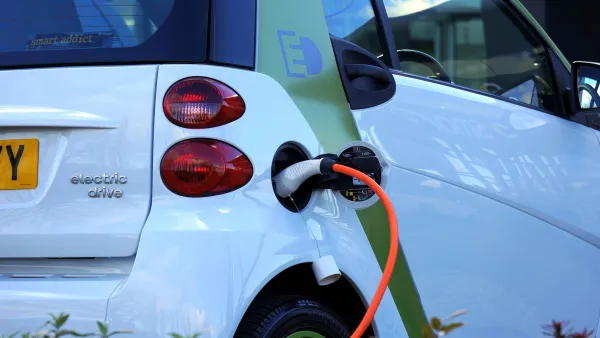
Federal Government Pledges $5 Billion for Electric Car Charging
A $5 billion federal investment will contribute to state efforts to install electric vehicle charging stations along interstate highways and major corridors.
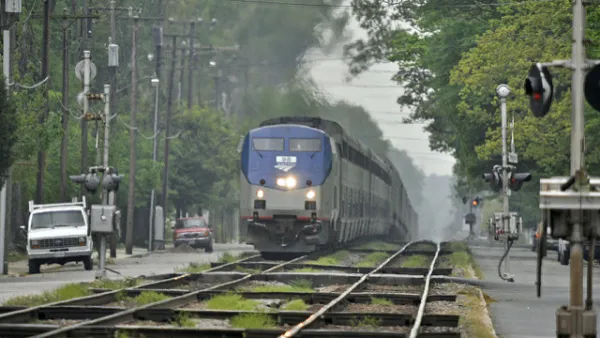
New Infrastructure Bill Guts Transit, EVs, and Safety Programs
The proposed bill keeps road funding almost intact while cutting funding for electrification, rail, and community development.
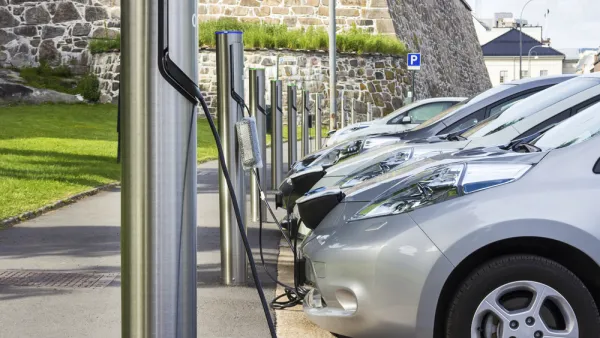
Too Much Focus on EVs in Infrastructure Bill
Funding the electrification of personal vehicles won't move the needle on climate change nearly as much as investing in infrastructure that lets people get out of their cars, mode shift advocates argue.

The state-sanctioned urbicide of Austin
People don’t kill cities. Freeways do.

US to reduce Colorado River water deliveries to Mexico
A new Colorado Treaty amendment reduces Mexico’s Colorado River water allocation by 250,000 acre feet.

New Jersey’s second-largest city bans standalone data centers
Jersey City will continue to allow co-location facilities, such as those meant for research institutions that store their own data.

Amtrak not solely to blame for New Jersey commuter rail's unreliability, report finds
A new study from the Garden State Initiative found that NJ Transit’s budget grew 20% across a 4 year period, but reliability declined significantly over the same period.

EPA erases limits on planet-warming pollution from power plants
Under Monday’s plan, power plants would still have some limits on how much mercury, arsenic and other contaminants they can emit.

Phoenix announces new on-demand transit service, more frequent RAPID buses
Both new services will launch in October, and are part of Phoenix's Project Effective Access Solutions for Easing Congestion.

FREE Course: Walkable City 1: Why Walkability?
After describing his path towards focusing on walkability as the essence of good planning, Jeff Speck marches through his five principal reasons for making more walkable places.
Reinventing Malls: Planning Alchemy—Turning Gray Fields Into Gold
The course focuses on the opportunities and imperatives that shape reinvention of mall sites.

Eagle County Government
Harvard University Graduate School of Design
Nashville Planning Department
The Architects Foundation
University of Cincinnati Online
The Pocatello Development Authority
The Urban Renewal Agency of the City of Pocatello
Journal of the American Planning Association