The state is budgeting $61 million to build wildlife crossings that increase biodiversity, help species thrive, and save both human and animal lives.


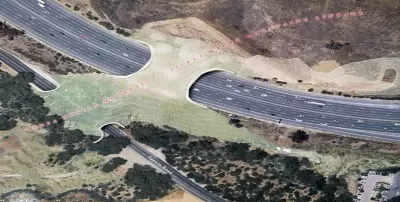
California's wildlife will soon have an easier time crossing busy roads thanks to a new push by state lawmakers to build wildlife crossings, reports Marissa Garcia. In Los Angeles, "[t]he project known as the Liberty Canyon Wildlife Crossing is one step closer to happening now that Gov. Gavin Newsom has signed a budget that includes $7 million to help build it — and another $54.5 million for similar projects in other parts of the state."
The plan is "part of a larger nationwide push to build special bridges and tunnels that help animals safely cross busy roads and freeways. The goal is twofold: to give species at risk the space they need to find mates, and to reduce the number of car crashes that imperil both wildlife and humans." In California alone, at least 7,000 crashes a year involve large wildlife, or roughly 20 such crashes daily. "And they aren’t cheap — for the drivers or the government. Between 2015 and 2018, wildlife crashes have cost more than $1 billion. The expenses include car damage, personal injuries, emergency response, traffic impacts, lost work and the clean-up."
In addition to reducing the carnage, Garcia writes, wildlife crossings would also re-link critical habitats and increase genetic diversity among animals living on both sides of dangerous roadways. When complete, the Liberty Canyon Wildlife Crossing, specifically designed to increase mobility for Southern California's mountain lion population, "will be the largest wildlife passage in the world."
FULL STORY: California is betting $61 million that new highway crossings will keep wildlife safe

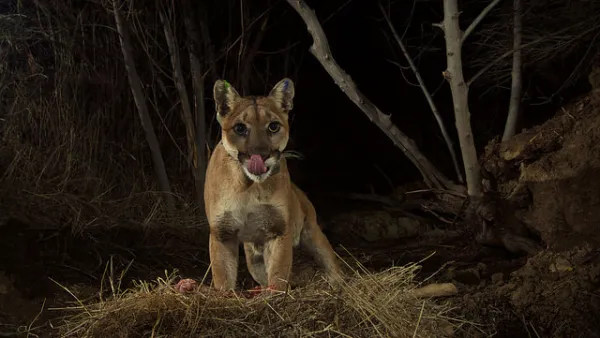
The Best Locations for L.A.’s Mountain Lion Freeway Bridges
A coalition of researchers have identified one area near the 101 and other near I-15 that would help keep the big cats alive and healthy.
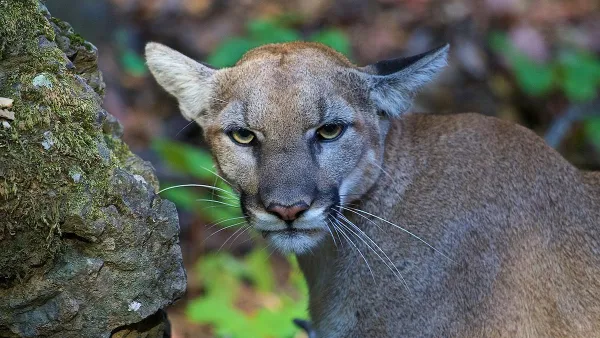
Cougar Death Highlights Urgent Need for Wildlife Crossing
A mountain lion was found dead on the 101 Freeway, less than half a mile from the steel and concrete endoskeleton of the Wallis Annenberg Wildlife Crossing.
L.A. Wildlife Crossing To Break Ground This Spring
The planned wildlife bridge spanning an eight-lane freeway will be the world's largest and most ambitious project of its kind.

Planetizen Federal Action Tracker
A weekly monitor of how Trump’s orders and actions are impacting planners and planning in America.

The state-sanctioned urbicide of Austin
People don’t kill cities. Freeways do.

US to reduce Colorado River water deliveries to Mexico
A new Colorado Treaty amendment reduces Mexico’s Colorado River water allocation by 250,000 acre feet.

5 New England states march closer to 800 megawatt wind energy project
Securing federal approval for the project may be complicated under the Trump administration, which has historically been hostile towards domestic wind power.

Baltimore to break ground on $50 million Transit Priority Project
The project will bring faster bus trips, safer streets and better bike connections to Baltimore.

Airbnb launches $250 million 'last-dollar financing' housing accelerator, makes first investment in Austin
The company will put $6.4 million towards affordable housing development in Texas’ capital.

FREE Course: Walkable City 1: Why Walkability?
After describing his path towards focusing on walkability as the essence of good planning, Jeff Speck marches through his five principal reasons for making more walkable places.
Reinventing Malls: Planning Alchemy—Turning Gray Fields Into Gold
The course focuses on the opportunities and imperatives that shape reinvention of mall sites.

Eagle County Government
Harvard University Graduate School of Design
Nashville Planning Department
The Architects Foundation
University of Cincinnati Online
The Pocatello Development Authority
The Urban Renewal Agency of the City of Pocatello
Journal of the American Planning Association