After many European train operators eliminated their unprofitable sleeper car services, a renewed interest in overnight rail travel has led to a boom in private sleeper train networks.


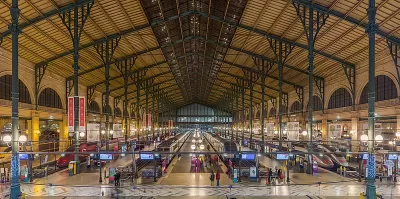
A French company wants to connect Paris and 12 other European cities with a network of sleeper trains, "hoping post-Covid interest in cleaner, greener travel will generate interest in its proposed 'hotels on rails'," writes Kim Willsher in The Guardian. The company, Midnight Trains, "plans to serve at least a dozen destinations between 500 and 900 miles from Paris, including cities in Spain, Portugal, Italy, Belgium, Germany, Denmark and Scotland" and begin service in 2024.
"Midnight Trains is the latest arrival in what is becoming a crowded market. Across Europe, state-run railways are facing new competition from private operators looking to introduce night trains." In recent years, Europe's sleeper cars "were being consigned to the economic sidings, driven out of business by low-cost flights and long-distance buses. Since then, however, public concerns over the climate emergency have led to a surge of interest in reviving night routes across the continent." The European Commission's Sustainable and Smart Mobility Strategy, a plan that lays out Europe's goals and strategies for fighting climate change and building resiliency, "calls for a major shift in passengers to rail, including night trains."
More trains, writes David Burroughs in the International Railway Journal, could "play an important role in reducing transport emissions." As he writes, "[i]f operators are able to fully develop attractive services to meet the growing demands from passengers, while overcoming the major challenges they face, it could mark the start of a major new era in the post-pandemic world, and offer a major boon for the rail sector."
Read the full story: New network of European sleeper trains planned

Amtrak unveils proposal to restructure, split into 3 divisions
Agency officials say the new structure would offer more transparency and accountability.
California rail builders sign MOU advancing statewide high-speed network
The agreement aims to create an interconnected high-speed rail network and bring down the cost of construction.
Why are America's trains so slow?
A brief historical inquiry.

Planetizen Federal Action Tracker
A weekly monitor of how Trump’s orders and actions are impacting planners and planning in America.

The state-sanctioned urbicide of Austin
People don’t kill cities. Freeways do.

Colorado’s Largest Data Center Could Rise Next to Homes — Without a Public Hearing
The proposed campus would consume 11 times the power of Denver International Airport; as it has across the country, opposition mounts.

Nation's most wind-powered state turns to coal as data centers increase energy demand
For the first time in decades, Iowa has increased its generation of coal power.

NYC cools commuters with city's first rain garden above a bus stop
New York City officials say the plants in the rain garden can absorb 16 gallons of rainwater during heavy storms.

Brightline West’s future may rely on $6 billion federal loan
The company has until Nov. 2 to make a $400 million equity investment into its proposed high-speed rail line.

FREE Course: Walkable City 1: Why Walkability?
After describing his path towards focusing on walkability as the essence of good planning, Jeff Speck marches through his five principal reasons for making more walkable places.
Reinventing Malls: Planning Alchemy—Turning Gray Fields Into Gold
The course focuses on the opportunities and imperatives that shape reinvention of mall sites.


Greater Baltimore Committee
Eagle County Government
Harvard University Graduate School of Design
The Architects Foundation
University of Cincinnati Online
The Pocatello Development Authority
The Urban Renewal Agency of the City of Pocatello
Journal of the American Planning Association