Despite the economic blow dealt by last year's lockdowns, business districts in smaller cities like Wilkes-Barre managed to weather the crisis.


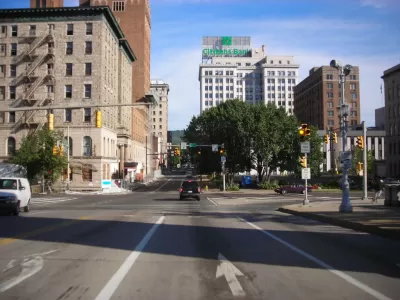
Wilkes-Barre, Pennsylvania, a city that once relied on coal production as its main economic driver, has struggled to maintain a vibrant business district. As the pandemic hit, Jonno Rattman, Michael Corkery, Alana Celii, and Gabriel Gianordoli of the New York Times photographed the city's Main Street and its transformation over the course of an unprecedented year, chronicling the challenges and resilience of local businesses.
While some businesses, particularly those already facing hard times before the pandemic, did shut down, "[a] survey by the National Main Street Center of several hundred communities found that for every business that closed in a city the size of Wilkes-Barre, 1.4 new ones opened up." According to an April 2020 survey, "more than half of the downtown Wilkes-Barre businesses that responded said they were at risk of closing permanently. In the end, only six did." Along with the Paycheck Protection Program, which awarded nearly $800 billion through over 11 million loans that kept many small businesses afloat, "[l]ow interest rates and falling rents have also aided entrepreneurship."
But local boosters such as Larry Newman, executive director of the Diamond City Partnership, worry that businesses will continue to be negatively impacted by the losses of the past year even as business returns to normal. "'I’ve begun to worry that many Main Street businesses may face a sort of economic equivalent of Covid long-haul,' he said. 'Making it through the shutdowns only to confront a persistent, longer-term struggle.'"
FULL STORY: How a Hobbled Main Street Survived the Pandemic ‘Asteroid’

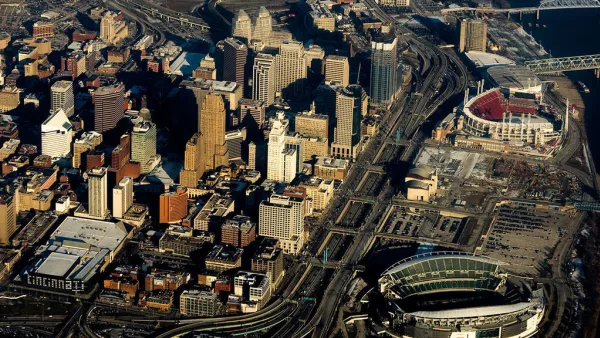
Why Central Business Districts Need Diverse Users
Central districts benefit from diversity, but a century of disinvestment and exodus has put many in a precarious position.
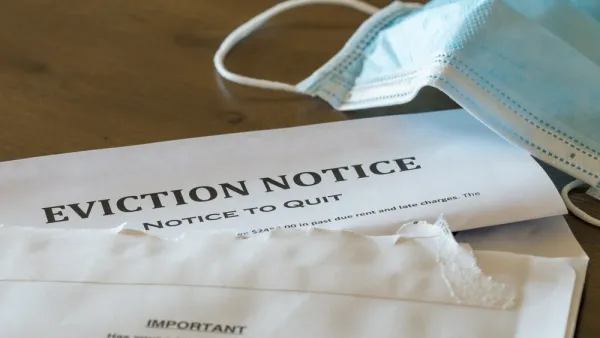
$425 Million in Rent Relief Never Reached Those in Need
A damning investigation reveals the immense financial resources that states could have spent on rent relief but failed to do so, whether willfully or not.
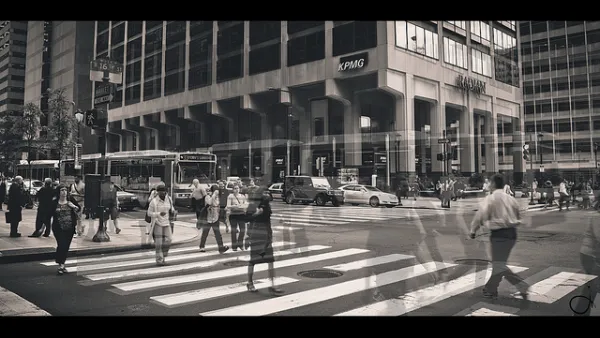
The Future of Downtowns Still Hangs in the Balance
Center City in Philadelphia offers a case study for one of the largest and potentially most consequential contingencies of the pandemic: What happens to downtowns is most workers never come back to the office?

Planetizen Federal Action Tracker
A weekly monitor of how Trump’s orders and actions are impacting planners and planning in America.

The state-sanctioned urbicide of Austin
People don’t kill cities. Freeways do.

US to reduce Colorado River water deliveries to Mexico
A new Colorado Treaty amendment reduces Mexico’s Colorado River water allocation by 250,000 acre feet.

Mamdani overhauls NYC's Vision Zero plan with 100 new policy goals
The overhaul aims to reduce traffic deaths and make streets safer for pedestrians, cyclists and drivers through lower speed limits, new safety infrastructure and more.

Amtrak not solely to blame for New Jersey commuter rail's unreliability, report finds
A new study from the Garden State Initiative found that NJ Transit’s budget grew 20% across a 4 year period, but reliability declined significantly over the same period.

EPA erases limits on planet-warming pollution from power plants
Under Monday’s plan, power plants would still have some limits on how much mercury, arsenic and other contaminants they can emit.

FREE Course: Walkable City 1: Why Walkability?
After describing his path towards focusing on walkability as the essence of good planning, Jeff Speck marches through his five principal reasons for making more walkable places.
Reinventing Malls: Planning Alchemy—Turning Gray Fields Into Gold
The course focuses on the opportunities and imperatives that shape reinvention of mall sites.


Eagle County Government
Harvard University Graduate School of Design
Nashville Planning Department
The Architects Foundation
University of Cincinnati Online
The Pocatello Development Authority
The Urban Renewal Agency of the City of Pocatello
Journal of the American Planning Association