Zoning and land use changes proposed in the Home in Tacoma plan, an element of the One Tacoma Comprehensive Plan, was approved this month by the Tacoma Planning Commission.



The Tacoma Planning Commission voted, 6-3, to advance the Home in Tacoma equitable affordable housing strategy as an element of the One Tacoma Comprehensive Plan, reports Stephen Fesler.
Central to Home in Tacoma is a "deep" revision of the city's future land use map in all areas zoned single-family and multifamily in Tacoma, according to Fesler.
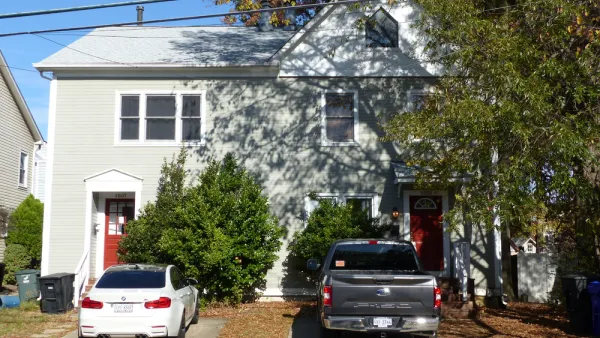
If adopted, this would essentially end the concept of single-family zones in the city in both name and regulation. Single-family areas would be redesignated and rezoned to Low-Scale Residential or Mid-Scale Residential zoning types, which would permit a mix of housing types like duplexes, rowhouses, and apartments. Low-Density Multifamily areas would also get a boost to Mid-Scale Residential, a more intensive land use designation than the current one.
The article includes more details about the proposed zoning and land use changes, and the process by which the approved Home in Tacoma plan evolved into its final form. Among those detail is a phased approach for adoption. "Under the phased approach, comprehensive plan changes and some near-term land use code and programmatic changes would be adopted in the first phase. Deeper land use code policies and zoning changes would follow in the second phase," explains Fesler.
Planetizen previewed the potential of the Home in Tacoma plan to eliminate single-family zoning in favor of Missing Middle Housing typologies in January and March this year.
FULL STORY: ‘Home In Tacoma’ Advances with Recommendation to Eliminate Single-Family Zoning

Tacoma Plan Would Eliminate Single-Family Zoning in Favor of 'Missing Middle' Housing
If implemented, Home in Tacoma would create new housing categories to encourage more multi-family buildings.
Upping Tacoma's Missing Middle Housing Game
Tacoma is looking to expand on the accessory dwelling unit reforms of the Home in Tacoma project by planning for new residential density along the city's transit routes.
Tacoma Density Plan Moves to Phase Two
The Home in Tacoma plan would amend the city's zoning code to include more 'missing middle' housing types and encourage infill development.

Planetizen Federal Action Tracker
A weekly monitor of how Trump’s orders and actions are impacting planners and planning in America.

The state-sanctioned urbicide of Austin
People don’t kill cities. Freeways do.

US to reduce Colorado River water deliveries to Mexico
A new Colorado Treaty amendment reduces Mexico’s Colorado River water allocation by 250,000 acre feet.

Mamdani overhauls NYC's Vision Zero plan with 100 new policy goals
The overhaul aims to reduce traffic deaths and make streets safer for pedestrians, cyclists and drivers through lower speed limits, new safety infrastructure and more.

Amtrak not solely to blame for New Jersey commuter rail's unreliability, report finds
A new study from the Garden State Initiative found that NJ Transit’s budget grew 20% across a 4 year period, but reliability declined significantly over the same period.

EPA erases limits on planet-warming pollution from power plants
Under Monday’s plan, power plants would still have some limits on how much mercury, arsenic and other contaminants they can emit.

FREE Course: Walkable City 1: Why Walkability?
After describing his path towards focusing on walkability as the essence of good planning, Jeff Speck marches through his five principal reasons for making more walkable places.
Reinventing Malls: Planning Alchemy—Turning Gray Fields Into Gold
The course focuses on the opportunities and imperatives that shape reinvention of mall sites.


Eagle County Government
Harvard University Graduate School of Design
Nashville Planning Department
The Architects Foundation
University of Cincinnati Online
The Pocatello Development Authority
The Urban Renewal Agency of the City of Pocatello
Journal of the American Planning Association