Despite the historic importance of a vast majority of the city of Philadelphia's buildings, demolitions are happening at a faster rate than ever.


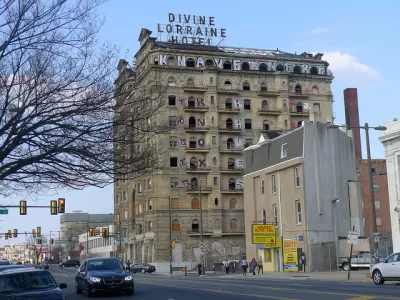
"Philadelphia’s history isn’t a burden," writes Ashley Hahn in the Philadelphia Inquirer, but it's certainly being treated that way. According to Hahn, "increasing numbers of old buildings are demolished annually by city contractors and private owners, landfilling reusable materials and untold histories."
While "[m]ore than two-thirds of Philadelphia buildings were built more than 50 years ago, making them potentially eligible for local historic designation on the basis of age alone," less than 3% of the city's buildings have historic designation. That protected segment, writes Hahn, "unfortunately reflects a predominantly white version of the city’s past."
"The city’s Department of Planning and Development is attempting to correct this failure through a grant-funded pilot project to develop and test a survey identifying culturally significant places overlooked by traditional preservation." The survey "will be driven by the communities whose histories the historic register has excluded, particularly Black Philadelphia."
The project, "done right," will likely take years. "The process could help build public trust in the city’s preservation system as it becomes less exclusionary and more representative of Philadelphia’s diverse heritage," writes Hahn, "[b]ut it does nothing to keep that history standing in the meantime." Hahn recommends that the city immediately "enact a demolition review policy, at least until a citywide survey is completed." Otherwise, " the city is undercutting its well-intentioned survey before it starts."
In other cities, permit applications to demolish buildings that meet "basic eligibility for local designation" trigger a review process. "It’s far faster to get a demolition permit than it is to designate a building as historic, which can take months. A demolition review policy would help level the playing field, instead of keeping it easy to level the city’s unprotected heritage."
FULL STORY: Welcome to Demodelphia, where our historic buildings are treated like a burden

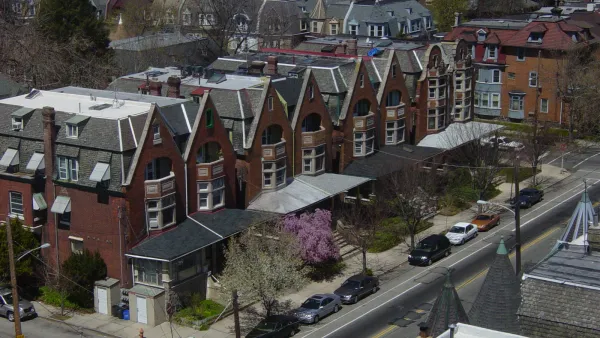
Philly City Council to Consider Bill Protecting Neighbors from Construction Damage
The proposal would hold builders accountable for damage incurred to adjacent homes as historic rowhouse properties see increased redevelopment.
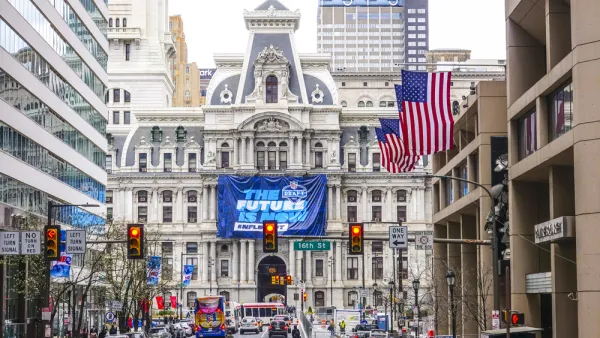
It's Official: Philadelphia Planning Offices Reorganized
The new Philadelphia Department of Planning and Development combines agencies that formerly oversaw housing, development, and planning.
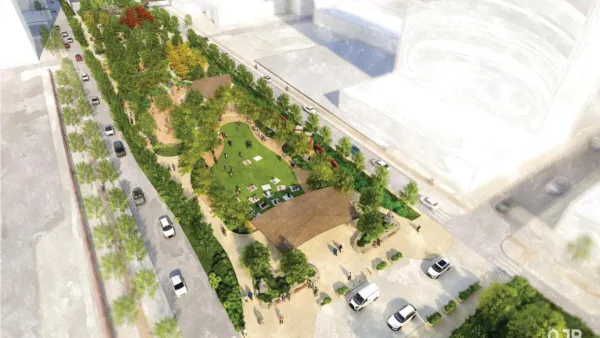
Philadelphia lawmakers fight to save 'Chinatown Stitch' from Trump cuts
The freeway cap project, approved and funded under the Biden administration, is now in jeopardy after the federal government rescinded all but $8 million in funding.

Planetizen Federal Action Tracker
A weekly monitor of how Trump’s orders and actions are impacting planners and planning in America.

The state-sanctioned urbicide of Austin
People don’t kill cities. Freeways do.

US to reduce Colorado River water deliveries to Mexico
A new Colorado Treaty amendment reduces Mexico’s Colorado River water allocation by 250,000 acre feet.

5 New England states march closer to 800 megawatt wind energy project
Securing federal approval for the project may be complicated under the Trump administration, which has historically been hostile towards domestic wind power.

Baltimore to break ground on $50 million Transit Priority Project
The project will bring faster bus trips, safer streets and better bike connections to Baltimore.

Airbnb launches $250 million 'last-dollar financing' housing accelerator, makes first investment in Austin
The company will put $6.4 million towards affordable housing development in Texas’ capital.

FREE Course: Walkable City 1: Why Walkability?
After describing his path towards focusing on walkability as the essence of good planning, Jeff Speck marches through his five principal reasons for making more walkable places.
Reinventing Malls: Planning Alchemy—Turning Gray Fields Into Gold
The course focuses on the opportunities and imperatives that shape reinvention of mall sites.

Eagle County Government
Harvard University Graduate School of Design
Nashville Planning Department
The Architects Foundation
University of Cincinnati Online
The Pocatello Development Authority
The Urban Renewal Agency of the City of Pocatello
Journal of the American Planning Association